
Low Glycemic Baking: Your Guide to Stable Blood Sugar

What is low glycemic baking and why does it matter?
Low glycemic baking means crafting baked goods that keep your blood sugar steady rather than sending it on a spike-and-crash cycle. The standard that guides this approach is a glycemic load of 10 or less per serving, with a target of roughly 0.18 GL per gram to maintain glucose stability throughout the day.
It helps to understand the difference between glycemic index (GI) and glycemic load (GL). GI measures how quickly a single food raises blood sugar, but it ignores serving size. GL accounts for both the quality and the quantity of carbohydrates you actually eat, making it the more practical tool for bakers. A food with a moderate GI can still have a low GL if you eat a reasonable portion.
The metabolic benefits are real and well-documented. Continuous glucose monitoring studies show that low total glycemic load snacks help keep glucose levels stable after eating, even for indulgent items. For anyone managing prediabetes, working toward weight goals, or simply wanting steadier energy through the afternoon, that stability matters.
Here is a quick summary of what low glycemic baking delivers:
- Reduced blood sugar spikes after eating, supporting metabolic health
- Sustained energy by replacing fast-digesting carbs with protein, fiber, and healthy fats
- Suitability for diabetes and prediabetes management when combined with a balanced diet
- Broader wellness support including better satiety and fewer cravings between meals
Bell's Protein Pantry’s high-protein baking mixes are a practical example of these principles in action, built around natural ingredients that keep GL low while delivering real flavor.
Table of Contents
- Which ingredients and strategies actually work for low GI baking?
- How do high-protein mixes support your wellness and save you time?
- How to choose and use low glycemic baking mixes wisely
- Bell's Protein Pantry makes high-protein, low glycemic baking genuinely easy
- Key Takeaways
Which ingredients and strategies actually work for low GI baking?
The ingredients you choose determine almost everything about a baked good’s glycemic impact. Three categories do the heaviest lifting: zero-GI sweeteners, protein-rich flours, and high-fiber additives.
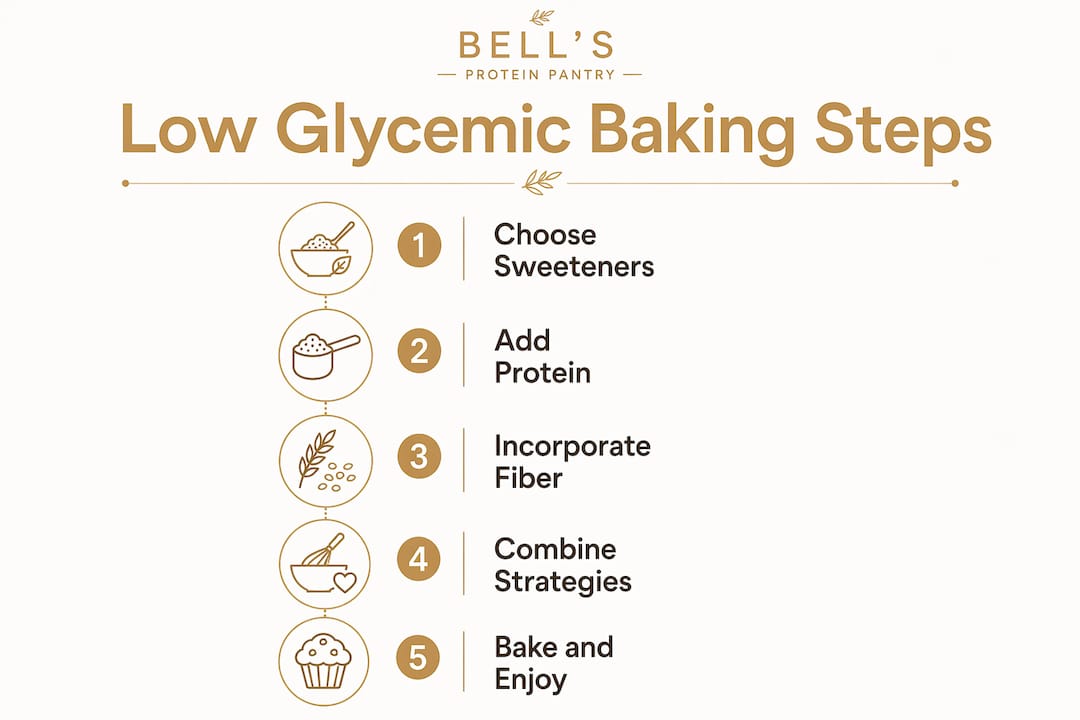
Zero-GI sweeteners like organic monk fruit are a genuine upgrade over conventional sugar. Monk Fruit carries a GI of 0 compared to table sugar’s GI of 65, meaning it contributes essentially no glucose load. Honey and maple syrup, despite their “natural” reputations, still raise blood sugar significantly. Choosing the right sweetener is one of the fastest ways to lower a recipe’s GL without changing its structure.
Protein-rich flours such as almond flour slow digestion by adding fat and protein alongside carbohydrates. Research shows that adding almonds to high-GI foods reduces the overall glycemic response by approximately 30%. That is a meaningful shift from a single ingredient swap.
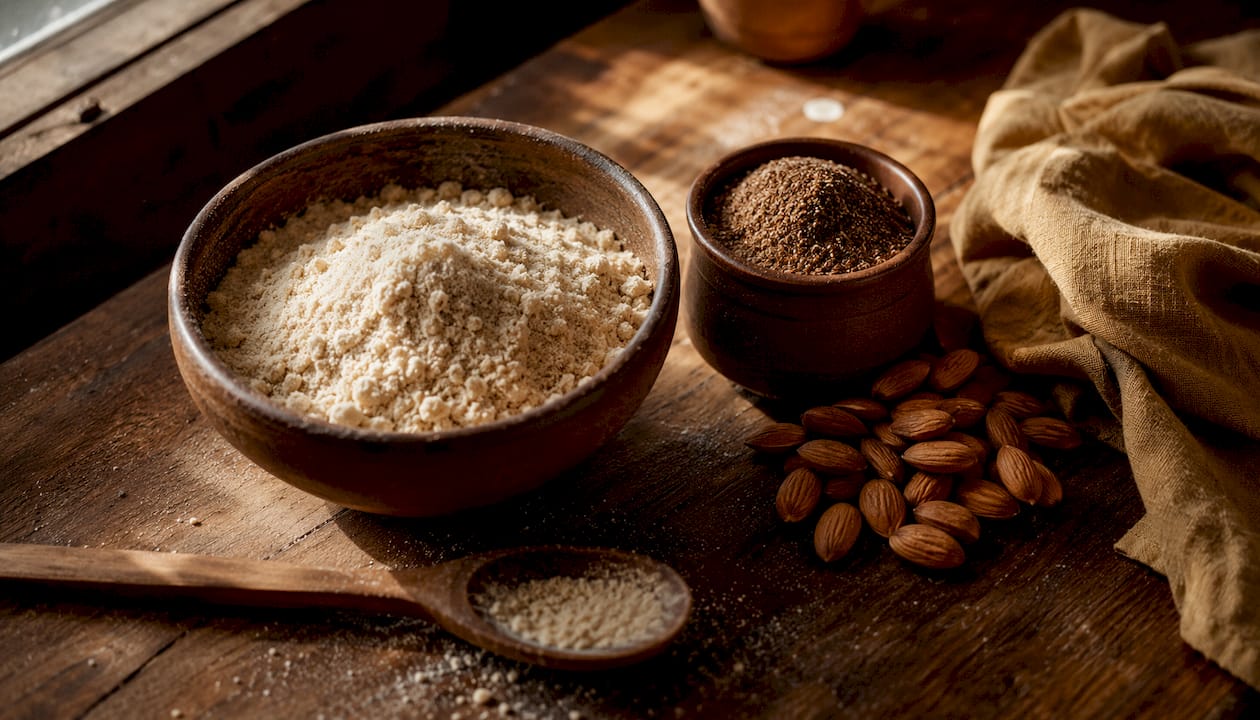
High-fiber additives like oat beta-glucan and ground flaxseed form a viscous layer in the digestive tract that physically slows glucose absorption. They also improve texture and add a satisfying density to muffins and quick breads. When you pair fiber with protein and healthy fat, the combined effect on blood sugar is greater than any single substitution alone.
Balancing glycemic control with sensory quality is where many home bakers struggle. Protein-heavy flours can produce dense, gummy results, and some fiber additives affect rise and volume. Advances in enzymatic treatment and fiber addition have helped commercial producers solve these challenges, but at home, the fix is usually a blend: part almond flour, part oat flour, with a leavening boost.
Common pitfalls to watch for:
- Assuming “natural” sweeteners like agave or coconut sugar are low-GI (they are not)
- Relying on a single substitution and expecting a dramatic GL reduction
- Ignoring how baking temperature and time affect starch structure and GI
- Overlooking gluten-free chocolate alternatives that can add flavor without spiking GL
Pro Tip: Combine at least two glycemic-lowering strategies in every recipe: a zero-GI sweetener plus a protein-rich flour, or a fiber additive plus a healthy fat. Stacking mechanisms produces results that no single swap can match.
How do high-protein mixes support your wellness and save you time?
Protein and fiber work together to slow postprandial (after-meal) blood glucose rise in a way that refined carbohydrates simply cannot replicate. Low-glycemic snacks combining fiber, lean protein, and healthy fats help regulate blood sugar and provide sustained energy, which is exactly what a well-designed baking mix should deliver.
Bell' s Protein Pantry’s mixes are built around this principle. Each serving delivers 17–19g of protein and 39% less sugar than leading brands, using all-natural ingredients. That protein load is high enough to meaningfully blunt glucose absorption and extend satiety, which matters whether you are managing macros, recovering from a workout, or just trying to avoid the 3 PM energy slump.
Stat to know: Combining protein and fiber in a baked snack can reduce the postprandial glucose spike compared to a carbohydrate-only equivalent, supporting both blood sugar stability and longer-lasting fullness.
The table below shows how a typical standard baking mix compares to a high-protein, low glycemic option like Bell's Protein Pantry’s:
| Nutrient | Standard Baking Mix (per serving) | High-Protein Low Glycemic Mix (per serving) |
|---|---|---|
| Protein | 3g | 17–19g |
| Sugar | 17–19g | 39% less |
| Fiber | 1–2g | Higher (fiber-rich ingredients) |
| Glycemic Load | Medium–High | Low (≤10 target) |
For busy households, the convenience factor is just as real as the nutrition. A high-protein banana bread that takes 30 minutes to prepare gives you a week’s worth of grab-and-go breakfasts that actually support your fitness goals. No complicated ingredient sourcing, no macro math. Just mix, bake, and eat well.
How to choose and use low glycemic baking mixes wisely
Not every mix marketed as “healthy” actually qualifies as low glycemic. Here is what to look for when you are evaluating options:
- Protein content: Aim for at least 15g per serving. Protein is the single strongest lever for blunting glucose response in a baked good.
- Sugar reduction: Look for mixes with meaningfully less sugar than conventional alternatives, and check that the sweetener used is genuinely low-GI (allulose, erythritol, or monk fruit, not just “cane sugar in smaller amounts”).
- Fiber inclusion: Ingredients like oat beta-glucan, flaxseed, or psyllium husk signal that the mix was formulated with glycemic control in mind.
- Clean ingredient list: Fewer additives and no artificial fillers generally mean better metabolic outcomes and better flavor.
Portion control is where many people quietly undo their progress. Even a well-formulated low glycemic muffin can push your GL higher if you eat three of them. Stick to the serving size on the label, and pair your baked good with a protein source or healthy fat to further slow glucose absorption. Clinical evidence shows that combining low-glycemic baked goods with protein-rich meals improves glucose control more than consuming them alone.
A few recipe adaptation tips worth keeping in mind:
- Swap all-purpose flour for almond or oat flour in a 1:1 ratio as a starting point, then adjust liquid slightly
- Replace conventional sugar with allulose at the same volume; expect slightly less browning
- Add 1–2 tablespoons of ground flaxseed to any muffin or quick bread batter for a fiber boost without affecting flavor
- Avoid loading recipes with dried fruit or high-GI mix-ins, which can offset the benefits of your other substitutions
If you want to skip the trial and error entirely, mixes designed specifically for low glycemic recipes do the formulation work for you. That is especially useful when you are meal prepping for the week and do not have time to troubleshoot a dense muffin at 7 AM. You can also explore gluten-free toffee bits as a low-impact mix-in for added texture and sweetness without a significant GL hit.
Bell's Protein Pantry makes high-protein, low glycemic baking genuinely easy
If you have been reading this and thinking “I want all of this without building recipes from scratch,” that is exactly why Bell's Protein Pantry exists.
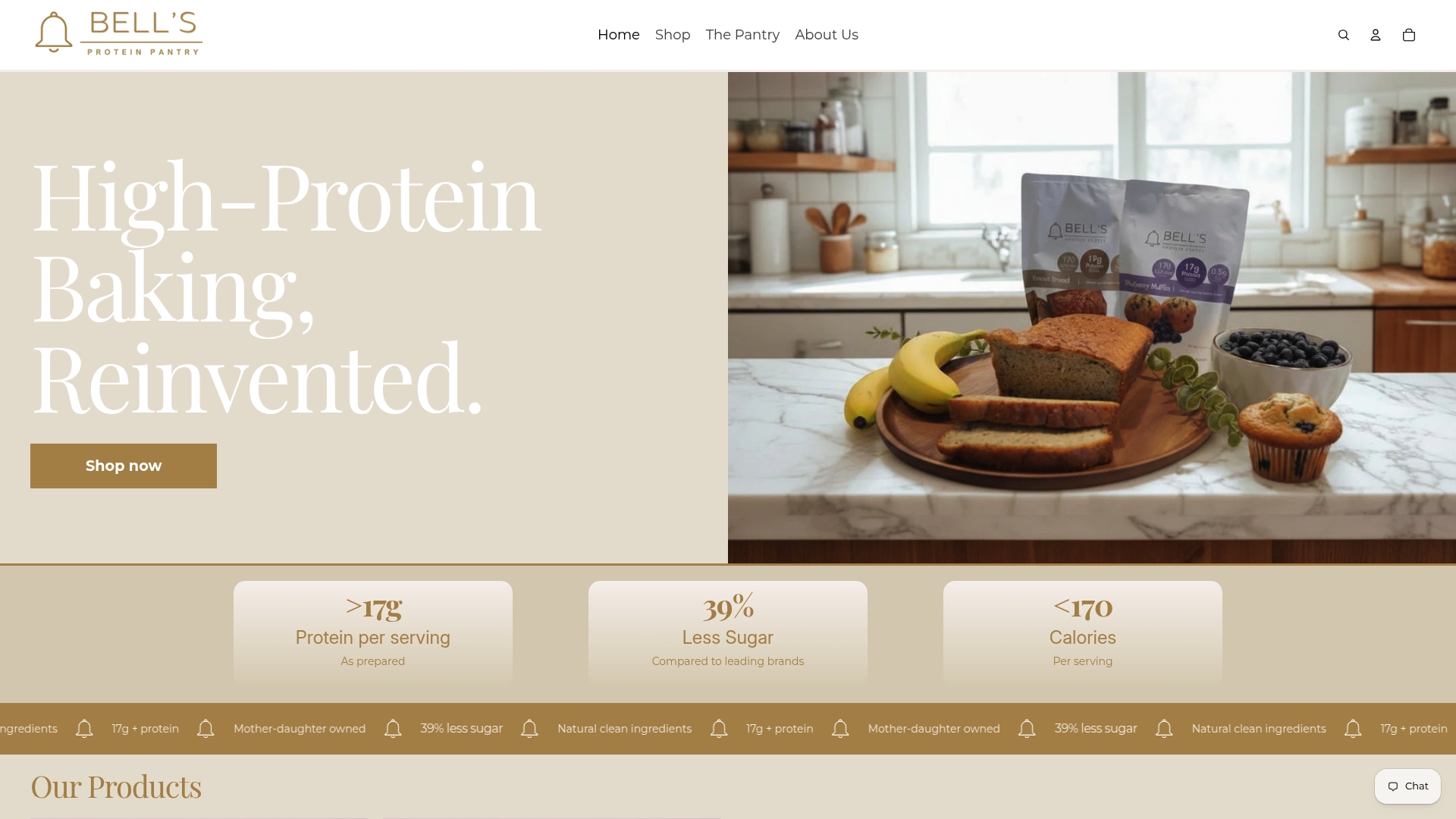
Founded by a mother-daughter team, Bell's Protein Pantry was built around a simple idea: baked goods that taste like a treat and fuel you like a meal. Every mix uses all-natural ingredients, delivers 17–19g of protein per serving, and contains 39% less sugar than leading brands. The Banana Bread and Blueberry Muffin mixes are the two flagship flavors, and both are formulated to keep glycemic load low without sacrificing the warmth and comfort of a fresh-baked good cooling on your counter.
These mixes put the principles covered throughout this article into a ready-to-use format. The protein is already there. The sugar is already reduced. The ingredient list is clean. All you do is mix and bake. For anyone with a busy schedule, a fitness routine, or a household to feed, that simplicity is the whole point.
Browse the full collection of protein baking mixes and find the option that fits your routine.
Key Takeaways
Low glycemic baking works best when protein, fiber, and zero-GI sweeteners are combined in every recipe, keeping glycemic load at or below 10 per serving for lasting blood sugar stability.
| Point | Details |
|---|---|
| Glycemic load target | Aim for a GL of 10 or less per serving, with roughly 0.18 GL per gram for glucose stability. |
| Ingredient stacking | Combining allulose, protein-rich flours, and fiber additives reduces GL more than any single swap. |
| Protein’s role | Almond additions alone can reduce glycemic response by approximately 30%; 17–19g protein per serving amplifies this effect. |
| Portion and pairing | Eating low glycemic baked goods alongside a protein-rich meal improves glucose control beyond what the baked good achieves alone. |
| Bell's Protein Pantry | Delivers 17–19g protein and 39% less sugar per serving in ready-to-bake mixes designed for health-conscious, busy consumers. |