
Banana Bread Protein Content: Your Fitness-Focused Guide

Traditional banana bread delivers a modest amount of protein per slice, which is fine for a weekend treat but falls short when you’re tracking macros for a fitness goal. The good news? A well-built high-protein version can reach 10–19 grams per serving, using ingredients you probably already have. Here’s what actually changes the numbers:
- Traditional banana bread: 2.5–5g protein, roughly 185–300+ calories per slice, with most of that energy coming from refined flour and sugar
- High-protein banana bread: 10–12g protein per serving, achieved through Greek yogurt, eggs, protein powder, and nut flours
- Store-bought options: 421 calories, 42g sugar, and 5.3g protein per 100g serving — a reminder that convenience usually costs you on the macro side
- Key protein sources to add: whey or casein protein powder, Greek yogurt, cottage cheese, almond flour, and whole eggs
- Calorie context: a high-protein slice can sit around 262 calories while delivering real satiety, compared to a sugar-heavy traditional slice that leaves you hungry an hour later
- Bell's Protein Pantry: higher in protein with 19g per serving and only 350 calories. This delivers real satiety, and 39% less sugar.
The gap between 3 grams and 12 grams of protein per slice is not a small tweak. It’s the difference between a dessert and a genuinely macro-friendly snack that supports muscle recovery.
What do the nutrition facts actually look like?
Banana bread macros shift dramatically depending on whether you’re pulling a loaf from a coffee shop case or baking at home with intention. A high-protein homemade slice clocks in at about 262 calories, 12g protein, 6g fat, 44g carbs, and 5g fiber. That fiber number matters because it slows digestion and keeps blood sugar steadier than a traditional slice would.
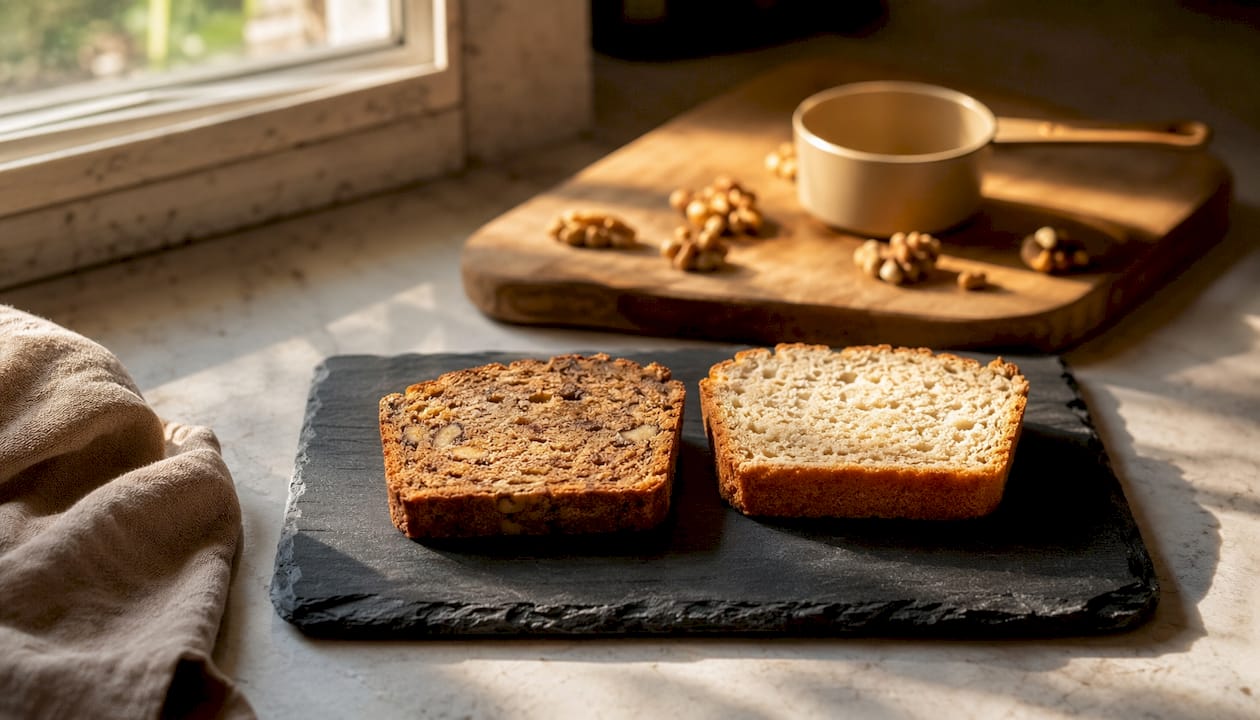
For a quick side-by-side, here’s how common versions differ in nutrition content, with traditional homemade having lower protein compared to high-protein homemade, and store-bought showing high sugar content per 100g serving.
Store-bought banana bread, including some popular café options, generally contains modest protein levels and higher fat content, showing how commercial baking typically prioritizes taste over protein content. Swapping refined flour for almond or oat flour, and adding Greek yogurt or a scoop of protein powder, is what moves the needle from 5g to 12g without adding a lot of extra calories. Ingredient choices are the whole story here.
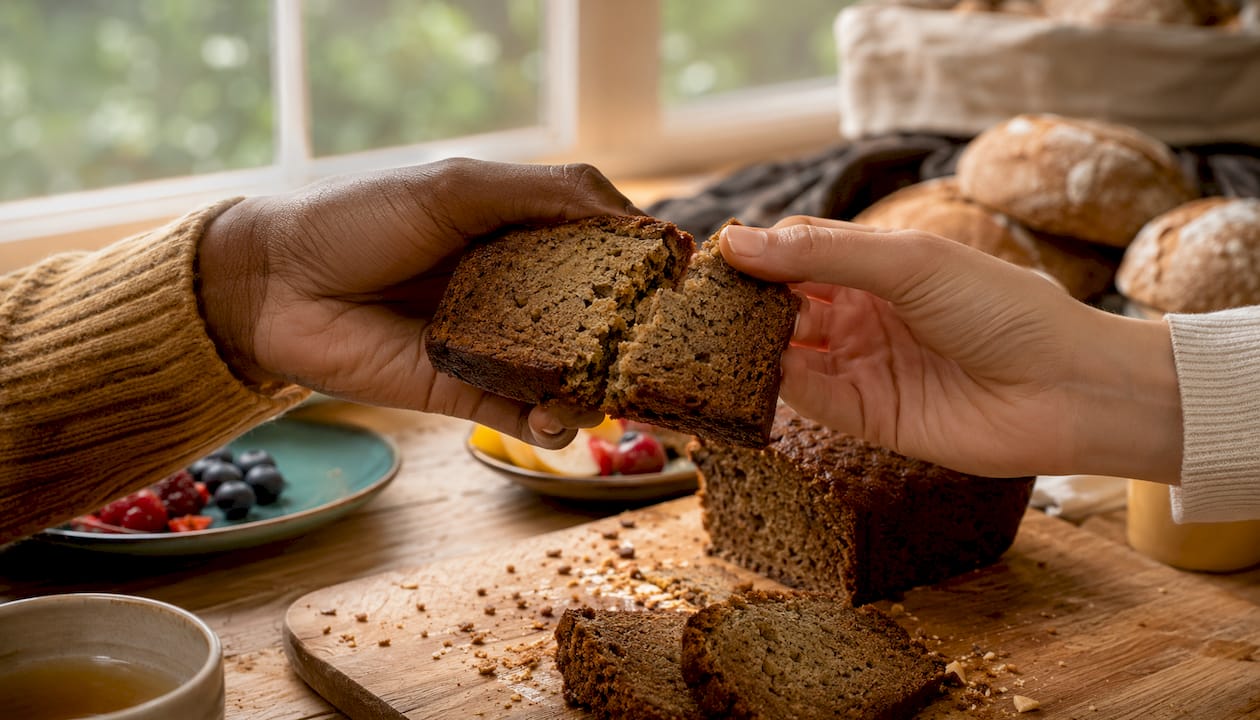
How to make high-protein banana bread at home
Getting the protein up without turning your loaf into a dry, crumbly brick takes a little planning. Here’s a recipe framework that works:
- Mash 2-3 ripe bananas in a large bowl until smooth. Ripe bananas add natural sweetness, which means you can cut back on added sugar without missing it.
- Whisk in 2 large eggs, 1/3 cup Oil, and 3/4 cup water or milk. If extra protein is wanted, add milk. Whisk until well blended
- Add Bell's Protein Pantry Banana Bread dry mix. Fold until just combined. Overmixing develops gluten and toughens the texture, so stop when you no longer see dry streaks.
- Pour into a greased 9x5 loaf pan and bake at 325°F for 40–50 minutes, or until a toothpick inserted in the center comes out clean. Remove a couple of minutes early as protein continues to bake as it cools.
- Cool completely before slicing. Let cool in pan 5-10 minutes. Cutting into a warm loaf compresses the crumb and makes it gummy.
Baking with protein powder is one of the most underused ways to hit your daily protein targets, especially if smoothies are getting old. The key is treating protein powder as a partial flour replacement, not a supplement dumped on top of a standard recipe.
Pro Tip: Use a blend of whey and casein or collagen protein powder instead of whey alone. Whey can pull moisture out of the batter during baking, leaving you with a dry loaf. Casein and collagen hold onto liquid, so a 50/50 blend gives you a moist, satisfying texture every time.
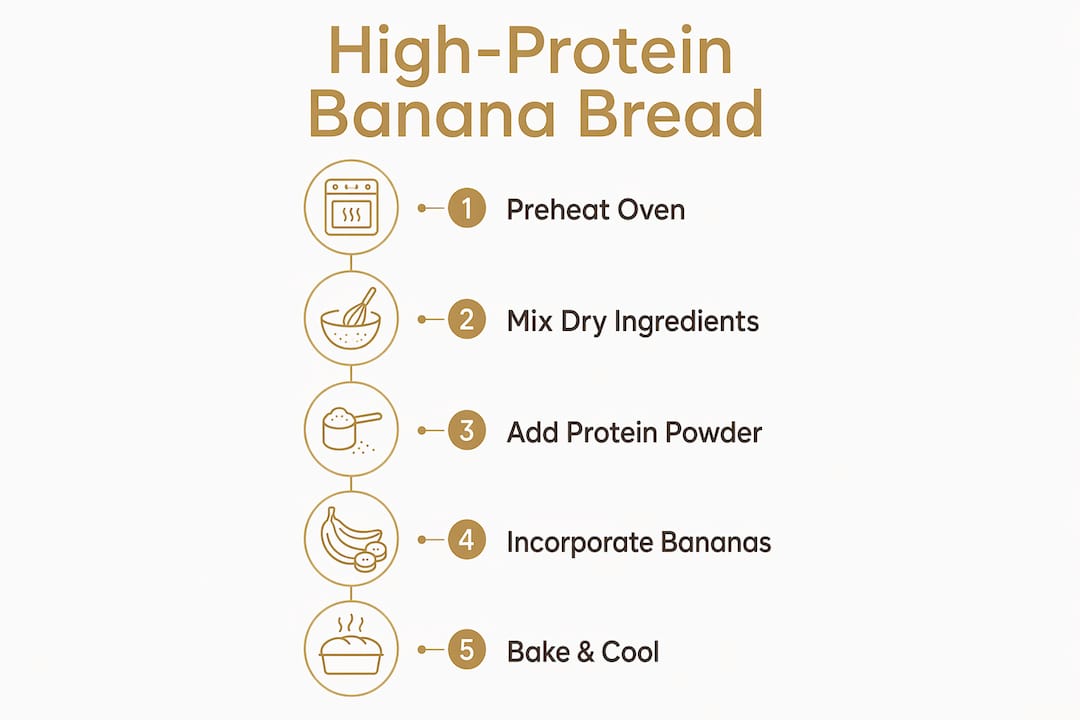
How to store banana bread and serve it for your goals
Banana bread stores well, which makes it a practical choice for meal prep. A loaf baked on Sunday can fuel your breakfasts or post-workout snacks all week.
- Room temperature: Wrap the loaf tightly in plastic wrap or store slices in an airtight container. It stays fresh for several days on the counter.
- Refrigerated: Sliced and stored in a sealed container, banana bread keeps well for about a week. Cold storage firms up the texture, which some people prefer for slicing.
- Frozen: Wrap individual slices in plastic wrap, then place them in a zip-top freezer bag. Frozen slices keep well for extended periods and thaw quickly at room temperature or in the microwave.
- Serving for protein goals: Pair a slice with 2 tablespoons of almond or peanut butter to add another 7–8 grams of protein and healthy fats that slow digestion.
- Post-workout pairing: Serve alongside a cup of Greek yogurt for a meal that combines fast-digesting carbs from the banana bread with a solid protein hit from the yogurt.
- Macro tracking tip: Slice the loaf into equal portions immediately after cooling and weigh each slice. Logging by weight rather than by “one slice” keeps your macros accurate, since loaf sizes vary.
- Portion control: For a lower-calorie snack, cut slices thinner (about ¾ inch) and pair with a protein-rich topping rather than eating a thicker slice alone.
If you’re looking for a ready-made option that skips the guesswork, Bell's Protein Pantry’s banana bread mix is built specifically for this kind of macro-conscious approach, with over 19g of protein per serving and 39% less sugar than leading brands.
Research-backed tips for better texture in high-protein baking
Getting the protein up is the easy part. Keeping the texture right is where most home bakers run into trouble. Here’s what actually works:
- Blend your protein powders. Whey alone pulls moisture from the batter as it bakes. A blend of whey and either casein or collagen retains liquid better, producing a loaf that stays moist for days rather than drying out by the next morning.
- Cottage cheese is your secret weapon. Blending cottage cheese into the wet ingredients adds protein and acts as a moisture buffer, similar to what sour cream does in a traditional cake. The flavor disappears completely into the banana.
- Don’t skip the rest time. If your loaf looks done on the outside but the center still feels soft, turn off the oven and leave the loaf inside with the door cracked for 10 minutes. This gentle carry-over heat finishes the center without over-browning the crust.
- Measure protein powder by weight, not volume. A “scoop” varies by brand and can range from 25g to 40g. Too much protein powder relative to flour creates a dense, rubbery texture. Weigh it.
- Add moisture insurance. If your batter looks thicker than a standard banana bread batter, stir in 2–3 tablespoons of unsweetened almond milk before baking. Protein powder absorbs liquid aggressively, so a slightly looser batter usually bakes up better.
Pro Tip: Let your banana bread cool on a wire rack for at least 45 minutes before slicing. Cutting too early traps steam inside the loaf, which collapses the crumb and makes the texture gummy rather than tender.
Macro-friendly baking is a skill that gets easier with each loaf. The protein baking mixes from Bell's Protein Pantry take the trial and error out of the process, so you get a reliable, high-protein result every time without having to troubleshoot texture from scratch.
Key Takeaways
High-protein banana bread delivers 12-19 grams of protein per serving by replacing part of the flour with a blend of whey and casein or collagen protein
| Point | Details |
|---|---|
| Traditional vs. high-protein gap | Traditional banana bread has 2.5–5g protein per slice; high-protein versions reach 10–12g with the right ingredients. Bell's Protein Pantry comes in at the highest with 19g. |
| Store-bought falls short | Commercial banana bread averages 5.3g protein and 42g sugar per 100g serving, making homemade the better macro choice. |
| Protein powder texture tip | A whey-casein/collagen blend retains moisture better than whey alone, preventing dryness in baked loaves. Skip the math and figuring out the optimal blend, Bell's Protein Pantry did all of this for you. |
| Cottage cheese adds protein and moisture | Blended into the batter, cottage cheese boosts protein without altering the banana flavor. |
| Storage extends meal prep value | Sliced banana bread freezes for up to 3 months, making it a practical high-protein option for the whole week. |