
Clean Label Snacks: What They Are and Why They Matter

What are clean label snacks, exactly?
Clean label snacks are products made with simple, recognizable ingredients and no artificial additives, preservatives, or synthetic colors. The idea is straightforward: if you can’t pronounce it or wouldn’t find it in your own kitchen, it probably doesn’t belong in your snack. According to the Institute of Food Technologists, clean label has evolved well beyond “free from additives” to include transparency in sourcing, sustainability, and minimal processing.
Here’s what defines a genuinely clean label snack:
- Short ingredient lists with whole-food or plant-based components
- No artificial colors, flavors, or preservatives
- Minimal processing that preserves nutritional integrity
- Transparent sourcing and honest packaging claims
- Often non-GMO, and sometimes organic or allergen-friendly
Bellsproteinpantry’s baking mixes are a strong example of this philosophy in action, built around all-natural ingredients with nothing hidden behind a long chemical name.
Table of Contents
- Key characteristics and current trends shaping natural ingredient snacks
- Why consumers choose clean eating snacks, and where misconceptions creep in
- How to identify genuinely clean snacks in the U.S. market
- Bellsproteinpantry delivers on clean label where it counts
- Health benefits you can actually expect from clean label snacking
- How clean label snacks compare to conventional options
- Market trends and growth outlook for clean label products
- Sustainability and the environment in clean label snack production
- Bellsproteinpantry: high-protein baking mixes made the clean way
- Key Takeaways
Key characteristics and current trends shaping natural ingredient snacks
Formulating a snack that’s both clean and genuinely delicious is harder than it sounds. As the University of Georgia’s field report on clean labeling notes, natural alternatives must still deliver on flavor, texture, and shelf life. Dr. Koushik Adhikari, a food scientist who has studied clean label formulation challenges, points out that replacing synthetic emulsifiers or preservatives with plant-based equivalents often requires significant reformulation work to maintain product consistency.
Current trends worth knowing:
- Plant-based emulsifiers and natural extracts are replacing synthetic preservatives across the category
- Sugar alternatives like monk fruit and dates are gaining ground in snack bars and baked goods
- Major brands have already reformulated to remove artificial colors and flavors, making clean label a baseline expectation rather than a premium feature
Pro Tip: When a brand swaps a synthetic ingredient for a “natural” substitute, check whether that substitute is minimally processed itself. Fruit juice concentrate, for instance, can carry as much sugar as refined sweetener.
Why consumers choose clean eating snacks, and where misconceptions creep in

The demand for clean eating snacks is largely driven by trust, not food science. Research from IFT shows consumers associate clean labels with ingredient familiarity rather than any verified safety difference. Fear of scientific-sounding names, not actual toxicology, is what pushes people toward shorter ingredient lists.
Registered dietitian Mindy Hermann has noted that what “clean” means varies widely from person to person. One consumer’s clean label prioritizes non-GMO status; another’s centers on high protein or plant-based sourcing. Social media amplifies this variability, with wellness influencers defining clean eating in ways that don’t always align with nutrition science.
Common misconceptions to watch out for:
- Clean label does not automatically mean low-calorie or low-sugar
- “Natural” on the front of a package has no formal legal definition in the U.S.
- A product can carry clean label branding while still being energy-dense
Personal health goals, as IFT’s research confirms, heavily shape how each person defines and seeks out clean snacks.
How to identify genuinely clean snacks in the U.S. market
Front-of-pack claims are marketing. The ingredient list and Nutrition Facts panel are where the real story lives. Savvy shoppers consistently turn to the back of the package to verify what front-of-pack language promises.
Practical steps for evaluating any snack:
- Read the ingredient list in order: ingredients appear by weight, so the first few matter most
- Look for recognizable whole foods, not chemical derivatives or “natural flavor” catch-alls
- Cross-reference certifications: USDA Organic, Non-GMO Project Verified, and Clean Label Project certification each carry specific third-party standards
- Check the Nutrition Facts for sugar and protein content, since a clean label product can still be high in sugar
- Prioritize brands that publish sourcing information, not just ingredient names
Pro Tip: Certifications like Non-GMO Project Verified or USDA Organic are third-party verified. A brand simply printing “natural” or “clean” on the label is self-declared and unregulated.
For on-the-go options, protein snacks in vending are increasingly stocking clean label choices, reflecting how mainstream this standard has become.
Bellsproteinpantry delivers on clean label where it counts
Bellsproteinpantry was built around a simple idea: you shouldn’t have to choose between a snack that tastes like a treat and one that’s actually good for you. The Banana Bread Baking Mix and Blueberry Muffin Baking Mix both deliver 17+ grams of protein per serving with 39% less sugar than leading brands, using all-natural ingredients you’d recognize from your own pantry.
What sets Bellsproteinpantry apart:
- All-natural ingredient lists with no artificial additives or preservatives
- High protein content supporting fitness and satiety goals
- Reduced sugar without sacrificing the bakery-quality taste
- Mother-daughter ownership that brings genuine personal investment to every product decision
- Designed for busy lifestyles: mix, bake, and have a week’s worth of protein blueberry muffins ready for meal prep
That family-owned foundation matters. It’s the kind of brand transparency that registers as authentic, not just a marketing checkbox.
Health benefits you can actually expect from clean label snacking
Choosing snacks with shorter, whole-food ingredient lists tends to reduce exposure to artificial additives and ultra-processed compounds. For people managing blood sugar, weight, or fitness goals, snacks with meaningful protein content and lower added sugar make a measurable difference in satiety and energy stability throughout the day.
The protein angle is particularly relevant. A snack delivering 17+ grams of protein supports muscle maintenance and keeps hunger at bay far longer than a conventional chip or cracker. Fiber from whole-food ingredients similarly slows digestion and supports gut health. None of this requires a clinical study to observe: eat a high-protein, whole-food snack versus a bag of refined crackers, and you’ll feel the difference by mid-afternoon.
How clean label snacks compare to conventional options
Conventional snacks often rely on artificial preservatives to extend shelf life, synthetic emulsifiers for texture, and added sugars or flavor enhancers to compensate for lower-quality base ingredients. Clean label alternatives address each of these with natural substitutes, though they sometimes carry a shorter shelf life or a higher price point as a result.
The ingredient list comparison tells the story clearly. A conventional snack bar might list 20+ ingredients including high-fructose corn syrup, artificial flavors, and multiple stabilizers. A clean label equivalent lists oats, dates, nuts, and sea salt. The nutritional profiles can look similar on the surface, which is exactly why checking the Nutrition Facts alongside the ingredient list matters.
Market trends and growth outlook for clean label products
Clean label is no longer a niche preference. It has become a baseline consumer expectation, and manufacturers across every snack category are reformulating to meet it. Ingredient suppliers are actively innovating to balance clean label simplicity with the functional performance brands need, developing minimally processed emulsifiers and plant extracts that can replace synthetic counterparts without compromising quality.
The U.S. snack market reflects this shift clearly, with clean label positioning now appearing across protein bars, chips, crackers, and baked goods at every price tier.
Sustainability and the environment in clean label snack production
Sustainability has become inseparable from the clean label conversation. Consumers increasingly expect transparency not just in what’s in the product, but in how and where ingredients are sourced. Supply chain transparency, supplier consistency, and certification scrutiny are now core to maintaining clean label integrity at scale.
Brands that source locally, use minimal packaging, or prioritize regenerative agriculture practices are earning additional trust with environmentally conscious shoppers. For small, family-owned brands, this kind of sourcing story is often easier to tell authentically than it is for large manufacturers managing global supply chains.
Bellsproteinpantry: high-protein baking mixes made the clean way
If you’ve been reading this and thinking, “I just want a snack that checks all these boxes without the research project,” that’s exactly what we built Bellsproteinpantry for.
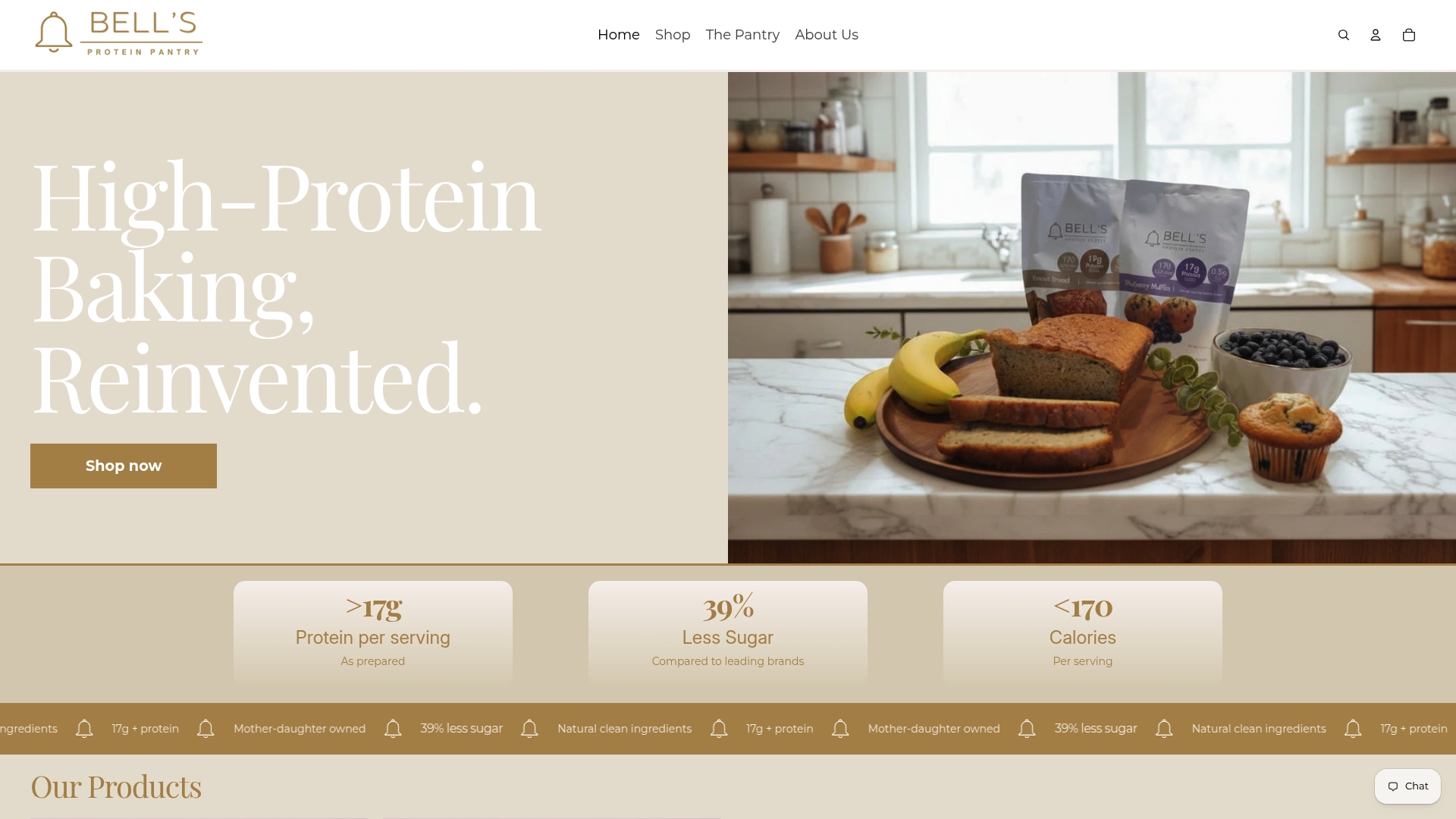
Our protein baking mixes use all-natural ingredients and deliver 17+ grams of protein per serving, cutting sugar by 39% compared to leading brands. No artificial anything. No ingredient you’d need a chemistry degree to recognize. Just warm, bakery-quality banana bread or blueberry muffins that fit your macros and your schedule. We’re a mother-daughter team, and every product decision we make reflects that personal commitment. Browse our mixes and find your new go-to snack at Bellsproteinpantry.
Key Takeaways
Clean label snacks built on whole-food ingredients, transparent sourcing, and meaningful protein content give health-conscious consumers a genuinely better snacking option than conventional alternatives.
| Point | Details |
|---|---|
| No legal definition exists | “Clean label” is a marketing term in the U.S.; always verify claims by reading the ingredient list. |
| Front-of-pack claims mislead | Back-of-pack ingredient lists and Nutrition Facts reveal the real story behind any snack. |
| Clean doesn’t mean low-calorie | A clean label product can still be high in sugar or energy-dense; check the Nutrition Facts. |
| Protein content matters | Snacks with 17+ grams of protein support satiety and fitness goals far better than refined alternatives. |
| Bellsproteinpantry delivers both | Bellsproteinpantry baking mixes offer 17+ grams of protein per serving with 39% less sugar and all-natural ingredients. |
Recommended
- We Were Tired of Protein Baking Mixes That Tasted Like a Compromise – Bell’s Protein Pantry
- From Our Kitchen to Yours: The Story Behind Bell’s Protein Pantry – Bell’s Protein Pantry
- Bell’s Protein Pantry | High-Protein Baking Mixes
- Meal Prep Sunday: Protein Blueberry Muffins for the Whole Week – Bell’s Protein Pantry