
Healthy Blueberry Muffin Recipe: High-Protein Guide

Make protein-rich blueberry muffins that deliver 10–15 g of protein per serving if you bake from scratch (with Greek yogurt, eggs, and protein powder), or use Bell’s Protein Pantry blueberry muffin mix for a consistent 17–19 g of protein per serving. Blueberries bring real nutritional weight to the table: research published in Frontiers in Nutrition links habitual blueberry intake to cardiovascular, metabolic, and cognitive benefits through their anthocyanin and phytochemical content. Swap in Greek yogurt and you can add a notable amount of protein per muffin compared with a standard recipe. Whether you bake from scratch or reach for a premix on a busy Monday morning, this guide covers every step.
Table of Contents
- What goes into a healthy blueberry muffin recipe?
- How do you bake high-protein blueberry muffins step by step?
- How do you hit 15–19 g of protein per muffin?
- How do you store and meal-prep blueberry muffins for the week?
- When does a high-protein premix make more sense than DIY?
- Key Takeaways
- Why we think the premix question deserves a straight answer
- Bell’s Protein Pantry blueberry muffin mix: the fast lane to 17 g of protein
What goes into a healthy blueberry muffin recipe?
Core ingredients
A solid high-protein base starts with these:
- 1¾ cups white whole wheat flour (or whole wheat pastry flour)
- ¾ cup plain Greek yogurt (full-fat for moisture and protein)
- 2 large eggs
- ½ cup honey or pure maple syrup
- 5 tablespoons unsalted butter or neutral oil (avocado or melted coconut oil)
- ¼ cup milk (dairy or plant-based)
- 1½ teaspoons baking powder, ½ teaspoon baking soda, ½ teaspoon salt
- 1½ cups fresh or frozen blueberries
- 1 tablespoon flour (for tossing the berries)
Healthy swaps worth knowing
| Standard ingredient | Healthier swap | Benefit |
|---|---|---|
| All-purpose flour | White whole wheat or spelt flour | More fiber and nutrients |
| Refined white sugar | Honey or maple syrup | Lower glycemic impact |
| Butter | Avocado oil or unsweetened applesauce | Less saturated fat |
| Regular yogurt | Plain Greek yogurt | ~6 g extra protein per muffin |
| Dairy milk | Unsweetened oat or almond milk | Dairy-free option |
| Wheat flour | Certified GF oat or rice flour blend | Gluten-free variation |
Allergen-friendly notes: For a vegan version, replace each egg with a flax egg (1 tablespoon ground flaxseed + 3 tablespoons water, rested 5 minutes). Use plant-based yogurt such as unsweetened coconut or soy yogurt and a vegan protein powder. For gluten-free muffins, a 1:1 gluten-free flour blend works, though the batter may need an extra tablespoon of liquid since GF flours tend to absorb more moisture.
Pro Tip: If you’re using melted coconut oil, bring your Greek yogurt to room temperature first. Cold yogurt causes the oil to re-solidify and creates lumpy, uneven batter.
How do you bake high-protein blueberry muffins step by step?
The method
| Step | Action | Detail |
|---|---|---|
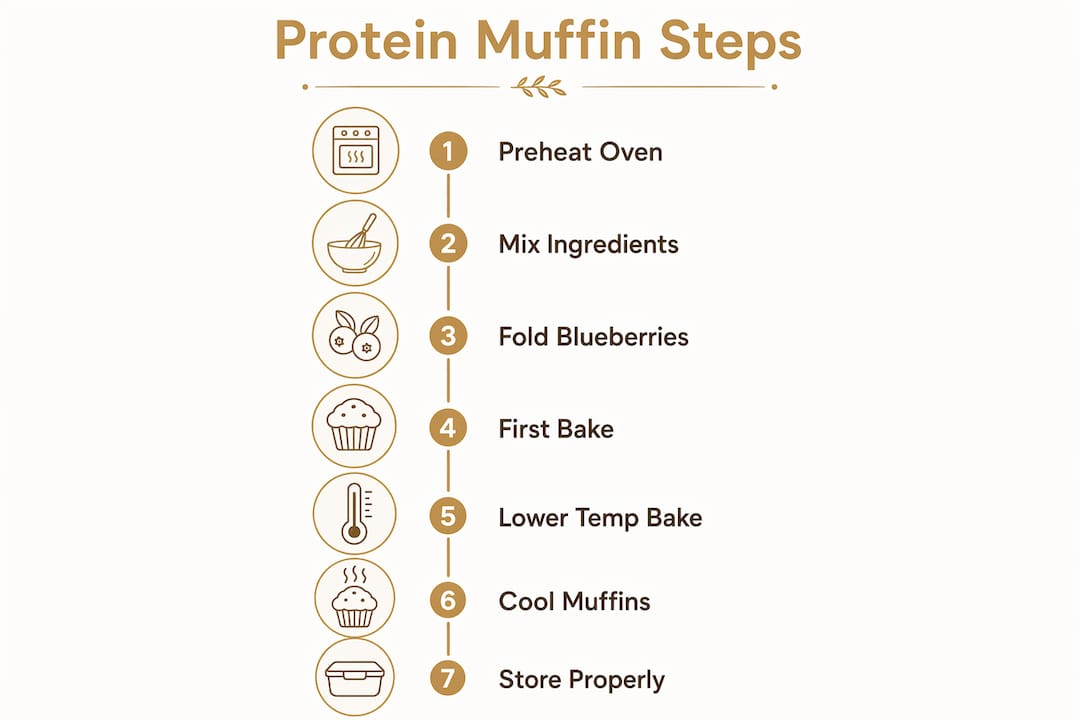
| 1 | Preheat | 425°F for standard muffins; 350°F for a gentler bake |
| 2 | Mix wet ingredients | Whisk butter/oil, honey, yogurt, eggs, milk, and vanilla in one large bowl |
| 3 | Add dry ingredients | Stir in flour, baking powder, baking soda, and salt until just combined |
| 4 | Prep blueberries | Toss berries in 1 tablespoon flour, then fold gently into batter |
| 5 | Fill and bake | Fill 12 muffin cups ¾ full; bake 18–22 minutes until a toothpick comes out clean |
| 6 | Cool | Rest in the pan 5–10 minutes, then transfer to a wire rack |
A two-temperature approach works well: start at 425°F for 10 minutes to get a tall dome, then drop to 375°F for another 10 minutes to finish the centers without drying out the tops. Mini muffins bake faster at 350°F for 10–13 minutes.
Troubleshooting common problems
Over-mixing is the top reason protein-rich muffins turn out dense and tough. Once you add the flour, stop stirring when a few small lumps remain. Those lumps disappear in the oven; vigorous stirring develops gluten and ruins the crumb. If blueberries keep sinking, the fix is simple: toss them in flour before folding. That light coating helps them grip the batter and stay suspended. Flat tops usually mean the oven wasn’t hot enough at the start, or the batter was too thin from excess liquid.
Pro Tip: Protein powder absorbs liquid quickly. If you add a scoop to the batter, let it rest for 2 minutes before filling the muffin cups so the batter thickens to the right consistency.
How do you hit 15–19 g of protein per muffin?
Greek yogurt is the easiest, lowest-effort protein booster available. According to tested recipe data, it adds roughly 6 g of protein per muffin while keeping the texture moist and tender. Stack it with other add-ins to reach higher targets:
- Greek yogurt (¾ cup): ~6 g protein contribution across the batch
- 2 large eggs: ~12 g total across 12 muffins (~1 g per muffin)
- 1 scoop whey or plant protein powder: 20–25 g total across the batch (~2 g per muffin)
- Chickpea flour (partial swap for wheat flour): adds plant-based protein and soluble fiber
- Almond flour (partial swap): adds healthy fats and a small protein bump
- Egg whites (2 extra): ~7 g additional protein across the batch
A practical example: Greek yogurt + 2 eggs + 1 scoop of whey protein powder gets you to roughly 10–12 g per muffin in a DIY recipe. Pair that with a high-protein flour base and you can approach 15 g. To reliably hit 17–19 g per serving, a purpose-built high-protein baking mix is the most consistent route because the protein ratio is already calibrated.
Statistic callout: A no-added-sugar Greek yogurt blueberry muffin can supply approximately 6 g protein and 4 g sugar per muffin when naturally sweetened with banana, showing how much DIY can accomplish without protein powder.
High-protein muffins also curb mid-morning energy drops better than standard bakery muffins, making them a genuinely better portable breakfast for busy days.
How do you store and meal-prep blueberry muffins for the week?
| Method | Duration | Best practice |
|---|---|---|
| Room temperature | Up to 3–4 days | Airtight container, cool dry place |
| Refrigerator | Up to 1 week | Wrap individually to prevent drying |
| Freezer | Up to 3 months | Cool completely, wrap each muffin, store in a sealed bag |
| Microwave reheat | 20 seconds | From frozen; cover with a damp paper towel |
| Oven reheat | — | Restores a slightly crisp top |
A weekly batch takes about 15 minutes of prep and 18–22 minutes of bake time. Bake on Sunday, cool completely, wrap individually, and freeze. Pull two or three muffins the night before and they’re ready by morning. Bell’s Protein Pantry’s own meal-prep guide walks through exactly this kind of weekly batch strategy if you want a step-by-step schedule.
Pro Tip: Flash-cool muffins on a wire rack before wrapping. Sealing them while still warm traps steam and makes the bottoms soggy by the next day.
When does a high-protein premix make more sense than DIY?
Sourcing whole wheat flour, Greek yogurt, protein powder, natural sweetener, and fresh blueberries takes time and adds up at the register. For busy professionals who want consistent macros without the measuring and cleanup, a premix closes that gap fast.
DIY vs. premix at a glance
| Factor | DIY from scratch | Bell’s Protein Pantry premix |
|---|---|---|
| Protein per serving | 10–15 g (with Greek yogurt, eggs, and protein powder) | 17–19 g (calibrated) |
| Sugar content | Varies by recipe | Reduced by 39% vs. leading brands |
| Prep time | 15–20 min active | Under 10 min, one bowl |
| Ingredient sourcing | Multiple items needed | One bag, add wet ingredients |
| Consistency | Recipe-dependent | Same result every batch |
Bell’s Protein Pantry uses all-natural ingredients and delivers 17–19 g of protein per serving with significantly less sugar than standard mixes. The mother-daughter team behind the brand built it specifically for people who want bakery-quality results without spending an hour in the kitchen. You can still add Greek yogurt or egg whites to push the protein even higher.
Choose DIY when you want full ingredient control, have specific allergen needs, or enjoy the process. Choose the premix when your schedule is tight, you’re meal-prepping for the week, or you need reliable macros every single time.
Pro Tip: Even with a premix, tossing your blueberries in a teaspoon of flour before folding them in keeps them from sinking. The technique works regardless of what base you’re using.
Key Takeaways
A high-protein blueberry muffin recipe built around Greek yogurt, whole grain flour, and natural sweeteners delivers real nutritional value, and Bell’s Protein Pantry premix is the fastest way to achieve a high protein content per serving consistently.
| Point | Details |
|---|---|
| Protein target is reachable DIY | Greek yogurt adds ~6 g protein per muffin; combining with eggs and protein powder gets to 10–15 g per muffin. |
| Technique prevents common failures | Avoid over-mixing and toss blueberries in flour to keep muffins tender and berries suspended. |
| Meal prep saves your week | Bake on Sunday, freeze individually, and reheat in 20 seconds for a ready breakfast all week. |
| Bell’s Protein Pantry hits 17–19 g | The premix delivers calibrated protein and 39% less sugar than leading brands in under 10 minutes of prep. |
Why we think the premix question deserves a straight answer
Most healthy baking content hedges on the DIY-vs-premix question, as if admitting a premix exists would undercut the recipe. We disagree. The honest answer is that both routes work, and the right one depends entirely on your week.
What we’ve found is that the people who actually stick with high-protein baking long-term are the ones who batch-bake on Sunday and keep the freezer stocked. The recipe in this guide is genuinely good, and the texture tweaks (room-temperature yogurt, the flour-toss on berries, the two-temperature bake) make a real difference in the final muffin. But on the weeks when Sunday disappears, having a bag of Bell’s Protein Pantry mix in the pantry means you still have a protein-forward breakfast on Monday without the planning.
Family-tested flavor matters too. A muffin that hits 17 g of protein but tastes like a protein bar won’t get eaten. The goal is something that actually lands on the breakfast table and gets finished, not just something that looks good on a macro tracker.
Bell’s Protein Pantry blueberry muffin mix: the fast lane to 17 g of protein
Spending 45 minutes sourcing, measuring, and cleaning up is the reason most people abandon healthy baking by week three. Bell’s Protein Pantry blueberry muffin mix cuts that down to one bowl, a few wet ingredients, and under 10 minutes of hands-on time, while delivering 17–19 g of protein per serving and 39% less sugar than leading brands.

The mix uses all-natural ingredients, so there’s nothing in the bag you’d need to look up. Prep is straightforward: combine the mix with your wet ingredients, fold in blueberries, and bake. Want to push the protein higher? Add a scoop of your preferred protein powder or a dollop of Greek yogurt. The batter handles both without losing texture. It’s the kind of product that fits a gym morning, a Sunday meal-prep session, or a quick weeknight bake equally well.
Browse the full protein baking mix collection and stock your pantry before the next busy week hits.
Recommended
- Meal Prep Sunday: Protein Blueberry Muffins for the Whole Week – Bell’s Protein Pantry
- High-Protein Banana Bread: The Breakfast Hack That Replaced My Protein – Bell’s Protein Pantry
- Blueberry Muffin – Bell’s Protein Pantry
- We Were Tired of Protein Baking Mixes That Tasted Like a Compromise – Bell’s Protein Pantry