
High Protein Muffins: 12–19g Per Serving Recipe Guide

What makes high protein muffins worth baking every week?
High protein muffins deliver a significant amount of protein per muffin by combining whey protein powder, cottage cheese, and eggs in one portable, bakery-quality package. That’s not a minor upgrade from a standard muffin. It’s the difference between a breakfast that keeps you full until lunch and one that leaves you raiding the snack drawer by 10 AM.
Here’s the quick snapshot of what a solid protein muffin recipe looks like:
- Protein per muffin: varies depending on your protein sources and ratios
- Core protein sources: whey protein powder, cottage cheese, eggs or egg whites
- Typical macros (per muffin): 133–198 calories, 8–21g carbohydrates, 3–9g fat
- Bake time: roughly 18–22 minutes total using the two-temperature method
- Meal prep friendly: freeze individually wrapped for up to 3 months
- Best for: breakfast, post-workout snacks, school lunches, grab-and-go mornings
These muffins work for athletes, but they’re just as useful for families who want a nutritious snack that steadies energy without a sugar spike. A tray of warm blueberry muffins cooling on your counter can be a full week’s worth of breakfasts. That’s the kind of practical nutrition we love at Bell's Protein Pantry.
Table of Contents
- What ingredients do high protein muffins actually need?
- How do you make high protein muffins step by step?
- What flavor variations work best with a protein muffin base?
- What do expert bakers know about avoiding dry or gummy muffins?
- How do you store and meal prep protein muffins for the week?
- Why Bell's Protein Pantry is a trusted name in protein baking
- Ready to skip the measuring and still hit your protein goals?
- Key Takeaways
What ingredients do high protein muffins actually need?
The protein in these muffins comes from three workhorses: whey protein powder, cottage cheese, and eggs. Get those right, and everything else falls into place.
The core protein sources
Whey protein powder is the most efficient way to boost protein without adding bulk. Vanilla whey is the most versatile flavor for baking because it complements both sweet and neutral batters. Use an unsweetened variety when you want control over sweetness and to avoid an artificial aftertaste.
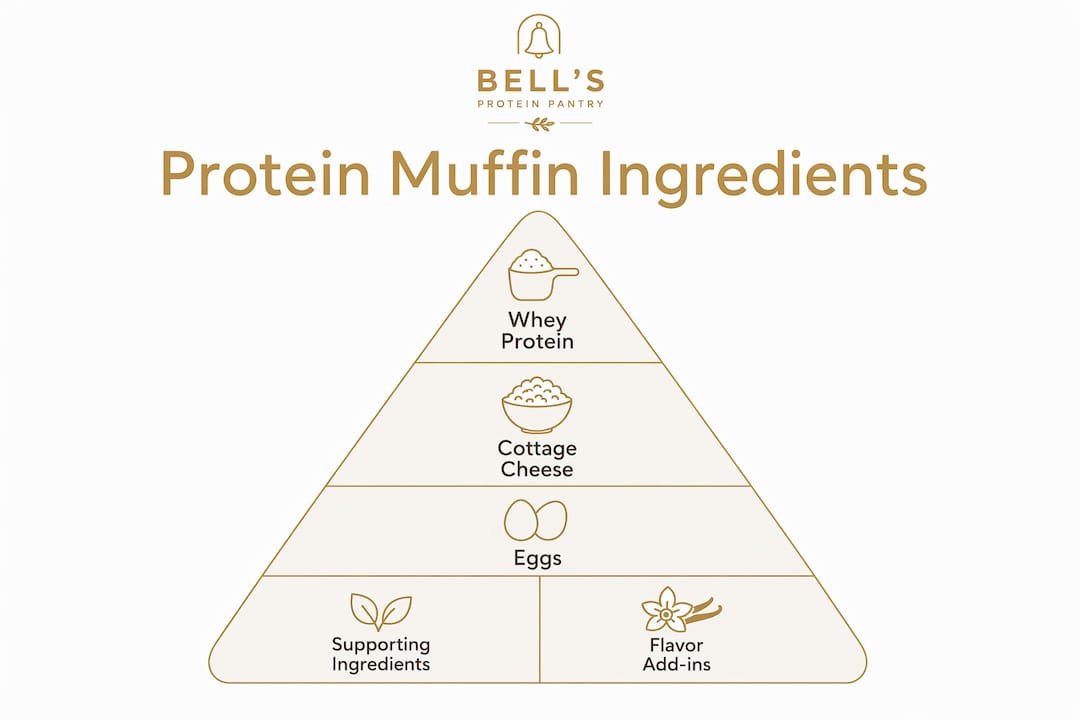
Cottage cheese is the ingredient that surprises most home bakers. Blended smooth, it adds moisture and a tender, cake-like crumb while contributing 8–10 grams of protein per muffin. You genuinely cannot taste it once it’s baked in. Full-fat cottage cheese gives the most tender result; low-fat versions work but produce a slightly drier muffin.
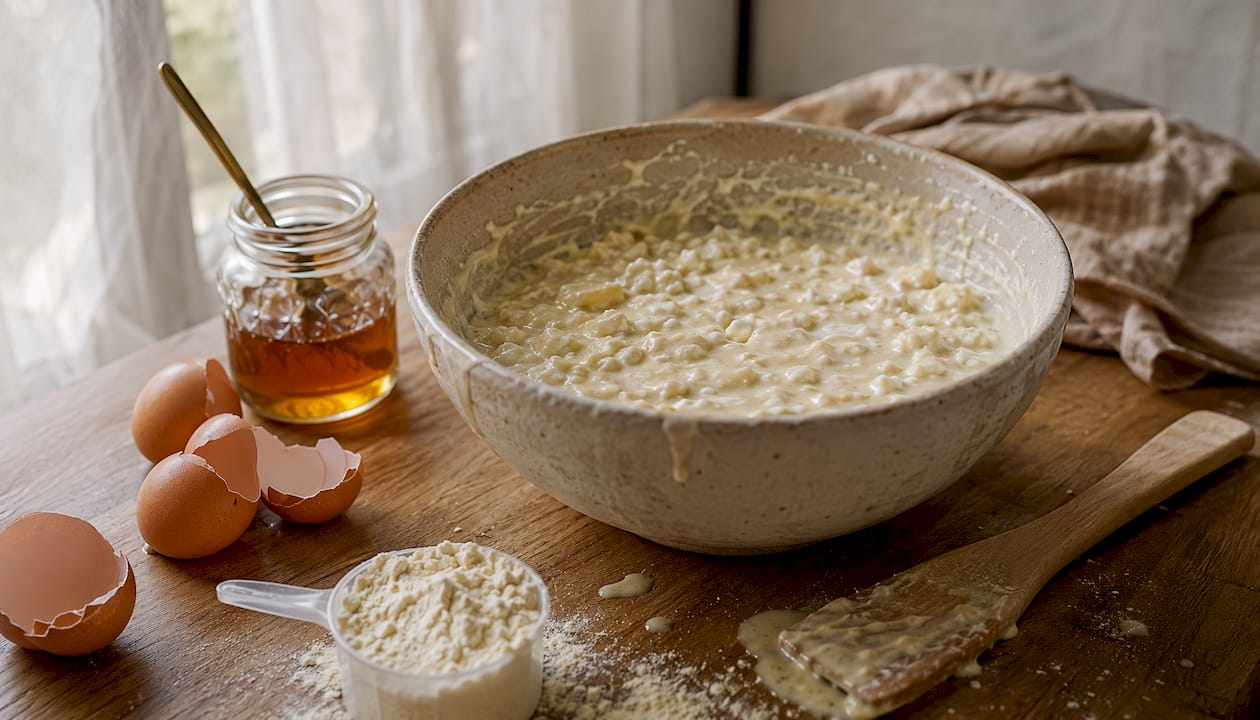
Eggs bind everything together and add lift. Whole eggs contribute healthy fats and richness. Liquid egg whites are a leaner swap that reduces fat by roughly 10g and about 90 calories per batch, though the muffins will be slightly less rich.
Supporting ingredients and what they do
| Ingredient | Role | Best Substitution |
|---|---|---|
| Oat flour | Structure, fiber, slow carbs | Gluten-free 1-to-1 blend (neutral macro impact) |
| Greek yogurt | Moisture, tang, extra protein | Cottage cheese blended (higher protein, more sodium) |
| Honey or maple syrup | Natural sweetness | Xylitol or erythritol for sugar-free |
| Avocado or olive oil | Tenderness, fat balance | Nut butter (adds healthy fats, changes flavor) |
| Baking powder | Rise and dome | No direct swap; do not reduce |
| Cinnamon, vanilla extract | Flavor depth | Any warm spice blend |
Substitution notes worth knowing:
- Swapping Greek yogurt for cottage cheese increases protein and sodium but keeps moisture levels similar.
- Plant-based protein powders like pea or casein absorb more liquid than whey, so increase your liquid ingredients by 10% to prevent a dry, dense result.
- Replacing oil with nut butter (almond, peanut, or sunflower seed) adds healthy fats and a subtle flavor that pairs well with chocolate chips or banana.
Pro Tip: Blend cottage cheese completely smooth before adding it to your batter. A quick blitz in a food processor or blender takes 30 seconds and eliminates any curds that could create uneven texture in the finished muffin.
How do you make high protein muffins step by step?
Follow this method and you’ll get domed, bakery-style tops with a moist, tender crumb every time.
-
Preheat your oven to 375°F. Spray a 12-cup muffin tin with nonstick cooking spray, or line with paper liners. A silicone tray gives the cleanest release without added fat.
-
Blend your oats if using whole rolled oats. Pulse them in a food processor or blender until they reach a fine flour consistency. This step takes about 20 seconds and makes a real difference in texture.
-
Whisk the dry ingredients together. Combine oat flour, whey protein powder, baking powder, cinnamon, and salt in a large bowl. Distributing these evenly now prevents protein clumps in the finished muffin.
-
Mix the wet ingredients separately. In a second bowl, combine blended cottage cheese, Greek yogurt, eggs, maple syrup, oil, and vanilla extract. Whisk until smooth and uniform.
-
Fold wet into dry, gently. Pour the wet mixture into the dry bowl and fold just until combined. Stop as soon as you no longer see dry streaks. Overmixing develops excess protein structure and produces a gummy, rubbery muffin.
-
Let the batter rest for 5 minutes. This rehydrates the oat flour and thickens the batter, which makes for a more tender crumb and helps the muffins hold their shape when scooped.
-
Portion evenly using an ice cream scoop. Fill each cup about three-quarters full. Uniform portions mean every muffin bakes at the same rate, so you won’t end up with some overdone and some underdone.
-
Bake at 375°F for 5 minutes, then reduce to 350°F for 13–15 minutes. Do not open the oven door between the two temperatures. This two-stage method creates a quick rise from the initial heat burst, giving you that bakery-style dome, then finishes the interior gently without burning the edges.
-
Check for doneness with a toothpick. It should come out with a fine crumb, not totally clean. Protein muffins go from moist to dry fast, so pull them slightly earlier than you think.
-
Cool in the pan for 10 minutes, then transfer to a wire rack. Letting them sit loosely covered overnight makes the liners peel off cleanly the next morning.
Pro Tip: If your muffins consistently come out dry, reduce the second baking stage by 2 minutes before adjusting any ingredients. Overbaking is the most common culprit, and it’s the easiest fix.
What flavor variations work best with a protein muffin base?
The base recipe is a blank canvas. Once you’ve nailed the texture, the flavor combinations are where things get fun.
Chocolate protein muffins are the crowd favorite. Use chocolate-flavored whey protein powder and fold in a handful of mini chocolate chips. For double chocolate, add a tablespoon of cocoa powder to the dry ingredients.
Blueberry protein muffins work beautifully with vanilla whey and blueberry-flavored Greek yogurt. Press a few fresh blueberries into the tops just before baking for a bakery-style finish. The same method works with raspberries, blackberries, or cherries.
Banana protein muffins use ripe, brown-spotted bananas mashed into the wet ingredients. The natural sweetness means you can cut back on added sweetener significantly. Pair with cinnamon and walnuts for a classic combination.
- Pumpkin spice: Swap Greek yogurt for canned pumpkin puree, increase cinnamon to 2 teaspoons, and add half a teaspoon of pumpkin pie spice.
- Lemon: Use lemon-flavored yogurt and stir the zest of one lemon into the wet ingredients.
- Nutella-style: Replace oil with chocolate hazelnut butter and fold in finely chopped hazelnuts.
- Apple cinnamon: Use unsweetened applesauce in place of oil for moisture and a neutral, lightly sweet flavor.
A note on dairy-free versions: swap Greek yogurt for plain coconut yogurt at a 1:1 ratio. You’ll lose a small amount of protein per muffin, but the texture stays moist. For fully plant-based muffins, use a pea protein or plant-based blend and remember to increase liquid by 10% to compensate for the higher absorption rate.
Flavor add-ins like chocolate chips, nuts, or dried fruit don’t significantly change the protein content, but they do affect moisture. Chocolate chips add a small amount of fat and sugar; nuts add fat and crunch. Both work well folded into the batter just before portioning. Check out the high-protein banana bread approach for more inspiration on flavor-forward protein baking.
What do expert bakers know about avoiding dry or gummy muffins?
The fear that protein muffins will turn out chalky or dry is real, but both problems are preventable. Most texture failures come down to three causes: the wrong protein powder, overmixing, or overbaking.

Moisture balance
Protein powders absorb liquid aggressively, especially plant-based varieties. Whey requires less added liquid than pea or casein protein, which is why balancing moisture with moist whole foods like cottage cheese, yogurt, or applesauce is so important. These ingredients do double duty: they add protein and keep the crumb from drying out during baking.
Avoid nonfat yogurt. The fat in whole-milk or 2% Greek yogurt is what keeps muffins tender for days after baking. Nonfat versions produce a noticeably drier result.
Troubleshooting guide
- Muffins are dry and crumbly: You overbaked them, used too much protein powder, or used casein/collagen protein. Reduce bake time by 2 minutes, or swap 20g of protein powder for 20g of almond flour.
- Muffins are gummy or rubbery: The batter was overmixed. Fold dry into wet just until combined, and stop immediately.
- Muffins are dense and flat: The batter was too wet, or the protein powder absorbed too much liquid before baking. Let the batter rest 5 minutes before scooping, and check that your baking powder is fresh.
- Muffins taste chalky: The protein powder flavor is too strong. Use a flavored whey you already enjoy drinking, or reduce the powder by 10g and replace with oat flour.
- Tops are browning too fast: Your oven runs hot. Use an oven thermometer to verify temperature, and tent loosely with foil after the first 5 minutes if needed.
- Liners stick: Let muffins cool completely, or leave them loosely covered overnight. The liners peel cleanly once the muffins have fully set.
One more thing worth knowing: casein protein absorbs so much liquid that it consistently produces dry, dense muffins regardless of how carefully you balance other ingredients. Stick with whey isolate or a plant-based blend for the best results.
How do you store and meal prep protein muffins for the week?
Protein muffins are one of the best meal prep bakes you can make. Bake a batch on Sunday and you have grab-and-go breakfasts or snacks ready for the entire week, with almost no morning effort required.
Cooling and packaging:
- Let muffins cool completely on a wire rack before storing. Sealing warm muffins traps steam and creates soggy bottoms.
- Store at room temperature for no more than 1 day if your recipe contains cottage cheese or other high-moisture dairy. These ingredients spoil quickly outside the fridge.
- Refrigerate in an airtight container for up to 5 days. Wrap individually in plastic wrap or beeswax wrap to prevent them from drying out against each other.
Freezing for longer storage:
- Wrap each muffin individually in plastic wrap, then place in a zip-top freezer bag or airtight container.
- Freeze for up to 3 months without quality loss. Label the bag with the date so you always know what’s in there.
- Thaw overnight in the refrigerator, or microwave from frozen for 60–90 seconds. They reheat well and taste nearly fresh-baked.
Meal prep tips:
- Bake a double batch and freeze half immediately. This gives you two weeks of breakfasts from one baking session.
- Use an ice cream scoop for portioning so every muffin is the same size and bakes evenly. Consistent size also makes tracking macros straightforward.
- For a full meal prep station setup that keeps your baking organized and efficient, a dedicated prep area with labeled containers makes the whole process faster.
A batch of protein muffins paired with a piece of fruit or a cup of coffee covers a complete, balanced breakfast in under two minutes. That’s the kind of convenience that actually makes healthy eating stick.
Why Bell's Protein Pantry is a trusted name in protein baking
We started Bell' s Protein Pantry because we were tired of choosing between food that tasted good and food that was actually good for you. As a mother-daughter team, we know what it means to feed a family on a busy schedule while still caring about what goes into every bite. That’s the heart of everything we make.
Our high-protein baking mixes are built around all-natural ingredients with no artificial fillers, and they deliver over 17 grams of protein per serving with 39% less sugar than leading brands. You get real nutrition without sacrificing the flavor that makes baking worth doing.
Our flagship mixes include:
- Blueberry Muffin Mix: A ready-to-bake mix that produces moist, tender muffins with 17+ grams of protein and a fraction of the sugar you’d find in a standard box mix.
- Banana Bread Mix: The same all-natural, high-protein formula in a classic banana bread format, perfect for slicing and freezing for the week ahead.
Both mixes are designed for busy people who want bakery-quality results without spending an hour measuring and sourcing specialty ingredients. You add a few simple wet ingredients, mix, and bake. The hard work is already done.
We share recipes, tips, and meal prep ideas on our blog because we genuinely believe that eating well should feel approachable, not like a chore. Our blueberry muffin meal prep guide walks through exactly how to bake a full week’s worth of protein muffins in one session, including freezing and reheating tips that keep them tasting fresh.
Ready to skip the measuring and still hit your protein goals?
Baking protein muffins from scratch is absolutely worth it, and everything in this guide gives you the tools to do it well. But if you want the same 17+ grams of protein per serving without sourcing five different specialty ingredients, Bell's Protein Pantry’s baking mixes are built for exactly that.

Our mixes use all-natural ingredients, contain 39% less sugar than leading brands, and come together in minutes. No protein powder math, no texture guesswork, no compromise on flavor. Whether you’re baking for yourself, your kids, or your whole household, the result is a muffin you’ll actually want to eat every morning. Families who want convenient, nutritious meals without the weeknight scramble will find our mixes fit naturally into any routine.
Browse our protein baking mixes and find the flavor that fits your week.
Key Takeaways
High protein muffins consistently deliver 12–19 grams of protein per serving when built on whey protein powder, cottage cheese, and eggs, making them one of the most practical high-protein breakfasts you can meal prep at home.
| Point | Details |
|---|---|
| Protein range per muffin | Recipes deliver 12–19g protein per muffin, with cottage cheese-based recipes providing 8–10g and blends with whey, Greek yogurt, and eggs delivering up to 19g depending on ingredient ratios and protein sources used. |
| Two-temperature baking | Bake at 375°F for 5 minutes, then reduce to 350°F for 13–15 minutes to get domed tops and a fully baked interior. |
| Freeze for 3 months | Individually wrapped muffins freeze without quality loss for up to 3 months, making them ideal for weekly meal prep. |
| Avoid overmixing | Fold batter just until combined; overmixing causes gummy, rubbery texture in low-gluten protein muffin recipes. |
| Bell's Protein Pantry mixes | Bell's Protein Pantry baking mixes deliver 17+ grams of protein per serving with 39% less sugar than leading brands. |