
Low Sugar Baking: Easy Swaps & Recipes for Home Bakers

Cut refined sugar substantially, compensate with one or two complementary alternatives, and make a few small technique tweaks. That’s the whole formula. You don’t need to overhaul your pantry or spend a weekend troubleshooting. Here’s the short version you can use today:
- Reduce, don’t eliminate. Keeping a portion of the original sugar preserves browning, spread, and mouthfeel better than any full-swap approach.
- Swap the rest with coconut sugar (1:1), honey (¾ cup per 1 cup sugar, reduce liquids), or mashed banana for moisture-rich bakes.
- Lower oven temp by 25°F when using liquid sweeteners to prevent over-browning.
- Xylitol warning: keep it away from dogs. Even small amounts are toxic to them.
- Want a no-fuss shortcut? Bellsproteinpantry’s high-protein baking mixes deliver high protein per serving and less sugar compared to leading brands, with zero guesswork.
Table of Contents
- What are the best fast swaps for low sugar baking?
- Why does sugar do so much more than sweeten?
- Exact substitution ratios you can use right now
- How small technique changes protect texture when you cut sugar
- Three easy low-sugar recipes worth making this week
- Bellsproteinpantry mixes: the fail-safe option for busy bakers
- How to fix the most common low-sugar baking problems
- How long does low-sugar baking take, and what does it cost?
- How to store reduced-sugar bakes so they stay fresh
- Key Takeaways
- Why we believe in the hybrid approach
- Ready to try reduced-sugar, high-protein baking mixes?
- Further reading and sources used in this guide
What are the best fast swaps for low sugar baking?
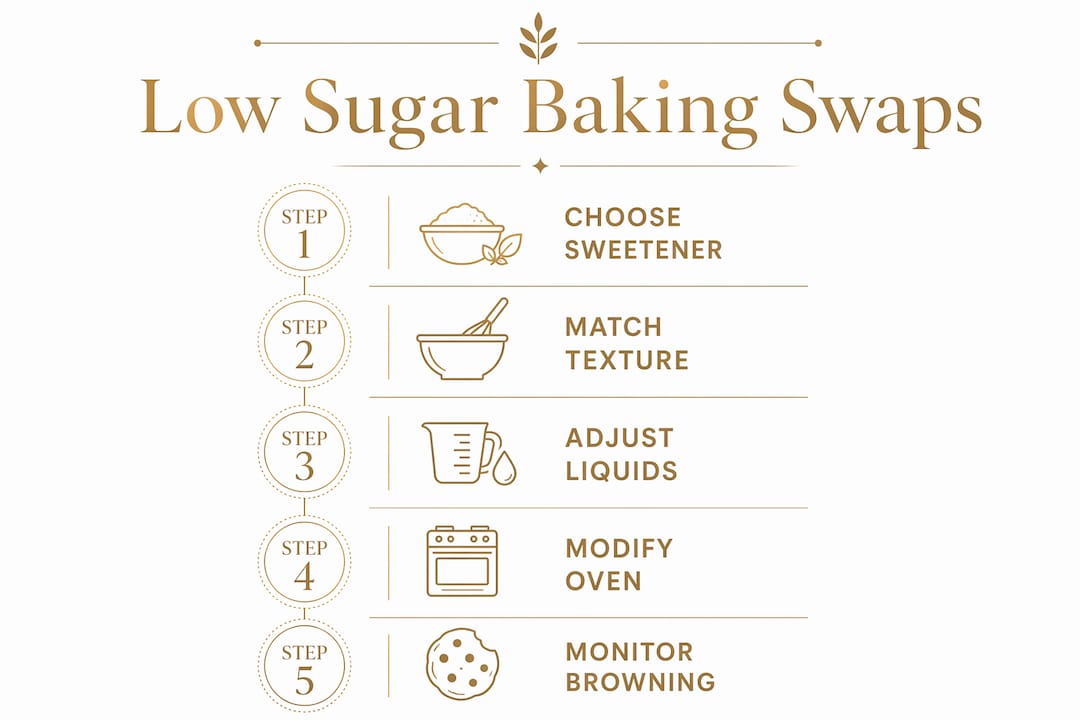
The easiest wins come from matching your swap to the recipe’s texture needs, not just its sweetness level.
Liquid sweeteners (honey, maple syrup) work beautifully in muffins and quick breads. Because they add water to your batter, reduce other liquids by roughly 2–4 tablespoons per cup of syrup and drop your oven temperature about 25°F. Maple syrup brings a mild caramel note; honey adds floral warmth.
Coconut sugar is the closest thing to a true 1:1 swap for granulated sugar. It preserves bulk and browning in cookies and muffins, with a subtle butterscotch flavor. Date sugar is granular like coconut sugar but won’t dissolve, so it stays speckled in the finished bake. Save it for rustic loaves and energy bars where texture variation is welcome.
Monk fruit and stevia blends are the go-to for low-carb treats and keto-friendly baking. They measure cup-for-cup but lack the bulk and hygroscopic properties of sugar, so your bake can turn out drier and paler. Add a tablespoon of oat fiber, inulin, or a small amount of coconut sugar to restore body.
Whole-food purées like mashed ripe banana, unsweetened applesauce, or date paste add fiber, natural sweetness, and moisture all at once. They do change flavor noticeably, so lean into it. Banana bread with extra banana instead of sugar? That’s a feature, not a flaw.
Pro Tip: For diabetes-friendly baking, coconut sugar and monk fruit blends have a lower glycemic impact than refined sugar. Whole-fruit purées add fiber, which slows glucose absorption further. Honey and maple syrup, while natural, still raise blood sugar and are best used sparingly.
Why does sugar do so much more than sweeten?
Sugar is a structural workhorse, and swapping it is a technical adjustment, not just a flavor change. Reducing sugar alters dough behavior across four key functions:
- Structure and aeration: Sugar traps air during creaming with butter, lightening the crumb. Fix: extend creaming time slightly, or add an extra egg white for lift.
- Moisture retention: Sugar is hygroscopic, meaning it pulls and holds water. Without it, bakes dry out faster. Fix: add a tablespoon of Greek yogurt, sour cream, or an extra yolk.
- Browning (Maillard reaction and caramelization): Less sugar means a paler crust. Fix: retain a small amount of real sugar, brush with egg wash, or add a teaspoon of molasses for color.
- Flavor depth: Sugar amplifies other flavors. Without it, bakes can taste flat. Fix: increase vanilla, cinnamon, or a pinch of flaky salt to compensate.
Pro Tip: Blending sweeteners almost always outperforms using a single alternative. A mix of coconut sugar for bulk plus a small amount of monk fruit for sweetness intensity covers more of sugar’s original roles than either cover alone.
Exact substitution ratios you can use right now
The table below gives starting ratios for the most common swaps. Treat these as a baseline and adjust from there.
| Original sugar | Suggested swap | Ratio | Key adjustments |
|---|---|---|---|
| 1 cup granulated sugar | Coconut sugar | 1:1 | None needed; slight color change |
| 1 cup granulated sugar | Honey | ¾ cup | Reduce liquids; lower oven temperature. |
| 1 cup granulated sugar | Maple syrup | ¾ cup | Reduce liquids; lower oven temperature. |
| 1 cup granulated sugar | Date paste | ¾ cup by weight | Reduce other liquids; best in rustic bakes |
| 1 cup granulated sugar | Monk fruit/stevia blend | Per package (usually 1:1) | Add bulking agent (oat fiber or inulin) |
| 1 cup granulated sugar | Mashed ripe banana | ¾ cup | Reduce liquids; expect flavor change |
A few things to keep in mind:
- Don’t use date sugar in recipes that need dissolved sugar (glazes, caramel, delicate cakes). It won’t melt.
- Don’t use monk fruit or stevia alone in recipes where bulk drives structure, like pound cake or shortbread, unless you blend with a bulking agent.
- Retaining a portion of the original sugar is the safest starting point for any recipe you haven’t tested before.
How small technique changes protect texture when you cut sugar
Small method changes often matter more than finding the perfect ingredient swap. Here’s what to adjust:
Creaming: When using coconut sugar or a blend, cream butter and sweetener a full minute longer than usual. The coarser crystals need more time to incorporate air.
Liquid sweeteners: Always reduce your other liquids first, then lower oven temperature by 15–25°F. This prevents the outside from browning before the center sets.
Zero-calorie sweeteners: Add 1 tablespoon of oat fiber or a small amount of coconut sugar per cup of sweetener to restore bulk and chew.
Extra binders: An extra egg white or a teaspoon of ground flaxseed mixed with water adds structure when sugar is significantly reduced.
Reducing sugar by a large amount in a single recipe attempt is where most home bakers run into trouble. The texture shifts are compounding: less moisture retention, less browning, less aeration, all at once. A 25–40% reduction with one complementary swap is far more forgiving and still delivers a noticeably healthier result.
Troubleshooting at a glance:
- Dry crumb: Add 1–2 tablespoons of Greek yogurt or applesauce; reduce bake time by 3–5 minutes.
- Dense cake: Fold less aggressively; increase baking powder by ¼ teaspoon.
- Pale exterior: Brush with egg wash before baking, or add a teaspoon of molasses to the batter.
Pro Tip: Cover your bake loosely with foil in the last minutes if using honey or maple syrup. Liquid sweeteners brown faster than granulated sugar, and foil prevents the top from over-darkening before the center finishes.
Bellsproteinpantry mixes: the fail-safe option for busy bakers
Formulated mixes remove the guesswork that makes DIY low-sugar baking frustrating on a busy weeknight. Bellsproteinpantry’s mixes are built specifically for this:
- 17–19g protein per serving from all-natural ingredients
- 39% less sugar compared to leading brands
- Banana Bread and Blueberry Muffin varieties, both ready with just a few wet ingredients
- Standard prep: mix, pour, bake. Most mixes are oven-ready in under 5 minutes of hands-on time and bake in 20–25 minutes
Who benefits most? Fitness-focused home bakers tracking macros, families wanting lower-sugar treats without a baking experiment, and anyone who’s tried a DIY swap that turned out dense or pale and just wants a reliable result. The banana bread mix is especially popular for meal prep, since slices hold up well in the fridge for several days.
How to fix the most common low-sugar baking problems
- Dense, gummy crumb. Likely cause: too much liquid or insufficient aeration. Fix: fold less, add ¼ tsp more baking powder, or retain 25–40% of the original sugar for structure.
- Pale, under-browned exterior. Likely cause: monk fruit or stevia blend with no browning capacity. Fix: brush with egg wash, add a teaspoon of molasses, or swap to coconut sugar for part of the sweetener.
- Over-browned top, raw center. Likely cause: liquid sweetener (honey or maple) at standard oven temp. Fix: lower temp by 25°F and cover loosely with foil in the final 10 minutes.
- Dry, crumbly texture. Likely cause: monk fruit blend drying the bake faster than sugar would. Fix: add 1–2 tablespoons of Greek yogurt or applesauce; reduce bake time slightly.
- Flat cookies with no spread. Likely cause: missing the fat-trapping function of granulated sugar. Fix: add 1 tablespoon of granulated coconut sugar back in, or chill the dough 20 minutes before baking.
Pro Tip: When a recipe fails with a full swap, don’t start over from scratch. Revert to keeping 25–40% of the original sugar and replace only the remainder. Most texture problems disappear with that one adjustment.
How to store reduced-sugar bakes so they stay fresh
Reduced-sugar bakes lose moisture faster than conventional ones because sugar normally holds water in the crumb. A few habits make a real difference:
- Wrap individually in plastic wrap or beeswax wrap before placing in an airtight container. This slows moisture loss at the surface.
- Freeze for longer storage. Muffins and banana bread slices freeze well for up to 3 months. Wrap tightly and thaw at room temperature or in a low oven at 300°F for 8–10 minutes.
- Reheat with moisture: microwave with a damp paper towel over the top for 20–30 seconds, or warm in a 300°F oven covered loosely with foil. Both methods restore softness without drying the crumb further.
For serving, a pinch of flaky salt on top of a muffin or cookie amplifies perceived sweetness without adding any. A light glaze made from fresh citrus juice and a teaspoon of honey, or a handful of toasted nuts alongside, adds contrast that makes reduced-sugar bakes feel complete. If you’re meal-prepping a full week of muffins, the protein blueberry muffin prep guide from Bellsproteinpantry has solid storage tips worth bookmarking.
Key Takeaways
Keeping 25–40% of original sugar while replacing the rest with a complementary alternative is the single most reliable approach to low sugar baking that still delivers good texture and flavor.
| Point | Details |
|---|---|
| Partial swap rule | Retain 25–40% of original sugar for browning, structure, and mouthfeel in any recipe. |
| Liquid sweetener adjustments | Reduce other liquids by 2–4 tbsp per cup of honey or maple syrup; lower oven temp 25°F. |
| Blend for best results | Combining two sweeteners (e.g., coconut sugar + monk fruit) covers more of sugar’s original roles. |
| Track your changes | Note every adjustment you make so successful batches are repeatable, not accidental. |
| Bellsproteinpantry mixes | Deliver 17–19g of protein per serving and 39% less sugar compared to leading brands, with no recipe development needed. |
Why we believe in the hybrid approach
Here’s our honest take: the all-or-nothing approach to sugar in baking rarely serves home bakers well. Going from a full cup of sugar to zero in one attempt almost always produces something disappointing, and that discourages people from trying again. The hybrid approach, keeping a small amount of real sugar while replacing the bulk with a natural alternative, is where the real wins happen.
We built Bellsproteinpantry’s mixes around exactly this thinking. The formulations don’t just cut sugar. They balance reduced sugar with enough protein and the right moisture profile to produce a bake that actually tastes like something you’d want to eat again. That’s harder to achieve than it sounds, and it’s why we spent time getting the ratios right rather than just swapping one ingredient for another.
For bakers who love the scratch process, the swaps and techniques in this guide give you a solid foundation. For those who want a reliable result on a Tuesday night without the experimentation, our mixes are there. Both paths lead to the same place: a tray of warm muffins or a golden loaf of banana bread that fits your health goals without tasting like a compromise. You can read more about how we got here in our kitchen story.
Ready to try reduced-sugar, high-protein baking mixes?
If you’ve been putting off healthier baking because the results felt unpredictable, Bellsproteinpantry is worth trying. Our Banana Bread and Blueberry Muffin mixes ship across the US and are designed for exactly the kind of busy, health-conscious baker this guide is written for.
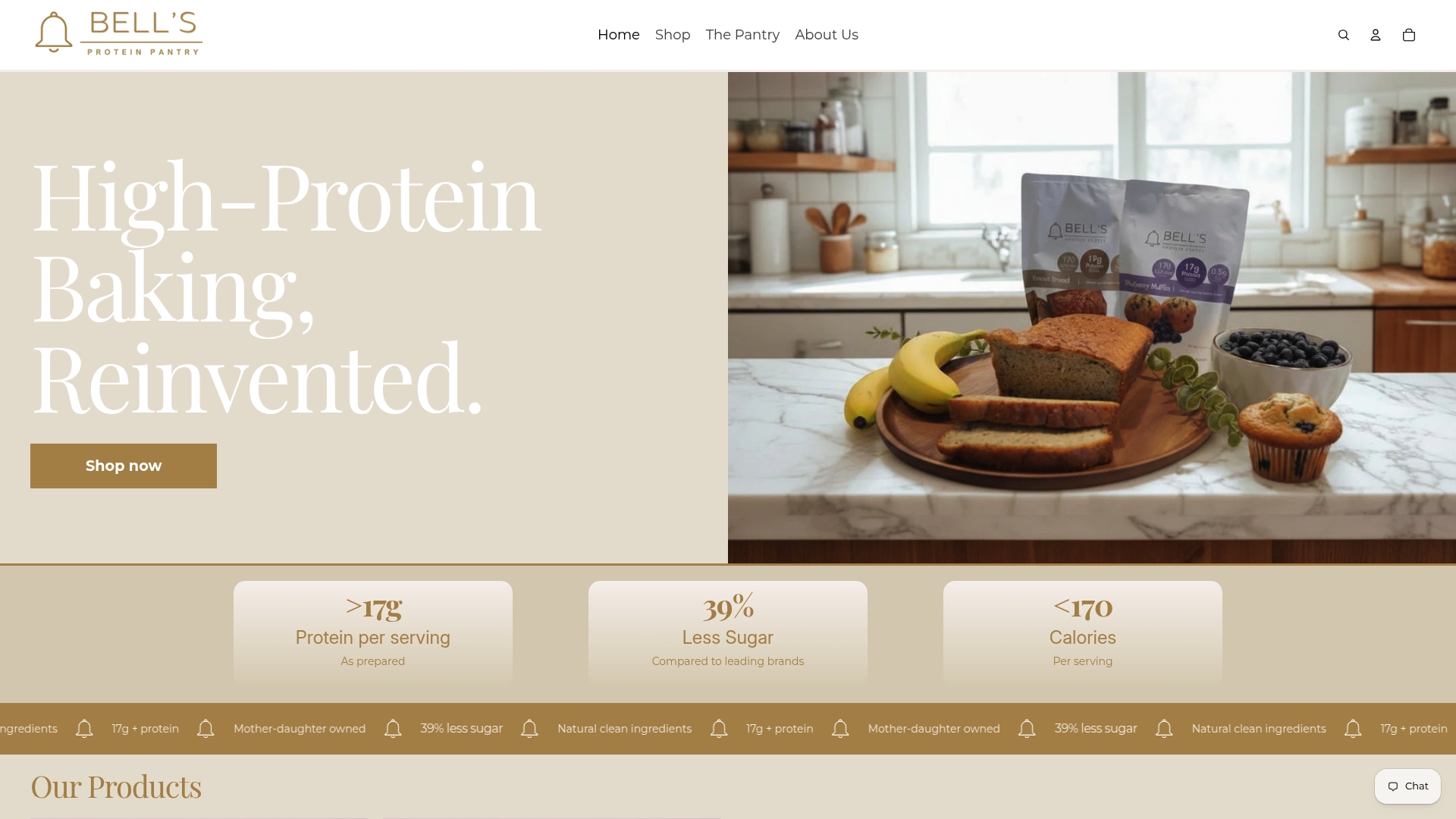
Each mix delivers 17–19g of protein per serving and 39% less sugar compared to leading brands, using all-natural ingredients. Prep takes under 5 minutes. The Banana Bread mix is a great first order if you want something crowd-pleasing and easy; the Blueberry Muffin mix is perfect for weekly meal prep. Both are available as one-time purchases or in variety bundles. Browse the full protein baking mix collection and find the option that fits your week.
Further reading and sources used in this guide
- 5 Natural Sweeteners for Low Sugar Baking (and 2 to Skip) — BakingSubs: supports the partial-swap rule, monk fruit blending guidance, and mix reliability.
- Baking with Natural Sweeteners — PCC Markets: source for liquid sweetener liquid-reduction and oven-temp adjustments.
- A Guide to Natural Sweeteners — Mondomulia: culinary chemistry explanation of sugar’s structural roles.
- 5 Low-Sugar Ways I Bake Dessert For My Family — The Kitchn: whole-fruit purée guidance and palate-training insight.
- The 5 Best Natural Sweeteners for Baking — The Greek Postman: coconut sugar 1:1 ratio and date sugar behavior.
- Use Dates, Apples or Honey Instead of Sugar for Healthier Baking — The Star: date paste use cases and practical recipe notes.
- Protein Baking Mixes — Bellsproteinpantry: product nutrition specs (17–19g protein per serving; 39% less sugar vs. leading brands).
- Baking decoration tools guide — Tortendekoshop: baking tools and presentation tips for finished low-sugar bakes.
This article is general information for home bakers and is not medical or nutritional advice. If you manage diabetes or another health condition, confirm any dietary changes with a qualified healthcare provider.