
High-Protein Breakfast Without Eggs: 30 g Meal Ideas

You don’t need eggs to build a protein-rich morning. Greek yogurt, cottage cheese, firm tofu, smoked salmon, and legume bowls are all reliable bases that can get you to 25–40 grams of protein before you leave the house. Here are two ready-to-eat options to start:
Dairy-forward (~31 g protein): 1 cup plain Greek yogurt (20 g) + 2 tbsp hemp hearts (6 g) + ¼ cup cottage cheese stirred in (5 g). Top with berries and you’re done.
Plant-forward (~28 g protein): ½ cup firm tofu scrambled with spinach (22 g) + 1 slice whole-grain toast with 1 tbsp almond butter (4 g) + a handful of edamame on the side (4 g).
Quick rules of thumb:
- Aim for 25–40 g protein at breakfast for real satiety
- Use two complementary sources if one base falls short
- You don’t need protein powder to hit the target
Key Takeaways
A protein breakfast without eggs is not only achievable but often more nutritious and varied than an egg-only routine, with Greek yogurt, tofu, cottage cheese, and smoked fish all delivering 15–22 g protein per serving before any boosters are added.
| Point | Details |
|---|---|
| Target 25–40 g at breakfast | This range supports satiety and steady energy; one egg provides only ~6 g, so combinations are key. |
| Top egg-free bases | Greek yogurt (~20 g/cup), firm tofu (~22 g/½ cup), cottage cheese (~15 g/½ cup), and smoked salmon (~17 g/3 oz). |
| Fastest boosters | Hemp hearts (10 g/3 tbsp), almond butter (7 g/2 tbsp), and edamame (9 g/½ cup) add protein with minimal prep. |
| Make-ahead strategy | Batch-prep dry components or bake muffins on Sunday; morning assembly drops to under two minutes. |
| Bell’s Protein Pantry | Their baking mixes deliver 17+ g protein per serving and pair with yogurt or nut butter to reach a full 30–37 g breakfast. |
Table of Contents
- Why 25–40 g of protein at breakfast actually matters
- The best egg-free protein foods, organized by category
- How to build a breakfast that reliably hits 25–40 g
- Plant-based egg-free breakfasts that actually hit the target
- Quick swaps and boosters that add protein without eggs or powder
- High-protein baked options that work as egg-free breakfasts
- Why rotating your protein sources beats an every-day-egg routine
- Bell’s Protein Pantry makes egg-free baked breakfasts genuinely easy
- Sources
Why 25–40 g of protein at breakfast actually matters
A single large egg delivers about 6 grams of protein. That’s fine as a topping, but three eggs provide less protein than some higher-protein alternatives, which falls short of the range that nutrition experts recommend for meaningful morning satiety. The 25–40 g target is where most people notice a real difference in how long they stay full and how steady their energy holds through mid-morning.
Quick stat: One cup of plain Greek yogurt alone (≈20 g protein) already outpaces a three-egg breakfast (≈18 g) before you add a single topping.
Protein slows gastric emptying, which means glucose enters your bloodstream more gradually when protein is present alongside fiber and fat. That’s the mechanism behind fewer mid-morning cravings. A bowl of oatmeal with no protein source tends to spike and crash; the same bowl with Greek yogurt or nut butter stirred in holds you longer. The combination of protein plus fiber plus a small amount of fat is what keeps blood sugar steady, not any one ingredient on its own.
The best egg-free protein foods, organized by category
Scanning this table gives you a fast sense of which foods pull the most protein weight per serving. Values are approximate and based on standard serving sizes (cooked or prepared as noted).
| Food | Typical Serving | Protein (approx.) |
|---|---|---|
| Plain nonfat Greek yogurt | 1 cup | 20 g |
| Cottage cheese | ½ cup | 15 g |
| Firm tofu | ½ cup | ~22 g |
| Smoked salmon | 3 oz | ~17 g |
| Canned tuna or sardines | 3 oz | ~20 g |
| Cooked lentils | ½ cup | ~9 g |
| Edamame (shelled) | ½ cup | ~9 g |
| Tempeh | 3 oz | ~16 g |
| Quinoa (cooked) | 1 cup | ~8 g |
| Almond butter | 2 tbsp | ~7 g |
| Hemp hearts | 3 tbsp | ~10 g |
| Skyr | ¾ cup | ~17 g |
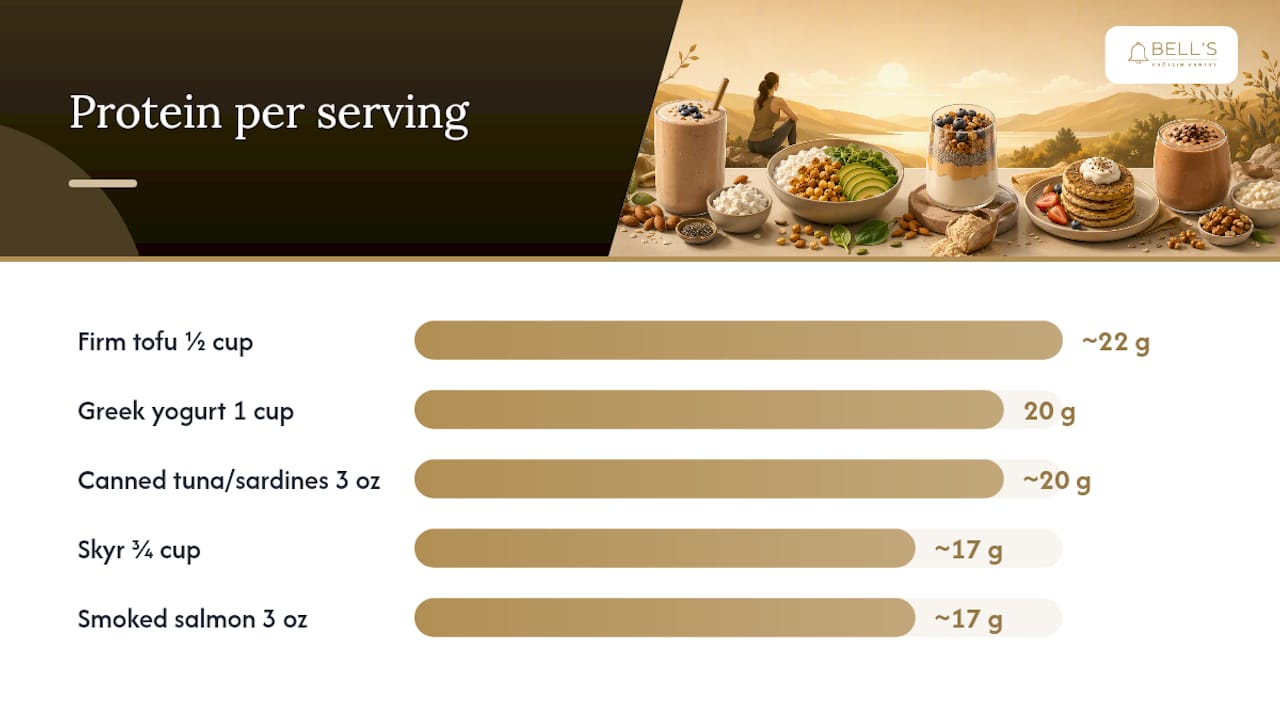
A few serving notes worth keeping in mind: tofu values are for firm tofu, raw weight; lentil and quinoa values are for cooked, drained portions; nut butter values assume a level tablespoon measure.
Greek yogurt and skyr are the fastest dairy bases. Stir in cottage cheese for an extra protein lift without changing the texture much. Smoked salmon and tinned fish are underused at breakfast but genuinely efficient, especially on toast or folded into a savory bowl. Tofu and tempeh are the plant-based workhorses, with tofu’s mild flavor making it easy to season in any direction. Hemp hearts are the most effortless booster on this list: three tablespoons stirred into anything adds 10 grams with almost no prep.
How to build a breakfast that reliably hits 25–40 g
The simplest formula: one high-protein base plus one booster. If your base is Greek yogurt (20 g), adding 3 tbsp hemp hearts (10 g) gets you to 30 g before any other toppings. If your base is tofu (22 g), a slice of toast with almond butter (7 g) puts you at 29 g. Two medium-protein sources work just as well when neither one alone is enough.
Assembly rules:
- Choose a base that delivers at least 15 g on its own.
- Add one booster (seeds, nut butter, tinned fish, extra dairy) to close the gap to 25–30 g.
- Include a fiber source (oats, fruit, whole-grain bread, vegetables) to slow digestion and extend fullness.
- Keep fat moderate: 1–2 tbsp nut butter or a small handful of nuts is plenty alongside a protein-rich base.
Sample meal builds:
-
Greek yogurt power bowl — 1 cup Greek yogurt (20 g) + 3 tbsp hemp hearts (10 g) + ½ cup blueberries + granola. Total: ~30 g. Batch-prepping the dry components means morning assembly takes under two minutes.
-
Smoked salmon toast — 2 slices whole-grain bread (6 g) + 3 oz smoked salmon (17 g) + 2 tbsp cottage cheese spread (5 g) + capers and cucumber. Total: ~28 g.
-
Savory lentil bowl — ½ cup cooked lentils (9 g) + ¾ cup skyr (17 g) + sautéed spinach + a drizzle of olive oil. Total: ~26 g.
-
Protein oats — ½ cup rolled oats cooked in 1 cup soy milk (8 g) + ½ cup cottage cheese stirred in (15 g) + 1 tbsp almond butter (4 g). Total: ~27 g.
-
Tempeh breakfast bowl — 3 oz tempeh (16 g) + ½ cup edamame (9 g) + brown rice + tamari. Total: ~25 g.
-
Cottage cheese toast — ½ cup cottage cheese (15 g) + 2 slices whole-grain bread (6 g) + 3 tbsp hemp hearts (10 g) + sliced tomato. Total: ~31 g.
Plant-based egg-free breakfasts that actually hit the target
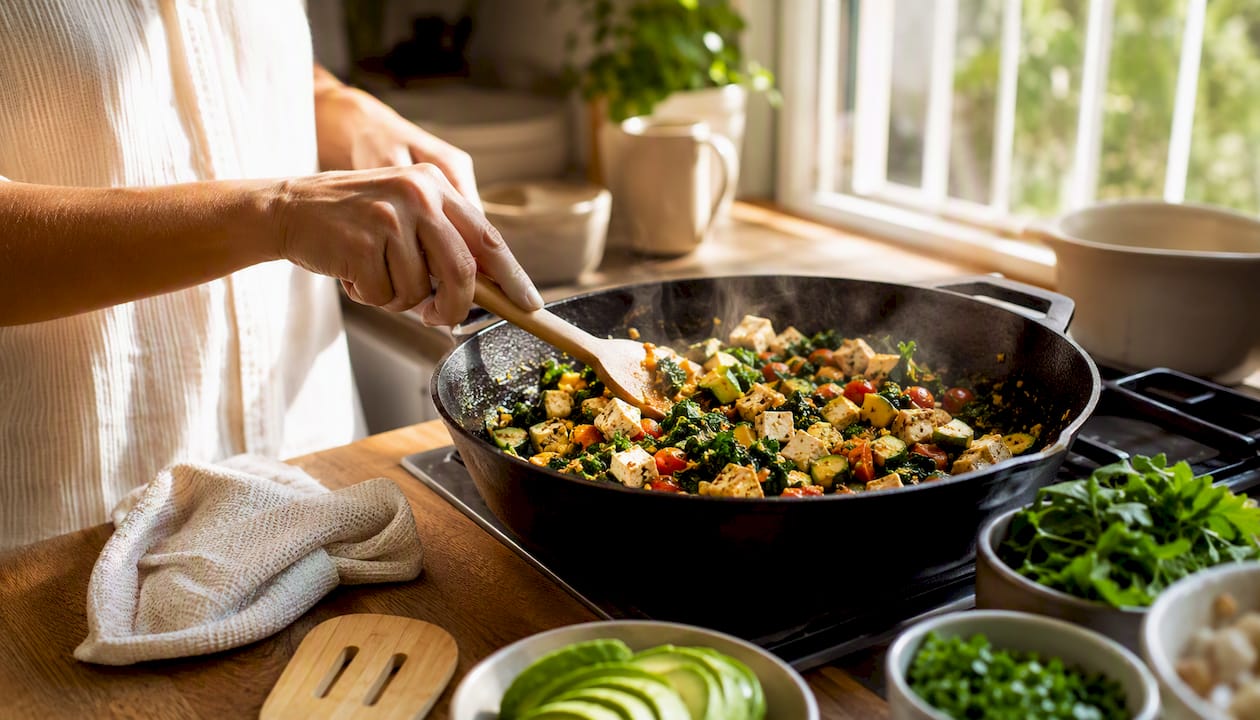
Reaching 25–40 g on a fully plant-based plate is straightforward once you stop relying on a single source. Tofu scrambles, edamame grain bowls, and blended legume bases all get you there without powder or animal products.
A vanilla almond chia pudding made with soy milk and almond butter delivers around 17 grams of protein on its own, and it’s one of the easiest make-ahead options in this category. Prep it the night before, and breakfast is literally already done.
Practical plant-based combos that hit meaningful totals:
- Tofu scramble + toast: ½ cup firm tofu scrambled with turmeric and nutritional yeast (22 g) + 2 slices whole-grain toast with 1 tbsp peanut butter (9 g). Total: ~31 g.
- Peanut butter overnight oats with soy milk: ½ cup oats + 1 cup soy milk (8 g) + 2 tbsp peanut butter (8 g) + 3 tbsp hemp hearts (10 g). Total: ~26 g.
- Lentil porridge with nuts: ½ cup red lentils cooked into a porridge (9 g) + 2 tbsp almond butter (7 g) + 1 tbsp hemp hearts (3 g) + a handful of walnuts (4 g). Total: ~23 g. Add ½ cup edamame on the side to push past 30 g.
Combining soy, seeds, and nut butter is a reliable plant-based strategy that also supports gut health when you pair it with fiber-rich toppings like berries, oats, or leafy greens.
Pro Tip: Prep overnight oat jars and chia pudding cups in batches of four on Sunday. In the morning, all you do is open the jar, add a spoonful of nut butter, and go. Grab-and-go plant-based breakfasts don’t get faster than that.
Quick swaps and boosters that add protein without eggs or powder
Sometimes you already have a breakfast you like and just need to push the protein number up. These additions are low-effort, pantry-friendly, and each one moves the needle by a meaningful amount.
- 3 tbsp hemp hearts stirred into oats, yogurt, or a smoothie: ~10 g protein
- 2 tbsp almond or peanut butter on toast or blended into oats: ~7–8 g protein
- ½ cup cottage cheese dolloped onto anything savory or blended into a smoothie: ~15 g protein
- 3 oz smoked salmon on toast or folded into a grain bowl: ~17 g protein
- ½ cup edamame as a side or mixed into a bowl: ~9 g protein
- ¾ cup skyr swapped for regular yogurt: ~17 g protein
- 3 oz canned tuna or sardines on crackers or toast: ~20 g protein
Small additions compound quickly. Two tablespoons of hemp hearts plus a dollop of cottage cheese adds roughly 18 grams to whatever you’re already eating.
Pro Tip: Briefly toast nut butter in a dry pan for about 20 seconds before stirring it into oats or porridge. It blooms the flavor noticeably and reduces the urge to add sweetener, which keeps your macros cleaner.
One thing worth watching: boosters add calories alongside protein. Hemp hearts and nut butters are calorie-dense, so if you’re adding multiple boosters, keep portions measured rather than eyeballed. Pairing a calorie-dense booster with a high-fiber base (oats, lentils, vegetables) keeps the meal satisfying without tipping into excess.
High-protein baked options that work as egg-free breakfasts
Baked goods rarely make the protein shortlist, but high-protein baking mixes change that math. Bell’s Protein Pantry mixes, including their Banana Bread and Blueberry Muffin varieties, deliver over 17 grams of protein per serving using all-natural ingredients and about 39% less sugar than leading brands. That’s a meaningful protein contribution from something that feels like a treat.
On its own, a baked mix serving covers roughly half your breakfast protein target. Pair it with a cup of Greek yogurt (20 g) and you’re at 37+ g total. Add a tablespoon of almond butter on the side and you’ve also covered fat and fiber. The high-protein banana bread and blueberry muffin options from Bell’s are particularly well-suited to batch baking: make a full tray on Sunday, wrap individual portions, and you have grab-and-go breakfasts ready for the week.
For meal prep, baked muffins freeze well for up to three months. Pull one out the night before, and it’s thawed and ready by morning. That kind of low-friction prep is what makes a protein target sustainable over time, not just achievable on a good day.
Why rotating your protein sources beats an every-day-egg routine
We hear this a lot: “I just eat eggs every morning — it’s easy.” And yes, eggs are convenient. But leaning on a single protein source every day limits your nutrient variety and, honestly, tends to get boring fast. Boredom is one of the most underrated reasons people abandon healthy eating habits.
Swapping in Greek yogurt one morning gives you calcium, probiotics, and a faster prep time than scrambling eggs. Choosing smoked salmon on another day adds omega-3 fatty acids and iodine, nutrients eggs don’t provide in meaningful amounts. Rotating tofu into the mix brings iron and isoflavones alongside its impressive protein density. Each swap changes not just the nutrient profile but the texture, flavor, and even the meal-prep time, which keeps breakfast feeling fresh rather than like a chore.
The practical upside of variety is adherence. A breakfast routine you actually look forward to is one you’ll keep. And when you’re working with a range of protein sources, you’re also less likely to be caught short when one ingredient runs out.
Bell’s Protein Pantry makes egg-free baked breakfasts genuinely easy
Hitting 25–40 g of morning protein is straightforward once you have the right building blocks on hand. Bell’s Protein Pantry high-protein baking mixes give you one of those building blocks in the most convenient form possible: a baked good that delivers 17+ grams of protein per serving, made with all-natural ingredients, and ready to pair with yogurt, nut butter, or a glass of soy milk to complete your target.
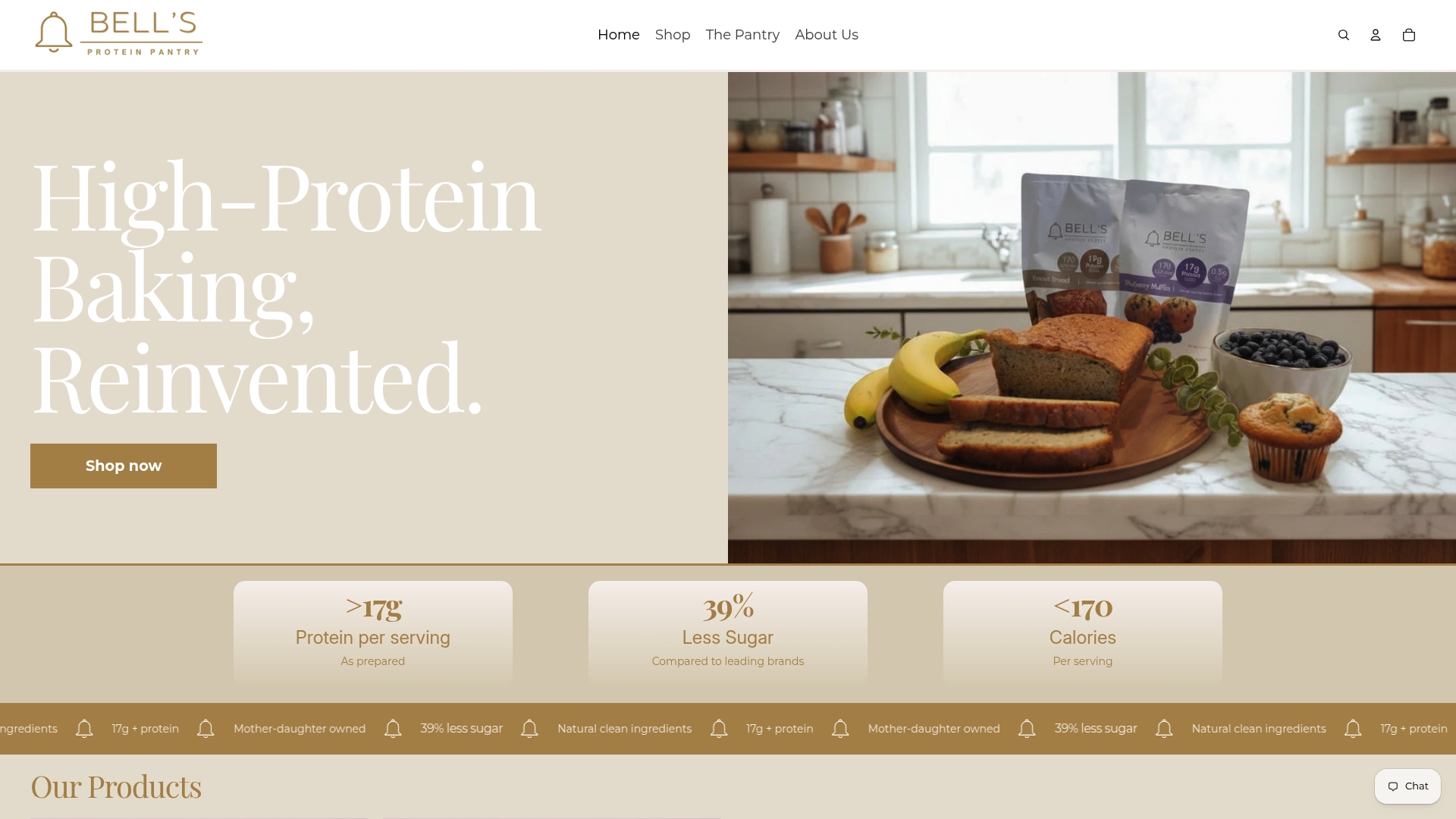
The Banana Bread and Blueberry Muffin mixes are designed for real life, not ideal conditions. Batch-bake on a Sunday, and you have protein-forward breakfasts ready for the entire week with zero morning effort. No powder, no complicated prep, no compromise on taste. Browse the mixes and bundles at Bellsproteinpantry and find the option that fits your routine.
Sources
- No Egg High Protein Breakfast | Lean By Plat
- High Protein Vanilla Almond Chia Pudding (without protein powder) - Desiree Nielsen
This article is general information, not a substitute for advice from a qualified doctor. Consult a qualified healthcare professional about your own circumstances before acting on anything here.
Recommended
- High Protein Breakfast Ideas to Keep You Full All Day – Bell’s Protein Pantry
- High Protein Brunch Recipes for a Satisfying Meal – Bell’s Protein Pantry
- High-Protein Banana Bread: The Breakfast Hack That Replaced My Protein – Bell’s Protein Pantry
- High Protein Weight Loss Snacks That Actually Work – Bell’s Protein Pantry