
Sugar Swaps for Baking: Practical Substitutes That Work

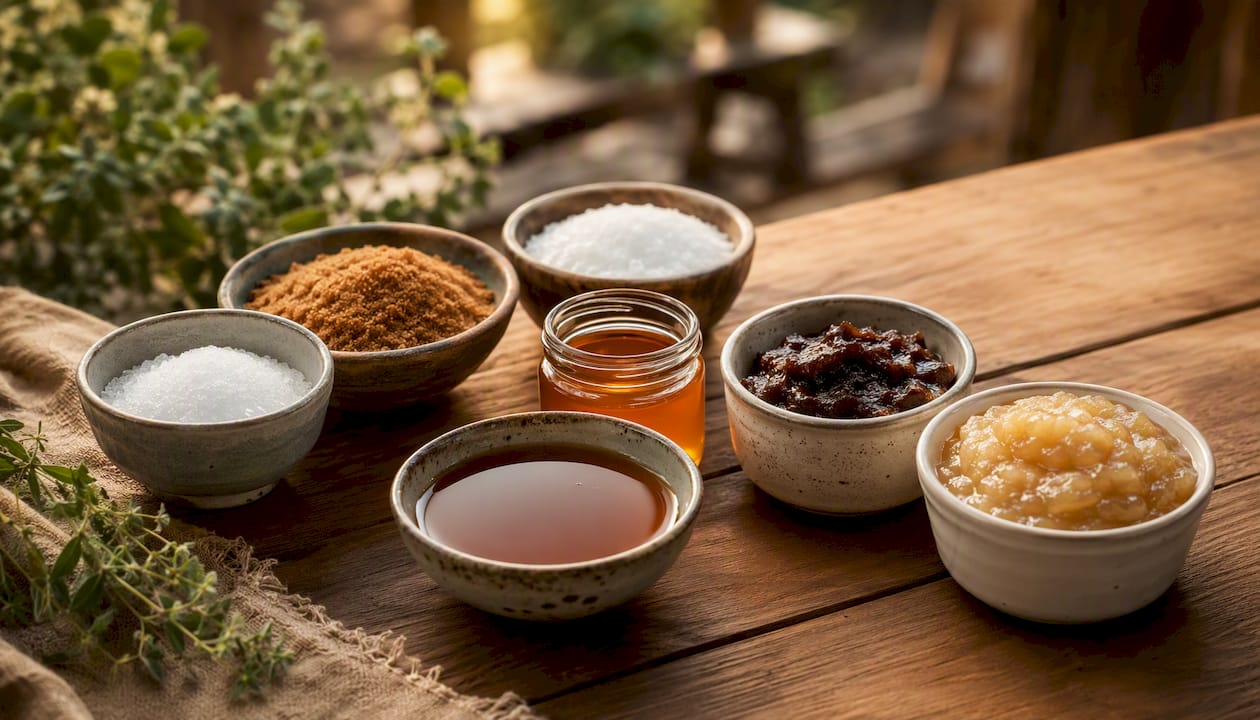
The most reliable sugar swaps for baking are allulose (for granulated behavior and browning), coconut sugar or a coconut sugar + monk fruit blend (for brown-sugar flavor), honey or maple syrup (for muffins and quick breads), date paste (for brownies and energy bars), and erythritol/monk fruit blends (for reduced-calorie baking). Here is a quick-reference shortlist to get you started:
- Allulose: Cookies, cakes, and anything needing browning. Use 1 to 1.3 cups per cup of sugar; lower oven temp by 25°F.
- Coconut sugar + monk fruit blend: Drop-in for brown sugar flavor. Use 1:1 by volume.
- Honey or maple syrup: Muffins, quick breads, and pancakes. Use ¾ cup per cup of sugar; reduce other liquids by 3 tablespoons.
- Date paste: Brownies, energy bars, and dense quick breads. Use 1:1 by weight for a rich, caramel-like sweetness.
- Erythritol/monk fruit blends: Reduced-calorie cookies and cakes. Use 1:1 by volume; expect less browning and a slight cooling aftertaste.
When you want predictable results without the trial-and-error, a formulated mix like Bell’s Protein Pantry handles the swap math for you, delivering a high protein content per serving with significantly less sugar than leading brands.
Key Takeaways
The most reliable approach to cutting sugar in baking is a hybrid strategy: keep some real sugar for structure and browning, and replace the rest with a tested alternative or blend.
| Point | Details |
|---|---|
| Keep some real sugar | Preserving some sucrose maintains browning, structure, and moisture in most baked goods. |
| Match the swap to the recipe | Allulose for cookies and cakes; honey or maple for muffins; date paste for brownies and dense breads. |
| Adjust liquids and temperature | Reduce other liquids by 3 tbsp per cup of syrup; lower oven temp by 25°F for syrups and allulose. |
| Watch for side effects | Sugar alcohols can cause GI upset above 10–15g; xylitol is toxic to dogs; erythritol recrystallizes on cooling. |
| Bell’s Protein Pantry | Preformulated mixes with 39% less sugar and 17–19g protein per serving remove the trial-and-error from low-sugar baking. |
Table of Contents
- Why does sugar do so much more than just sweeten?
- A practical guide to every sugar substitute category
- How to swap sugar in any recipe: conversions and adjustments
- Which swap works best for your specific recipe?
- Health trade-offs, calories, and things to watch for
- Simple kitchen experiments to test a swap before you commit
- Why the “zero-sugar” goal often works against you in home baking
- When a ready-made low-sugar baking mix makes more sense
- Sources
Why does sugar do so much more than just sweeten?
Sugar pulls more weight in a recipe than most bakers realize. Swap it out without understanding its roles, and you will likely end up with a flat cookie, a gummy crumb, or a pale loaf that never quite browns. These are the five functions sugar performs in baked goods:
- Sweetness: The obvious one. Sugar sets the baseline flavor, but it also balances acidity and bitterness from cocoa, lemon, or whole-grain flours.
- Bulk and structure: Sugar adds physical volume. Remove it entirely and your batter loses mass, which collapses cakes and produces dense, squat muffins.
- Browning and caramelization: Sugar caramelizes above 320°F and participates in the Maillard reaction with proteins, creating golden crusts and complex flavor. No sugar, no color.
- Moisture retention: Sugar is hygroscopic, meaning it attracts and holds water. That is why a properly sugared cookie stays soft for days while an under-sugared one turns crumbly by morning.
- Fermentation food for yeast: In yeast breads, sugar feeds the yeast. Replace it entirely and your dough may rise slowly or not at all.
Commercial baking practitioners confirm that natural sweeteners are not drop-in replacements for refined sugar; they change creaming, spread, and texture, and often require blends or reformulation to restore what refined sugar was doing.
You will cut sugar meaningfully while keeping enough structure and browning to evaluate whether the swap is working.*
A practical guide to every sugar substitute category
Each substitute category behaves differently in the oven. Here is how they stack up across the functions that matter most for home baking.
Granulated options: coconut sugar and date sugar
Coconut sugar is made from concentrated coconut sap and behaves similarly to brown sugar in most recipes. It dissolves and creams reasonably well, adds a mild caramel flavor, and browns in the oven. Research published in PMC notes a reported glycemic index of around 35, along with added minerals, though quality varies by processing and adulteration is a documented sourcing risk. Date sugar is simply dried, ground dates. It does not dissolve fully, so it works best in rustic baked goods rather than delicate cakes.
- Pros: Minimally processed, recognizable flavor, 1:1 swap by volume.
- Pitfall: Neither dissolves as cleanly as white sugar; expect a slightly denser crumb.
Low-calorie granulated blends: erythritol and monk fruit
Erythritol provides bulk and measures cup-for-cup, but it can recrystallize on cooling and produces a noticeable cooling aftertaste. Monk fruit extract adds sweetness without calories but has zero bulk on its own. Blending the two covers both gaps. Use powdered erythritol when possible to reduce the cooling effect.
- Pros: Very low calorie, no blood sugar spike, widely available.
- Pitfall: Minimal browning; recrystallization can make cookies grainy after cooling.
Allulose: the closest single swap
Allulose browns and behaves more like sugar than most low-calorie sweeteners, making it the top pick when you need both sweetness and a golden crust. It caramelizes, stays moist, and does not recrystallize. The catch: it browns faster than sucrose, so you will need to lower your oven temperature by about 25°F and watch the clock.
- Pros: Excellent browning, moist texture, no cooling effect.
- Pitfall: Faster browning can mean overbaked edges if you are not watching.
Liquid sweeteners: honey and maple syrup
Honey and maple syrup add sweetness and moisture, and they brown well. The flavor contribution is real, which is a plus in banana bread and a potential distraction in a delicate vanilla cake. Both are nutritive sweeteners with a calorie count close to sugar, so the benefit is flavor complexity and a slightly lower glycemic response rather than a dramatic calorie reduction.
- Pros: Widely available, natural flavor, good moisture retention.
- Pitfall: Adds liquid to the batter; requires reducing other liquids and sometimes lowering oven temp.
Fruit purées: date paste, applesauce, mashed banana
Date paste is the most versatile fruit-based swap, delivering a rich, caramel-like sweetness with plenty of fiber. Applesauce and mashed banana work well in quick breads and muffins but add their own flavor. All three add significant moisture, which is great for brownies and dense loaves but can make cakes gummy if overused.
- Pros: Whole-food ingredients, fiber, natural sweetness.
- Pitfall: High moisture content; reduce other liquids and expect a denser texture.
How to swap sugar in any recipe: conversions and adjustments
The conversion ratios below apply when a recipe calls for 1 cup of granulated white sugar. Adjustments to liquid, temperature, and leavening are just as important as the swap ratio itself.
| If recipe calls for 1 cup sugar | Use this instead | Liquid adjustment | Temp adjustment |
|---|---|---|---|
| Allulose | 1 to 1.3 cups | None needed | Lower by 25°F |
| Coconut sugar | 1 cup | None | None |
| Erythritol/monk fruit blend | 1 cup | None | None; watch for less browning |
| Honey | ¾ cup | Reduce other liquids by 3 tbsp | Lower by 25°F |
| Maple syrup | ¾ cup | Reduce other liquids by 3 tbsp | Lower by 25°F |
| Date paste | 1 cup (by weight) | Reduce other liquids by 2–3 tbsp | None |
| Applesauce | 1 cup | Reduce other liquids by ¼ cup | None |
Extension field reports confirm that blends that include some real sugar typically give baked goods better texture, volume, and moisture than complete zero-sugar replacements. Keeping some real sugar in a recipe is often the simplest way to preserve structure while still cutting overall sugar content.
Adjustment checklist when swapping:
- Reduce other liquids by 3 tablespoons per cup of syrup used.
- Lower oven temperature by 25°F when using honey, maple syrup, or allulose.
- Add an extra egg or 2 tablespoons of yogurt when removing significant bulk.
- Increase baking soda slightly (about ¼ teaspoon per cup of honey) to neutralize acidity from liquid sweeteners.
- Use powdered erythritol instead of granulated to minimize recrystallization.
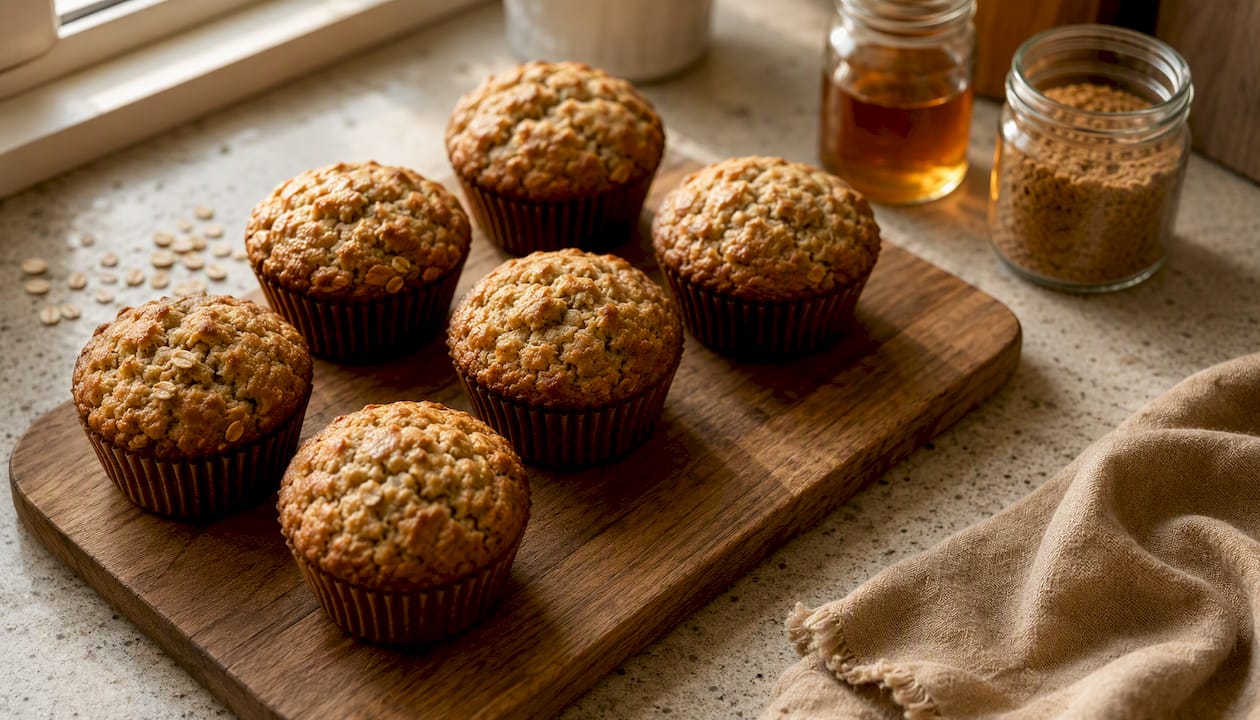
Pro Tip: Test any new swap in a muffin pan first. Six muffins use a fraction of the ingredients, bake in 18–20 minutes, and give you a clear read on crumb, moisture, and browning before you commit to a full loaf or cake.
Which swap works best for your specific recipe?
Not every substitute performs equally across recipe types. Here is where each swap shines and where it struggles.
Cookies
Allulose is the top pick for cookies that need spread and a golden edge. Coconut sugar works well for a chewier, brown-sugar-style cookie. Pure erythritol/monk fruit blends produce a cakier texture with less spread, which some bakers prefer but others find disappointing.
Cakes and muffins
Liquid sweeteners like honey and maple syrup work well here, especially in lower sugar muffins where a tender crumb matters more than a crisp edge. Use ¾ cup syrup per cup of sugar, reduce liquids, and lower the oven temp. Keeping some real sugar preserves lift and a fine crumb. Allulose also performs well in cakes, with excellent moisture retention.
Brownies
Date paste is the standout here. Its natural sweetness, fiber, and moisture create a fudgy, dense brownie without the need for much added sugar. Maple syrup works too.
Yeast breads
Replace no more than half the sugar in a yeast bread recipe. Yeast feeds on sucrose, and removing it entirely slows fermentation noticeably. Honey is a good partial swap because yeast can use its fructose and glucose. For a banana bread without sugar, ripe bananas provide enough natural sugars to support a modest rise.
Meringues and caramelized items
This is where most swaps fail. Erythritol and stevia do not behave like sugar under heat; they will not form a stable meringue or a proper caramel. Allulose caramelizes, but it browns faster and at a lower temperature than sucrose, so test carefully. For meringues, there is no reliable non-sugar swap that produces the same glossy, stable result. Aquafaba (chickpea liquid) can help with structure, but the sweetener still needs to be at least partially real sugar.
Health trade-offs, calories, and things to watch for
Choosing a sugar substitute involves more than cutting calories. Here is a practical breakdown of what actually matters.
- Nutritive sweeteners (coconut sugar, honey, maple syrup, date paste): similar calorie count to white sugar (roughly 45–60 calories per tablespoon), but with trace minerals, antioxidants, and a modestly lower glycemic response in some cases. They are not low-calorie options; they are better-quality calories.
- Non-nutritive sweeteners (erythritol, monk fruit, allulose, stevia): very low or zero calories. The FDA provides safety and approval information for these sweeteners; checking regulatory status is worthwhile before using any new-to-you option in quantity.
- Sugar alcohols (xylitol, sorbitol, maltitol): lower calorie than sugar but can cause significant GI discomfort, including bloating and diarrhea, when consumed in amounts above about 10–15g. Xylitol is also highly toxic to dogs, so keep baked goods made with it well out of reach of pets.
- “Natural” labeling: A sweetener labeled “natural” is not automatically low in sugar or calories. Coconut sugar, for example, is still roughly 70–80% sucrose and fructose. For low-glycemic baking, the glycemic index of the sweetener matters, but so does the total amount used.
- Sourcing and adulteration: Specialty sugars like coconut sugar carry documented adulteration risks. Buying from reputable suppliers with transparent sourcing reduces this risk.
- Storage and shelf life: Baked goods made with liquid sweeteners or fruit purées tend to retain more moisture, which means they can mold faster than standard sugar-sweetened versions. Store them in an airtight container and refrigerate after two days. Goods made with erythritol may become slightly grainy as they cool and sit, because erythritol tends to recrystallize over time.
Simple kitchen experiments to test a swap before you commit
Testing a swap on a small scale saves ingredients and frustration. These three mini-tests cover the most important variables.
- Half-cookie sheet test: Make a small batch of six cookies, three with your swap and three with the original sugar. Bake side by side on the same sheet. Observe spread (wider or narrower?), color (paler or darker?), and texture after cooling. Record the results before you taste.
- Single-muffin pan test: Mix a quarter of your muffin recipe and fill two or three cups of a standard muffin tin. This tests crumb structure, moisture, and rise without committing to a full dozen. Check the interior after five minutes of cooling by pressing gently; it should spring back.
- Small caramel or frosting test: Melt two tablespoons of your chosen sweetener in a small saucepan over medium heat. Watch for color change, viscosity, and smell. This tells you whether the sweetener caramelizes, recrystallizes, or stays liquid, all of which predict how it will behave in a glaze or frosting.
What to observe and record: spread diameter, surface color (use a scale from pale to deep brown), interior moisture when pressed, any aftertaste (cooling, bitter, or metallic), and texture after the baked good has cooled completely.
Pro Tip: Always keep one control sample made with the original recipe. Tasting your swap next to the original is the fastest way to identify exactly what changed, rather than relying on memory.
Why the “zero-sugar” goal often works against you in home baking
The appeal of a fully sugar-free bake is understandable. But in practice, chasing zero sugar often means sacrificing the texture, color, and shelf life that make baked goods worth eating in the first place.
We have found, both in our own kitchen testing and in the broader baking community, that hybrid approaches consistently outperform full replacements.
The nuance that most “zero-sugar” recipes skip over is this: different sugar functions require different solutions. Browning needs a reducing sugar or caramelizing agent. Moisture retention needs a hygroscopic ingredient. Bulk needs physical mass. No single alternative sweetener covers all three equally well, which is exactly why blends work better than single swaps. When you need consistent results for gifting, meal prep, or high-protein baking, a formulated mix removes the guesswork entirely.
When a ready-made low-sugar baking mix makes more sense
DIY swaps are satisfying when you have time to experiment. But there are real scenarios where the variability of a homemade swap creates more problems than it solves: baking for a group with specific nutrition goals, prepping protein-rich snacks for the week, or gifting something that needs to look and taste consistent every time.
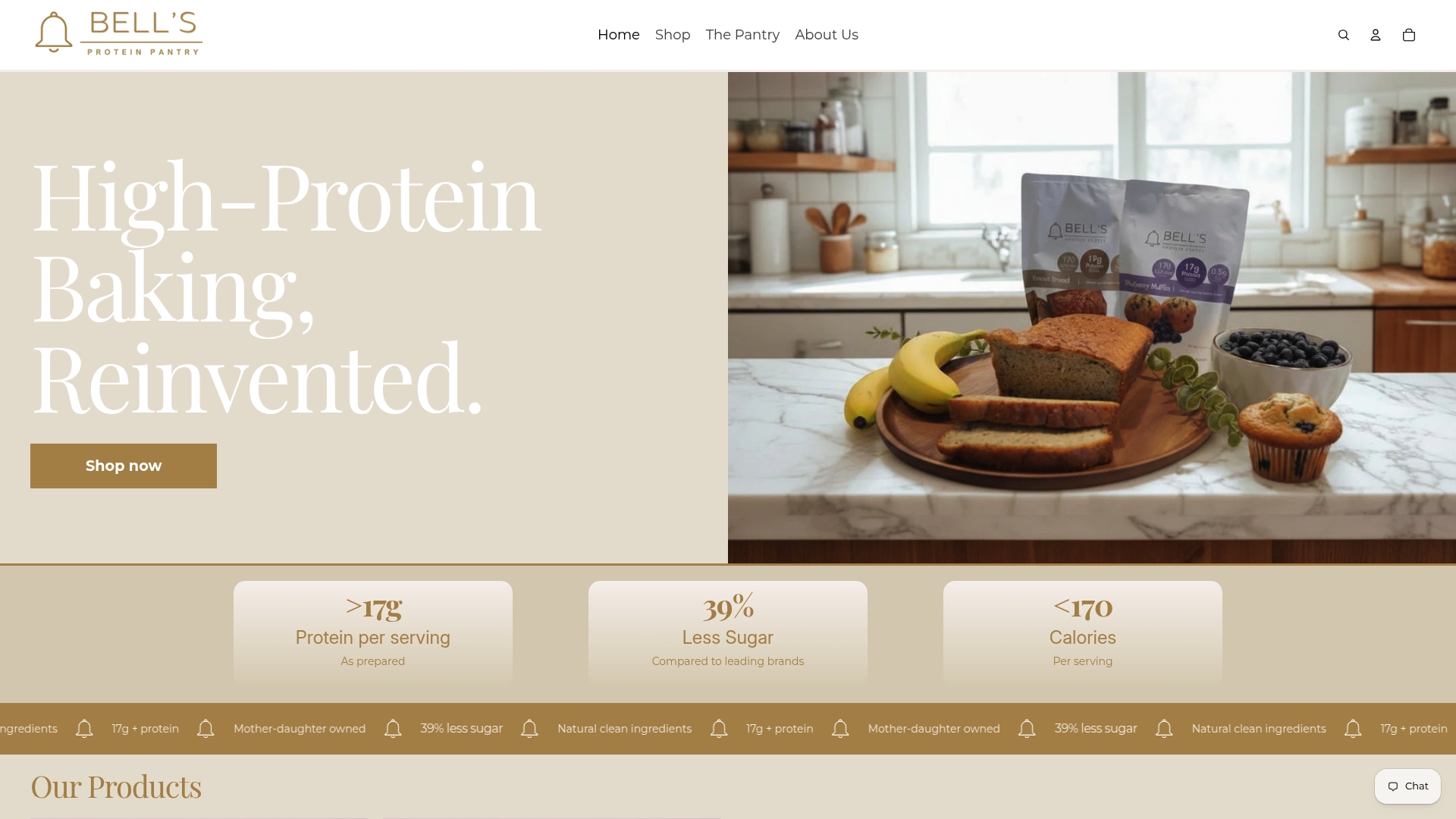
Bell’s Protein Pantry was built for exactly those moments. Our protein baking mixes are formulated with all-natural ingredients, 39% less sugar than leading brands, and 17–19g of protein per serving. The swap math, the liquid adjustments, the oven-temp tweaks — we have already done all of that so you do not have to. The Banana Bread mix is a great starting point: it bakes up moist and golden with a predictable rise, and it fits naturally into a high-protein meal prep routine. Browse the full collection and find the mix that fits your week.
Sources
These references are worth bookmarking when you want to go deeper on conversion math, safety, or technical formulation.
- Navigating the swap to natural sweeteners - Commercial Baking
- PMC article on coconut sugar properties (PMC9964017)
- Cooking and Baking with Sugar Substitutes - CAES Field Report
- FDA: Aspartame and other sweeteners in food
- Sugar-Free Baking: A Sweetener Conversion and Behavior Guide
Recommended
- Low Sugar Baking: Easy Swaps & Recipes for Home Bakers – Bell’s Protein Pantry
- Banana Bread Without Sugar: A Naturally Sweet Guide – Bell’s Protein Pantry
- Low Glycemic Baking: Your Guide to Stable Blood Sugar – Bell’s Protein Pantry
- Healthy Dessert Ideas That Actually Satisfy Your Sweet Tooth – Bell’s Protein Pantry