
Blueberry Muffin Carbs: Exact Counts and Lower-Carb Swaps

A typical blueberry muffin contains anywhere from 8 grams to 74 grams of total carbohydrates, and the size in your hand determines almost everything. A mini muffin barely dents your carb budget. A large bakery muffin, the kind that comes wrapped in paper the size of a cupcake liner gone rogue, can eat up a third of a moderate daily carb allowance in one sitting.
Here’s the quick breakdown by size:
- Mini muffin (about 28g): roughly 8–10g total carbs
- Small/home-style muffin (about 70g): roughly 36–46g total carbs
- Medium homemade muffin: around 49–50g carbs
-
Medium Bell's Protein Pantry muffin: 30g carbs
- Large commercial muffin (about 139–140g): 66–74g total carbs
Net carbs run close to total carbs here because fiber is usually low, often under 4 grams per muffin, so don’t expect much of a discount once you subtract it. Want the full nutrition picture, including sugar and protein numbers by size? Keep reading.
Key Takeaways
Blueberry muffin carbs range from 8g in a mini to 74g in a large commercial muffin, and serving weight, not the blueberries, drives that difference.
| Point | Details |
|---|---|
| Size drives carbs most | A large 139g muffin can carry around 66–74g of carbs, whereas a mini muffin contains a small amount of carbs. |
| Net carbs stay close to total | Fiber is usually under 4g per muffin, so subtracting it barely changes the number. |
| Mixes hide added sugar | Some dry mixes pack 32–36g of added sugar per serving before baking even starts. |
| Weigh, don’t guess | A kitchen scale gives a far more accurate carb estimate than label serving sizes. |
| Bell’s Protein Pantry offers a swap | Its Blueberry Muffin mix cuts sugar by 39% and adds 17–19g of protein per serving. |
Table of Contents
- Blueberry Muffin Nutrition at a Glance
- What Actually Changes a Muffin’s Carb Count
- How to Estimate Carbs From a Label or Recipe
- Are Blueberry Muffins OK for Blood Sugar Management?
- Lower-Carb Swaps That Actually Work
- How I Fit a Muffin Into My Own Plan
- A Simpler Way to Bake Lower-Carb Muffins at Home
- Frequently Asked Questions
- Sources
Blueberry Muffin Nutrition at a Glance
Muffin size labels are notoriously unreliable, so we built this snapshot around actual serving weights instead of guesswork. Weight in grams is the one number that doesn’t lie to you.
That’s a real spread. A 70g muffin and a 140g muffin from the same bakery case can carry nearly double the carbs, and most people can’t eyeball that difference. CalorieKing’s data puts fiber in a large muffin at only about 3.6g, which is why net carbs and total carbs land so close together across nearly every size.
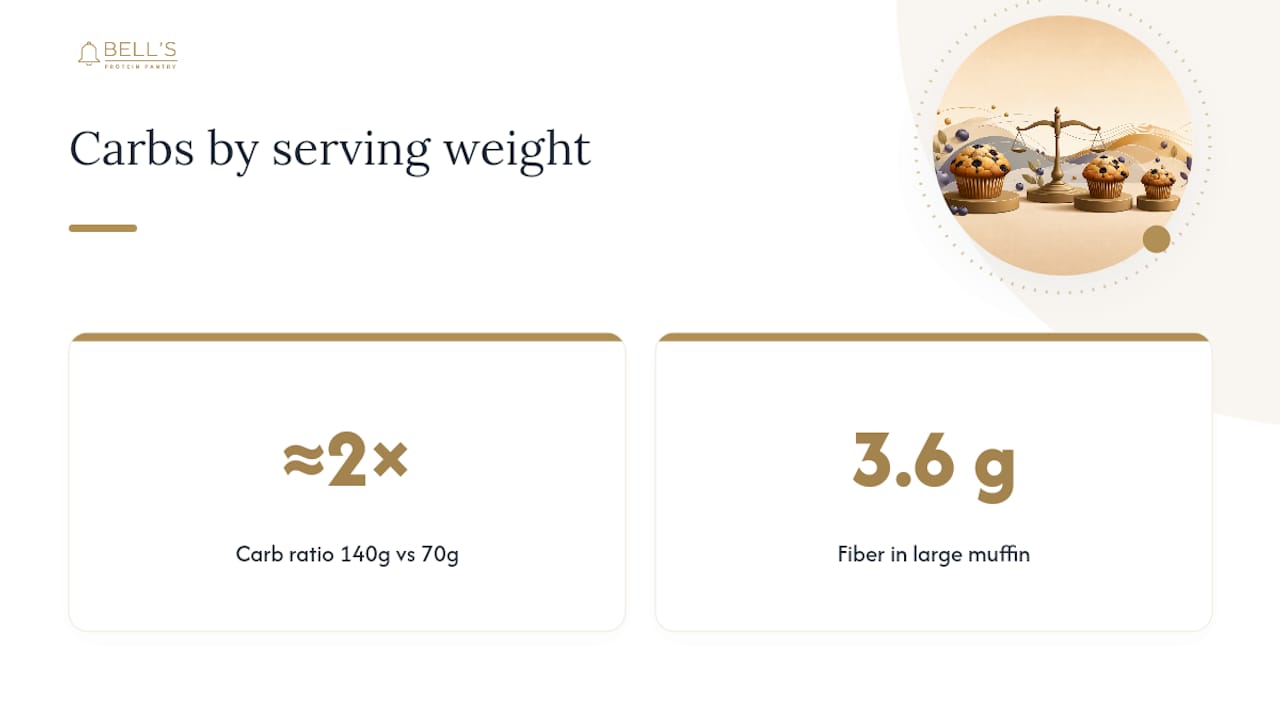
Pro Tip: A kitchen scale settles more carb-counting arguments than any label ever will. Weigh your muffin once, note the gram figure, and you’ll spot which row of this table actually applies to you.
What Actually Changes a Muffin’s Carb Count
Two blueberry muffins can look identical and carry wildly different carb loads, and the difference almost always comes down to what’s in the batter, not the blueberries themselves.
Added sugar in commercial mixes does most of the damage. EWG’s product analysis found some popular dry mixes pack 32–36 grams of added sugar into a single dry-mix serving, before you’ve even cracked an egg. Flour type and quantity matter too, along with whether you’re getting real blueberries or “blueberry bits,” which are often sugar and food coloring dressed up to look like fruit.
Watch for these red flags on a label:
- A mix serving size that seems small relative to the sugar grams listed
- “Blueberry-flavored bits” instead of dried or fresh blueberries
- Fiber under 1 gram per serving
- A syrup glaze or streusel topping added after baking
Pro Tip: Added sugar often hides under names like invert sugar, corn syrup solids, or dextrose. If three sweeteners show up before the blueberries do, assume the carb count runs high.
How to Estimate Carbs From a Label or Recipe
You don’t need a lab to get a solid carb estimate. You need basic division and a little patience.
For a packaged mix:
- Check the dry mix serving size and its listed total carbs.
- Find how many muffins that serving yields (often two).
- Add any carbs from ingredients you mix in, like milk or oil.
- Divide the combined total by the number of muffins you actually bake.
For a homemade recipe:
- Add up total carbs from every ingredient in the batch, flour, sugar, milk, blueberries, everything.
- Divide that batch total by the number of muffins the recipe makes.
A worked example: a Krusteaz-style mix lists about 72g total carbohydrate per 90g serving, which typically yields two muffins. That’s 36g of carbs per muffin from the mix alone, before any add-ins.
Pro Tip: If your muffins come out bigger than the recipe’s stated yield, say you got 10 instead of 12, divide by the number you actually pulled from the oven, not the number on the box.
Are Blueberry Muffins OK for Blood Sugar Management?
Standard blueberry muffins are high in refined carbs relative to protein and fiber, and they can push blood glucose up quickly if eaten alone. Virta Health notes that typical blueberry muffins generally don’t fit a blood-sugar-stabilizing eating pattern unless your total daily carbohydrate intake is being carefully tracked.
That doesn’t mean a flat no. It means portion and pairing decide the outcome:
- Split a large muffin in half and pair it with eggs or a protein shake
- Choose a mini or small muffin over a commercial large one
- Favor recipes with more fiber and less added sugar
- Avoid eating a muffin on an empty stomach with nothing else on the plate
- Have a Bell's Protein Pantry muffin with 39% less sugar
Talk to your doctor or a registered dietitian about how muffins fit your specific blood-sugar targets. Everyone’s response to a 46g-carb hit looks different depending on medication, activity, and overall carb budget for the day.
Lower-Carb Swaps That Actually Work
You don’t have to give up muffins. You just have to get smarter about which ones you reach for.
- Go mini instead of large; you get the same flavor with a fraction of the carbs
- Halve a large muffin and save the rest for tomorrow
- Bake with almond or oat flour to cut refined carbs and add fiber
- Choose a mix built around protein instead of sugar as the main bulking ingredient (like Bell's Protein Pantry)
That last swap makes the biggest difference. A standard large muffin can carry 66–74g of carbs, while Bell’s Protein Pantry’s blueberry mix is formulated with 39% less sugar than leading conventional mixes and delivers 17–19g of protein per serving. That protein does real work, it slows digestion and keeps you fuller longer, which matters if you’ve ever eaten a muffin at 10am and been hungry again by 10:45.
Pro Tip: If you’re baking at home, check out this high-protein muffin recipe guide for exact swaps that boost protein without wrecking texture.

How I Fit a Muffin Into My Own Plan
A muffin earns its spot on my plate when I treat it as a planned carb, not a grab-and-go afterthought. I weigh it, pair it with eggs or a protein shake, and save bakery-style muffins for weekends instead of weekday breakfasts. Small habits like these keep one baked good from quietly running my whole day’s carb budget.
A Simpler Way to Bake Lower-Carb Muffins at Home
Store-bought muffin mixes routinely pack 32–36 grams of added sugar into a single dry serving, and most of that sugar does nothing but spike your blood glucose.

That protein-first formula means you get the same warm-from-the-oven muffin experience without the sugar crash an hour later. If you’re ready to swap your current mix for one built around your actual nutrition goals, check out the Protein Baking Mixes collection and pick up a bag of the Blueberry Muffin mix for your next baking day.
Frequently Asked Questions
How many carbs are in a typical blueberry muffin? A typical blueberry muffin has between 36g and 74g of total carbohydrates, depending mostly on size. A small 70g muffin sits near the low end, while a large 140g commercial muffin sits near the high end.
What is the serving size for blueberry muffin nutrition labels? Serving size varies widely by brand and bakery, from about 28g for a mini muffin to 139–140g for a large commercial one. Always check the gram weight, not just the label word “medium” or “large.”
Are blueberry muffins healthy? Standard blueberry muffins are high in refined carbs and added sugar relative to protein and fiber, so they function more like a dessert than a health food. Choosing a smaller portion or a higher-protein mix changes that equation considerably.
Do net carbs differ much from total carbs in a blueberry muffin? Not usually. Most blueberry muffins contain under 4 grams of fiber, so subtracting fiber from total carbs only shaves off a small amount.
What’s a lower-carb alternative to a regular blueberry muffin? Mini muffins, half-portions, and high-protein mixes like Bell’s Protein Pantry’s Blueberry Muffin mix all reduce carb and sugar load while keeping you fuller longer thanks to added protein.
This article is general information, not a substitute for advice from a qualified doctor. Consult a qualified healthcare professional about your own circumstances before acting on anything here.
Sources
Carb and calorie figures throughout this article draw from PubMed, CalorieKing, Virta Health, Carb Manager, and EWG Food Scores. Table values reflect ranges compiled across these sources.
Recommended
- Low Sugar Baking: Easy Swaps & Recipes for Home Bakers – Bell’s Protein Pantry
- Healthy Blueberry Muffin Recipe: High-Protein Guide – Bell’s Protein Pantry
- Blueberry Protein Muffins: High-Protein Recipe Guide – Bell’s Protein Pantry
- Best Blueberry Muffin Mix for High-Protein Baking – Bell’s Protein Pantry