
The Best High-Protein Snacks to Bring to Work

The most reliable high-protein snacks for work are Greek yogurt (16–20 g per serving), hard-boiled eggs (provide a moderate amount of protein each), beef jerky (provides a notable protein amount per ounce), tuna or salmon pouches (19–25 g per 3-oz serving), edamame (offers significant protein per cup), cottage cheese (provides notable protein per half-cup), string cheese (~7–8 g per stick), and protein bars (10–25 g depending on brand). Here’s a quick look at where each one lands on the protein scale:
Smaller boosters (5–12 g per serving):
- Hard-boiled eggs provide a moderate protein amount per egg
- String cheese: ~7–8 g per stick
- Beef jerky provides approximately 9 grams of protein per ounce
- Chia pudding: ~5–7 g per half-cup
Mid-range options (12–18 g per serving):
- Cottage cheese: ~14 g per half-cup
- Edamame: ~17 g per cup
- Greek yogurt: ~16–20 g per serving
Snacks that can hit 20–30 g on their own:
- Tuna or salmon pouches: ~19–25 g per 3-oz serving
- Protein bars: varies widely, 10–25 g
- Egg muffins (2–3 pieces): ~18–24 g
For choosing between options, the simplest rule is this: if you have access to an office fridge, lean into Greek yogurt, cottage cheese, and egg muffins. If your desk is your only storage, shelf-stable picks like jerky, tuna pouches, and nut butter packets are your best friends. Plant-based? Edamame, roasted chickpeas, and chia pudding all travel well.
Key Takeaways
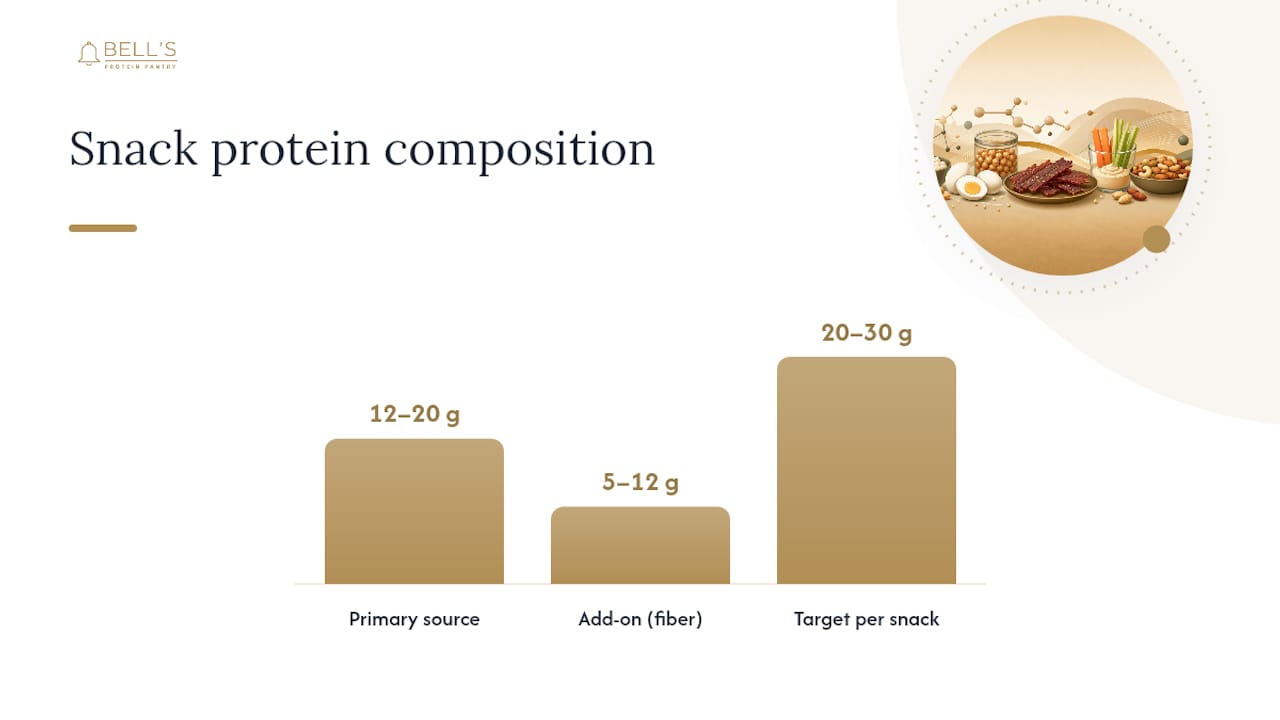
The most effective strategy for high-protein snacks at work is to prep once, portion clearly, and pair a 12–20 g primary source with a 5–12 g add-on to reliably hit 20–30 g per snack.
| Point | Details |
|---|---|
| Target 20–30 g per snack | Pair one primary source (12–20 g) with one add-on (5–12 g) to hit the recovery-friendly range. |
| Refrigerate perishables promptly | Use an insulated bag with an ice pack; discard any perishable snack left at room temperature for over 2 hours. |
| Prep once, eat all week | Batch-cook egg muffins, energy bites, or baked muffins on Sunday; freeze extras for up to 3 months. |
| Pair protein with fiber | Adding fiber (fruit, veggies, chia seeds) slows digestion and prevents mid-afternoon energy crashes. |
| Bell’s Protein Pantry mixes | Deliver 17+ g protein per serving with 39% less sugar, making them a reliable make-ahead work snack option. |
Table of Contents
- Why protein matters during the workday
- Ready-to-eat high-protein snacks for work
- Make-ahead snacks you can prep once and grab all week
- How to build a 20–30 g protein snack at work
- Packing, storage, and food safety for work snacks
- Why Bell’s Protein Pantry mixes work as a make-ahead office snack
- Choosing snacks that fit your dietary needs
- What actually makes the high-protein work habit stick
- Bell’s Protein Pantry makes your Sunday prep count all week
- Sources
Why protein matters during the workday
Protein keeps you fuller longer, supports steady energy, and helps your muscles recover whether you hit the gym before or after your shift. Harvard Health recommends aiming for some protein at every meal and snack, noting that at least 5 g is a useful minimum and that 20–30 g is the sweet spot for muscle recovery around resistance training.
Pairing protein with fiber makes that satiety effect even stronger. Verywell Health explains that the combination slows digestion and reduces the blood sugar spikes that cause afternoon energy crashes — a real issue in office settings where the vending machine is always ten steps away.
Ready-to-eat high-protein snacks for work
No cooking, no prep, just grab and go. These options split into two camps: refrigerated items you keep in the office fridge, and shelf-stable picks that live in your desk drawer.
Refrigerated picks:
- Greek yogurt (16–20 g/serving): thick, filling, and pairs well with a handful of nuts for extra protein and crunch. Keep it in the fridge; it’s good for 1–2 weeks unopened.
- Cottage cheese (~14 g/half-cup): mild flavor, easy to eat with a spoon, and works with fruit or a drizzle of hot sauce. Refrigerate and use within 5–7 days of opening.
- Hard-boiled eggs (~6 g each): prep a batch on Sunday and they keep refrigerated for up to one week. Two eggs = ~12 g protein with zero added sugar.
- Edamame (~17 g/cup): buy pre-shelled and frozen, thaw overnight, and pack in a small container. Refrigerate and eat within 3–4 days.
Shelf-stable animal proteins:
- Beef jerky (~9 g/oz): convenient but watch sodium. The American Heart Association recommends limiting heavily processed, high-sodium meats, so look for lower-sodium varieties.
- Tuna or salmon pouches (19–25 g per 3-oz serving): no can opener needed, and canned fatty fish also delivers heart-healthy omega-3s. NIH Office of Dietary Supplements notes that omega-3s from fatty fish support cardiovascular health beyond the protein benefit alone.
Plant-based shelf-stable options:
- Roasted chickpeas (~7–8 g/half-cup): crunchy, satisfying, and available in dozens of flavors. Shelf-stable for weeks in a sealed bag.
- Pumpkin seeds (~9 g/oz): small but dense. Toss a small bag in your work bag and forget about it until hunger hits.
Packaged convenience items:
- Protein bars (10–25 g): read the label carefully. Many bars marketed as “high protein” sit below 10 g while carrying 20+ g of sugar.
- String cheese (~7–8 g/stick): kid-friendly packaging, adult-level convenience. Refrigerate; eat within 1 week of opening.
Per-serving protein figures are drawn from USDA FoodData Central and Healthline’s portable snack guide.
| Snack | Protein (g/serving) | Needs fridge? | Quick tip |
|---|---|---|---|
| Greek yogurt | 16–20 g | Yes | Add nuts for crunch and extra protein |
| Cottage cheese | ~14 g (½ cup) | Yes | Pair with fruit or hot sauce |
| Hard-boiled eggs | ~6 g each | Yes | Batch-cook Sunday; good 7 days |
| Edamame | ~17 g (1 cup) | Yes | Buy pre-shelled; thaw overnight |
| Tuna pouch | 19–25 g (3 oz) | No | No opener needed; omega-3 bonus |
| Beef jerky | ~9 g (1 oz) | No | Choose low-sodium varieties |
| Roasted chickpeas | 7–8 g (½ cup) | No | Keep a bag in your desk drawer |
| String cheese | 7–8 g (1 stick) | Yes | Pair with jerky for ~17 g total |
| Protein bar | 10–25 g | No | Check sugar content before buying |
| Pumpkin seeds | ~9 g (1 oz) | No | Mix into yogurt or eat solo |
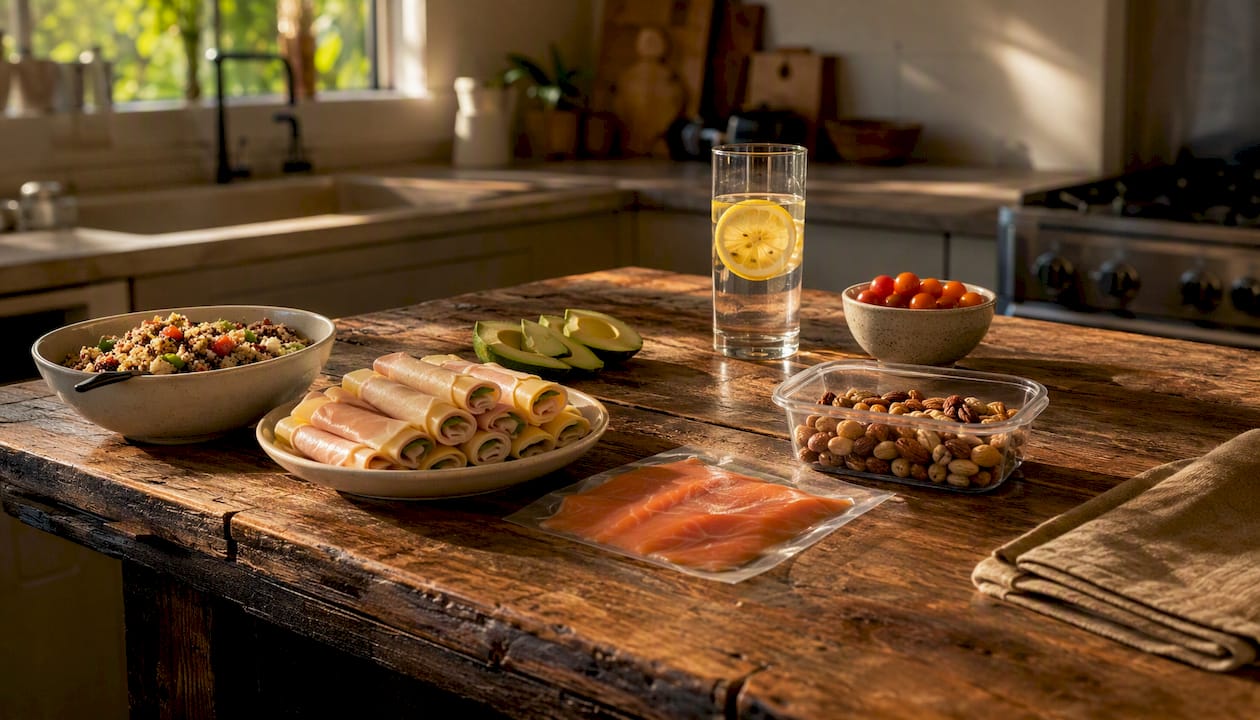
Pro Tip: Store crunchy elements like roasted chickpeas or pumpkin seeds in a separate small container from creamy bases like yogurt or cottage cheese. Combining them right before eating keeps both textures intact after hours in a bag.
Make-ahead snacks you can prep once and grab all week
Spending 30–45 minutes on a Sunday sets you up with protein-forward snacks for five full days. These options travel well, hold up in the fridge or freezer, and give you a known protein count every time.
1. Egg muffins Whisk 6 eggs with diced vegetables and shredded cheese, pour into a muffin tin, and bake at 350°F for 18–20 minutes. Makes 6 muffins (~3 g protein each from egg alone, plus cheese). Two muffins = ~12–14 g protein. Keep refrigerated for 4 days or freeze for up to 3 months.
2. Greek yogurt parfait cups Layer Greek yogurt, berries, and a tablespoon of chia seeds in small mason jars. Each jar delivers ~18–22 g protein (yogurt 16–20 g + chia ~2 g). Refrigerate for up to 3 days. Pack the granola separately to keep it crunchy.
3. Chia seed pudding Combine 2 tablespoons chia seeds with ¾ cup unsweetened almond milk and a scoop of protein powder. Stir, refrigerate overnight. Harvard’s nutrition source notes that two tablespoons of chia seeds provide roughly 4–5 g protein plus fiber, which helps with satiety. With protein powder, a single jar can reach 20–25 g.
4. Overnight oats with protein powder Combine ½ cup rolled oats, ¾ cup milk, one scoop protein powder, and a tablespoon of nut butter. Refrigerate overnight. Protein per jar: ~25–30 g depending on your protein powder. Good for 3–4 days in the fridge.
5. Homemade energy bites Mix 1 cup rolled oats, ½ cup nut butter, ¼ cup honey, ¼ cup protein powder, and 2 tablespoons chia seeds. Roll into balls and refrigerate for 30 minutes. Each ball delivers roughly 4–6 g protein; eat 3–4 for a solid 15–20 g snack. Keeps refrigerated for 1 week or frozen for 2 months.
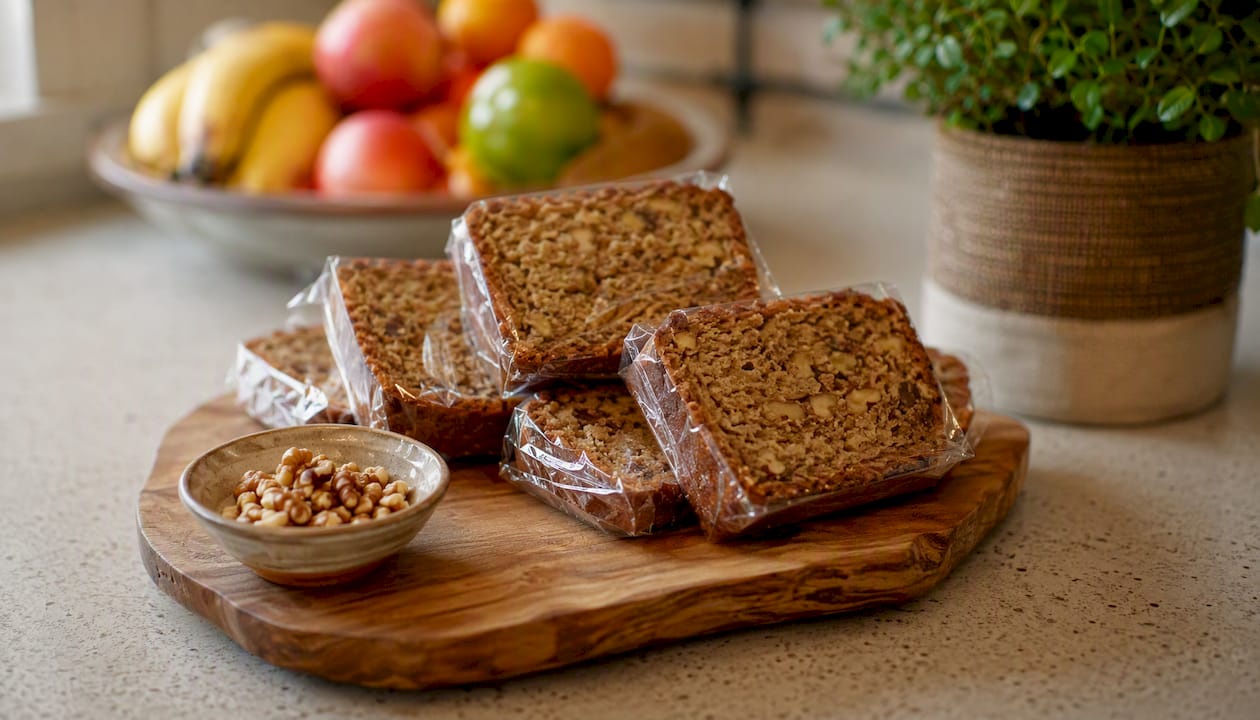
6. High-protein banana bread or muffins This is where a quality baking mix saves serious time. Bake a batch on Sunday, slice or portion into individual servings, and wrap each one. Bell’s Protein Pantry’s Banana Bread mix delivers 17+ g protein per serving with 39% less sugar than leading brands, so you get bakery-quality flavor without the sugar crash. Freeze extras and rotate through the week. For a full step-by-step prep guide, the Protein Blueberry Muffin meal prep post walks through the whole Sunday batch process.
7. Cottage cheese and veggie snack packs Portion ½ cup cottage cheese into small containers alongside sliced cucumbers, bell pepper strips, or cherry tomatoes. ~14 g protein per pack. Refrigerate for up to 4 days.
How to build a 20–30 g protein snack at work
The simplest approach: pair one primary protein source (12–20 g) with one secondary add-on (5–12 g). Harvard Health supports targeting 20–30 g around resistance training for recovery, and this two-item method gets you there without overthinking it.
Sample combos with protein math:
- Greek yogurt (17 g) + 1 oz pumpkin seeds (9 g) = ~26 g
- Tuna pouch (20 g) + 5 whole-grain crackers + 1 string cheese (7 g) = ~27 g
- 2 hard-boiled eggs (12 g) + ½ cup cottage cheese (14 g) = ~26 g
- 1 cup edamame (17 g) + 1 oz beef jerky (9 g) = ~26 g
- Overnight oats with protein powder (25–30 g) = hits the target solo
- 2 egg muffins (12–14 g) + 1 string cheese (7 g) = ~19–21 g
For a fiber and protein pairing that also steadies blood sugar, add a piece of fruit, a handful of raw veggies, or a tablespoon of chia seeds to any of these combos.
Pro Tip: If you work out before or after your shift, aim for your 20–30 g snack within 30–60 minutes of finishing. For a mid-afternoon desk slump with no workout involved, even a 12–15 g snack paired with fiber is enough to carry you to dinner without raiding the office candy bowl.
Packing, storage, and food safety for work snacks
Perishable snacks need to stay at or below 40°F. If your commute runs longer than an hour, pack refrigerated items in an insulated bag with an ice pack. Once at the office, transfer them to the fridge immediately.
Quick packing checklist:
- Small insulated lunch bag or bento box
- Reusable ice pack (keeps food safe for 4–6 hours)
- Small leak-proof containers for yogurt, cottage cheese, or egg muffins
- Separate dry container for crunchy add-ons (nuts, seeds, chickpeas)
- Spoon, napkin, and a small fork if needed
Refrigerator timelines for common make-ahead snacks:
- Egg muffins: 4 days refrigerated, 3 months frozen
- Greek yogurt parfait jars: 3 days refrigerated (pack granola separately)
- Energy bites: 1 week refrigerated, 2 months frozen
- Baked protein muffins or banana bread: 4–5 days refrigerated, 3 months frozen
- Cottage cheese packs: 4 days refrigerated
The USDA’s food safety guidance puts the “danger zone” for perishable foods at 40°F–140°F. A snack left on a desk at room temperature should be eaten within 2 hours. After that, discard it. For shelf-stable items like jerky, nut packs, and sealed tuna pouches, Verywell Health recommends keeping a small stash in your desk drawer so you always have a backup when the fridge option runs out.
Pro Tip: Pack crunchy elements like roasted chickpeas or granola in a separate zip bag inside your lunch container. Combine them with your yogurt or cottage cheese right at your desk. This one habit keeps textures fresh and makes the snack feel like something you actually want to eat at 3 PM.
Why Bell’s Protein Pantry mixes work as a make-ahead office snack
The challenge with most make-ahead baked snacks is that you never quite know how much protein you’re getting. Bell’s Protein Pantry solves that. You bake a batch on Sunday, portion it out, and head into the week knowing exactly what’s in each slice or muffin.
Practically, it looks like this: bake a loaf of banana bread or a tray of muffins, let them cool, wrap individual portions in parchment, and stack them in the fridge or freezer. Grab one each morning on your way out. If you froze extras, pull one out the night before or microwave it for 30–45 seconds at work. The texture holds up well, and the protein count stays consistent.
For anyone tracking macros or managing weight alongside their work snack routine, the high-protein weight loss snack guide on the Bell’s blog pairs well with this approach.
Pro Tip: Slice banana bread into portions before freezing rather than freezing the whole loaf. Individual slices thaw faster and are easier to grab without defrosting more than you need.
Choosing snacks that fit your dietary needs
High-protein eating at work looks different depending on your dietary preferences, and the good news is there are solid options across every category.
Vegan and plant-based: Edamame, roasted chickpeas, pumpkin seeds, chia pudding, and plant-based protein bars all deliver meaningful protein without animal products. Combining two plant sources (like edamame + pumpkin seeds) helps you reach a fuller amino acid profile. Overnight oats with a plant-based protein powder can hit 20–25 g per jar.
Vegetarian: All of the plant-based options above apply, plus Greek yogurt, cottage cheese, string cheese, hard-boiled eggs, and egg muffins. Vegetarians generally have an easier time hitting 20–30 g per snack because dairy and eggs are both protein-dense and portable.
Gluten-free: Most naturally high-protein foods (eggs, dairy, meat, fish, legumes, seeds) are gluten-free. Watch labels on protein bars, jerky marinades, and flavored roasted chickpeas, which sometimes contain gluten-containing additives. Bell’s Protein Pantry mixes are worth checking for current gluten-free status directly on their product pages, as formulations can vary.
Lower sodium: Heavily processed options like jerky and some protein bars carry significant sodium. The American Heart Association recommends prioritizing fish, legumes, and low-fat dairy over processed meats when heart health is a concern. Tuna pouches, Greek yogurt, and edamame are all naturally lower in sodium and still protein-dense.
Lower sugar: Many flavored yogurts, granola bars, and protein bars carry more sugar than protein. Reading the nutrition label before buying is the single most useful habit here.
What actually makes the high-protein work habit stick
The snacks themselves aren’t the hard part. The habit is. Every week, we come back to the same simple ritual: prep on Sunday, portion into ready-to-grab packs, and keep a shelf-stable backup in the desk drawer for the days when the fridge option doesn’t happen.
Freeze extras from your Sunday bake. Rotate them through the week so nothing goes stale and you always have something waiting. That rotation habit is what separates the people who eat well at work from the ones who end up at the vending machine by Wednesday.
Bell’s Protein Pantry makes your Sunday prep count all week
Baked snacks with 17+ g protein per serving and 39% less sugar than leading brands — that’s what Bell’s Protein Pantry protein baking mixes bring to your Sunday prep routine. Mix, bake, portion, and freeze. By Monday morning, you have a week’s worth of portable, protein-forward snacks ready to grab on your way out the door.
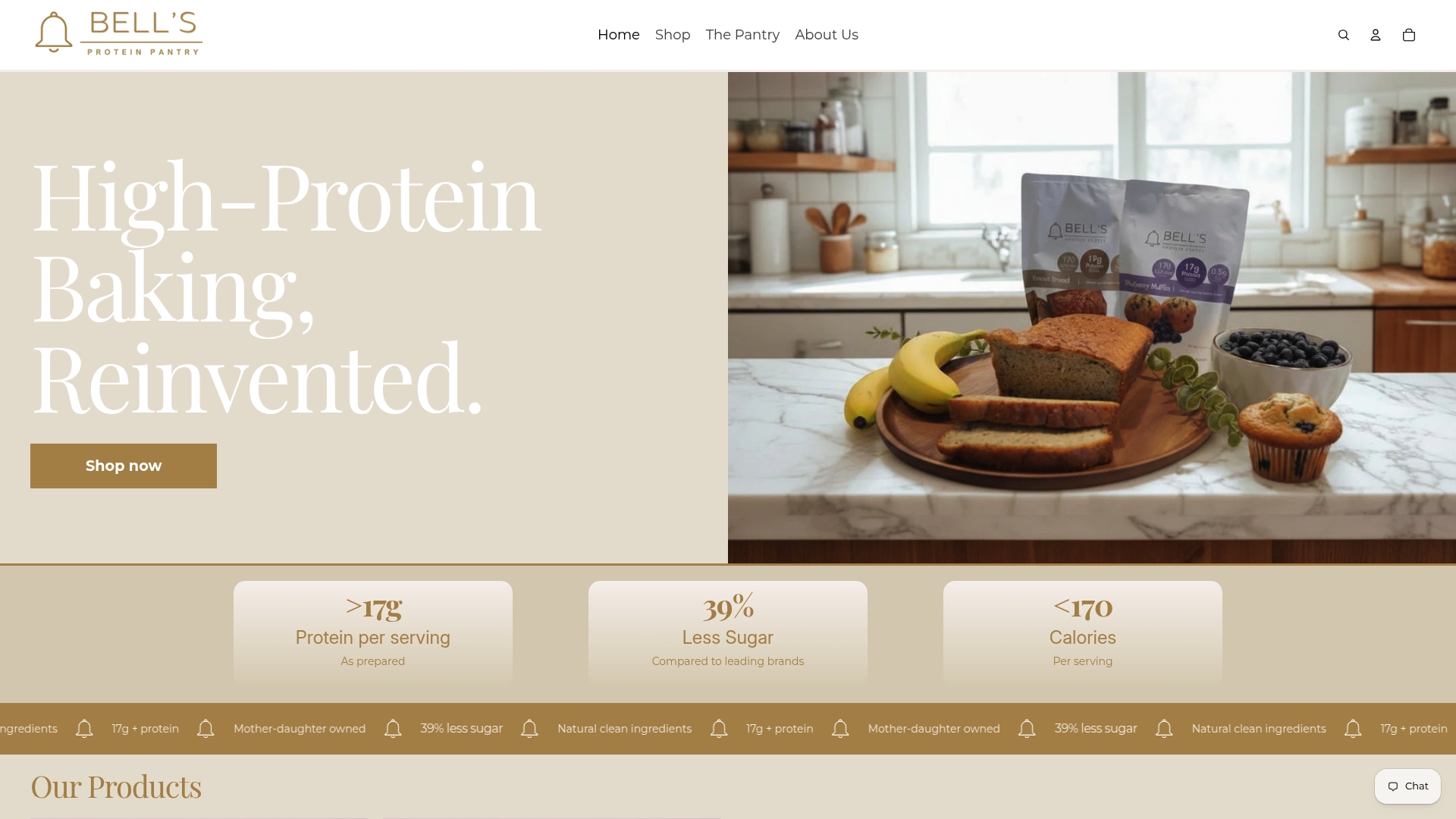
The banana bread and blueberry muffin mixes both use all-natural ingredients, bake in under 30 minutes, and portion cleanly into individual servings. Wrap each one, stack them in the fridge or freezer, and reheat at work in under a minute. No guessing on protein, no sugar crash at 2 PM. Browse the full mix collection at Bellsproteinpantry and pick the flavor that fits your week.
Sources
These are the sources we relied on for protein figures, nutrition guidance, and packing advice throughout this article:
- Fdc
- High-protein snacks to build muscle and keep hunger at bay — Harvard Health
- 30 High Protein Snacks That Are Healthy and Portable — Healthline
- Protein and heart health — American Heart Association
- NIH Office of Dietary Supplements — Omega-3 Fatty Acids
- Healthy high-protein snacks for busy days — Verywell Health
This article is general information, not a substitute for advice from a qualified doctor. Consult a qualified healthcare professional about your own circumstances before acting on anything here.
Recommended
- High Protein Weight Loss Snacks That Actually Work – Bell’s Protein Pantry
- Best High Protein Snacks for Fitness and Real Results – Bell’s Protein Pantry
- Portable Protein Snacks for Busy, Health-Conscious People – Bell’s Protein Pantry
- High Protein Breakfast Ideas to Keep You Full All Day – Bell’s Protein Pantry