
90-Second Protein Mug Cake: High-Protein Snack Ready Fast

This protein mug cake is ready in 90 seconds to 3 minutes, serves one, and delivers roughly 18–25 g of protein per serving depending on your powder and add-ins, per tested recipe results. Microwave cooking works through steam, so expect a soft, moist texture rather than a traditional crust. It sets fully during a 30–60 second rest after cooking, so pulling it out while the center looks just glossy is exactly right.
Prep time: 3 minutes | Cook time: 90 seconds–3 minutes | Yield: 1 serving
Quick recipe checklist:
- Moisture anchor: Greek yogurt, mashed banana, or oil
- 1 scoop protein powder (whey, casein, or plant blend)
- Leavening: ¼ tsp of baking powder
- Liquid: 2–3 tbsp milk or water
Pro Tip: Use a 12-oz or larger microwave-safe mug. A mug that is too small causes overflow and uneven cooking.
Key Takeaways
A protein mug cake with a moisture anchor, leveled protein powder scoop, and correct microwave timing consistently delivers 18–25 g of protein in under three minutes.
| Point | Details |
|---|---|
| Cook time and rest | Microwave 60–90 seconds by wattage, then rest 45–60 seconds before eating. |
| Moisture anchor is required | Greek yogurt, mashed banana, or oil prevents dry, chalky texture every time. |
| Match liquid to powder type | Plant and casein powders need 1–2 tsp extra liquid compared to whey. |
| Protein range per serving | Expect 18–25 g protein depending on powder choice and add-ins. |
| Bell’s Protein Pantry shortcut | Use ¼ cup of a Bell’s mix with 3 TBSP water, 17–19 g protein, no measuring required. |
Table of Contents
- What goes into a protein mug cake?
- How to make it in the microwave (step by step)
- Why does your mug cake turn out rubbery or dry?
- How does protein powder type affect your mug cake?
- Fast flavor variations and serving ideas
- What are the macros in a protein mug cake?
- How Bell’s Protein Pantry makes mug cakes even easier
- Our take on what actually matters in a protein mug cake
- Bell’s Protein Pantry baking mixes: skip the measuring
- Sources
What goes into a protein mug cake?
A solid high-protein mug cake needs four things working together: structure, moisture, leavening, and protein. Overload any one of them and the texture suffers.
Core ingredients (single serving):
- 3 tbsp oat flour or all-purpose flour
- 1 scoop (about 30 g) protein powder
- ¼ tsp baking powder
- 1 pinch of salt
- 3 tbsp milk (dairy or non-dairy)
- 1 large egg or 2 tbsp egg whites
- 2 tbsp Greek yogurt or mashed banana (moisture anchor)
- 1 tsp oil or nut butter (optional, adds richness)
- 1–2 tsp sweetener or maple syrup (optional)
Common add-ins: chocolate chips, blueberries, chopped nuts, cinnamon, or a spoonful of peanut butter swirled in before cooking.
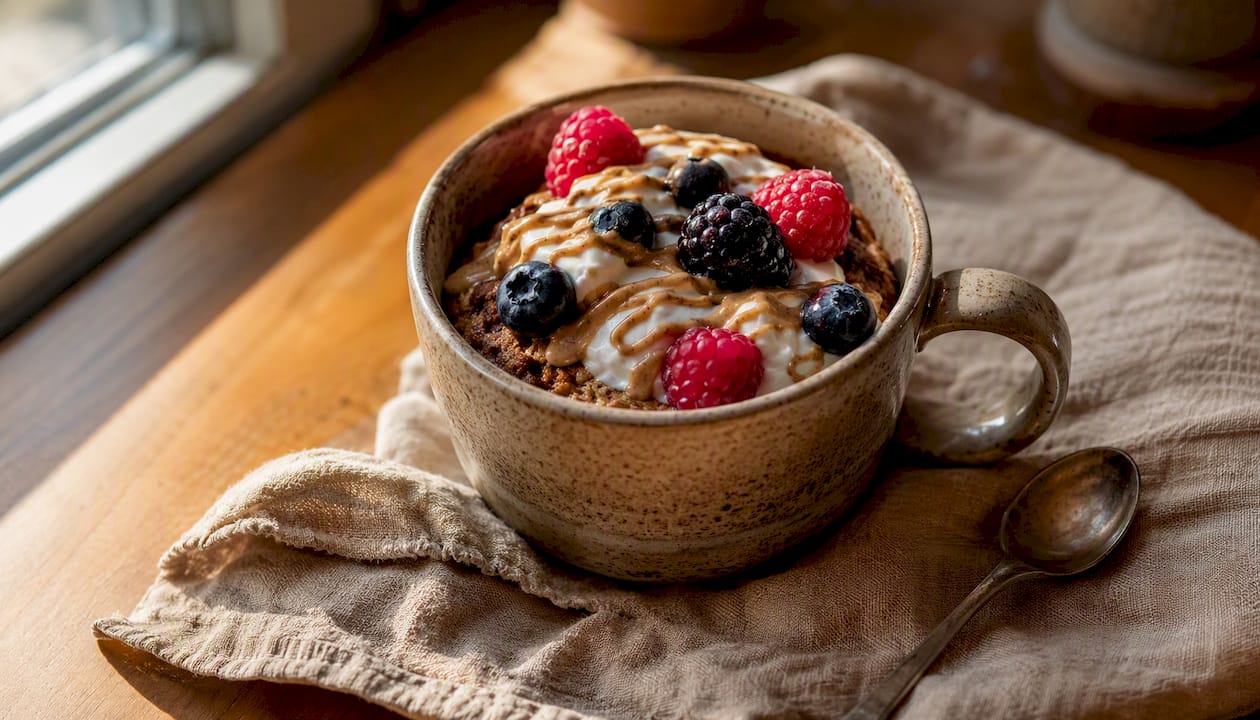
Topping ideas: a drizzle of almond butter, a dollop of Greek yogurt, fresh berries, or a splash of low-sugar syrup.
Ingredient swaps:
| Need | Swap |
|---|---|
| Vegan egg | 1 tbsp ground flaxseed + 3 tbsp water (rest 5 min) |
| Gluten-free | Certified gluten-free oat flour or almond flour |
| Dairy-free | Oat milk, almond milk, or coconut yogurt |
| Lower calorie | Water instead of milk, skip oil |
Pro Tip: Greek yogurt and mashed banana both act as moisture anchors and add protein. Using one of them is non-negotiable for a tender crumb, not optional.
How to make it in the microwave (step by step)
- Add flour, protein powder, baking powder, and salt to your mug. Stir the dry ingredients together first.
- Add the egg (or flax egg), Greek yogurt or banana, milk, and oil. Mix until just combined. Do not over-mix.
- Microwave on high. Start with the shortest time for your wattage (see table below), then check.
- The cake is done when the top looks just set and slightly glossy. The center may look slightly underdone.
- Rest for 30–60 seconds before eating. It firms up during this time.
- Add toppings and enjoy warm.
Wattage guide (based on practical cook-time testing):
| Microwave wattage | Starting cook time | Check interval |
|---|---|---|
| 1000W | 90 seconds | +15 seconds |
| — | 90 seconds | +10 seconds |
| 1000W | 60 seconds | +10 seconds |
| — | 60 seconds | +10 seconds |
Always check in short increments. Overcooking by even 15 seconds can push a mug cake from tender to rubbery. For basic microwave food safety, use a microwave-safe mug and avoid metal utensils.
Pro Tip: Stir the batter until just combined, then tap the mug on the counter twice to release air bubbles. This gives you a more even rise.
Why does your mug cake turn out rubbery or dry?
Texture problems are the most common complaint, and they almost always trace back to one of three causes.
Common problems and fixes:
- Rubbery texture: You overcooked it or skipped the moisture anchor. Reduce cook time by 10–15 seconds and add 1–2 tbsp Greek yogurt or mashed banana next time. Stopping the microwave while the center looks just set and letting the cake rest is the single most reliable fix.
- Dry or chalky texture: Too much protein powder relative to liquid and flour. Protein powder absorbs a significant amount of liquid, so even a slightly heaped scoop can dry out the batter. Level your scoops.
- Undercooked or soggy center: Cook time was too short, or the mug was too wide and shallow. Use a taller, narrower mug and add 10–15 seconds.
- Dense, heavy crumb: Over-mixing develops too much structure. Stir only until the batter comes together.
Microwave cooking is steam-based, which means your mug cake will always be moister than an oven-baked cake and will never form a crust. That is normal, not a flaw. Post-cook toppings like nut butter, chocolate chips, or a spoonful of yogurt add the textural contrast a crust would otherwise provide.
Pro Tip: Wait the full 60 seconds before tasting. Adding toppings immediately after cooking traps steam and can make the surface gummy. Let it breathe first.
How does protein powder type affect your mug cake?
Treat protein powder as a structural ingredient, not just a flavor boost. Different formulations absorb liquid differently, and that directly changes your final texture.
Behavior by powder type:
- Whey protein: Produces a lighter, slightly springier crumb. Dries out faster than other types, so watch cook time closely and pull it early.
- Casein protein: Much more absorbent. Batter will look thicker, and the cake comes out denser. Add an extra 1–2 tsp of liquid and consider Greek yogurt as your moisture anchor.
- Plant-based blends (pea, rice, hemp): Absorb the most liquid of the three. Plant powders usually need more liquid than whey, so add 1–2 tsp extra milk or water and use a banana or yogurt anchor.
Leveling your scoop matters more than you might think. A heaped 30 g scoop can easily become 40–45 g, which throws off the liquid-to-powder ratio and produces a chalky result. Spoon powder into the scoop and level it off.
Dairy-free and vegan swaps: Pea protein and brown rice protein blends work well. Pair them with oat milk and coconut yogurt for a fully plant-based version that still holds together.
Pro Tip: If you switch protein powder brands, expect to adjust liquid by 1–2 tsp. Even powders with the same macros can behave differently because of their processing method.
Fast flavor variations and serving ideas
The base recipe is a blank canvas. These swaps take under a minute to adjust.
Flavor variations:
- Chocolate: Add 1 tbsp cocoa powder and a handful of chocolate chips.
- Peanut butter: Swirl 1 tbsp peanut butter into the batter before microwaving.
- Banana: Use mashed banana as your moisture anchor and add a pinch of cinnamon.
- Vanilla: Use vanilla protein powder and top with fresh berries and a drizzle of honey.
Vegan and gluten-free versions:
- Replace the egg with a flax egg (1 tbsp ground flax + 3 tbsp water, rested 5 minutes).
- Use certified gluten-free oat flour.
- Swap dairy milk for oat or almond milk and use coconut yogurt as the moisture anchor.
- Choose a plant-based protein powder.
How to add more protein without wrecking texture: Stir in 2 tbsp cottage cheese (blended smooth) or an extra egg white. Both add protein and moisture simultaneously, so the texture stays tender. Dairy-based additions like cottage cheese or Greek yogurt improve mouthfeel while bumping up your protein count.
For more healthy dessert ideas that fit the same macros, Bell’s Protein Pantry has a full guide worth bookmarking.
Pro Tip: For a post-workout version, top with a spoonful of Greek yogurt and sliced banana. You get extra protein, potassium, and a cooling contrast to the warm cake.
What are the macros in a protein mug cake?
Macros vary by powder brand and add-ins, so treat this as a working estimate rather than a fixed panel.
Estimated nutrition for the base recipe (1 serving, whey protein powder):
| Nutrient | Estimated amount |
|---|---|
| Calories | 280 kcal |
| Protein | 18–25 g |
| Carbohydrates | 18–25 g |
| Fat | 7–12 g |
A tested recipe can deliver roughly 18–25 g protein depending on powder and add-ins. Casein and plant powders often land at the lower end of that range per scoop; adding an egg white or Greek yogurt pushes you toward the higher end.
To raise protein: Add 2 tbsp Greek yogurt (+3–4 g), one egg white (+3–4 g), or 2 tbsp cottage cheese (+4–5 g).
To lower calories: Use water instead of milk, skip the oil, and choose a lower-calorie sweetener.
For tracking, pull the nutrition label from your specific protein powder and calculate from there. For more on how ingredient swaps shift macros in protein bakes, the banana bread protein content guide from Bell’s Protein Pantry walks through the math clearly.
How Bell’s Protein Pantry makes mug cakes even easier
If measuring nine separate ingredients sounds like more effort than you want at 7 AM, a pre-formulated baking mix is a genuinely useful shortcut. Our mug cup only comes in about 150 calories and 15g of protein for a healthier option. Bell’s Protein Pantry baking mixes are built around the same formula this guide describes: structure, moisture anchor, and measured protein, already balanced.
How to convert a Bell’s mix into a single-serve mug cake:
- Use roughly ¼ cup (about 40 g) of the mix per serving.
- Add 3 tbsp milk or water.
- Stir, microwave 60–90 seconds at 1000W, rest 45 seconds, and serve.
The banana bread mix adapts especially well to mug-cake format, and the blueberry muffin mix produces a lighter, fruitier result. Both options skip the guesswork on powder-to-flour ratios that trips up most first attempts.
For a deeper look at how mix behavior compares to scratch baking, the best blueberry muffin mix guide covers the key differences.
Pro Tip: For a thicker, fudgier mug cake using a Bell’s mix, reduce the liquid by 1 tbsp and add 1 tbsp Greek yogurt. It comes out closer to a brownie than a cake. For added protein add an egg, this will also allow it to be more fluffy.
Our take on what actually matters in a protein mug cake
Most people who struggle with mug cakes are fighting the wrong problem. They tweak cook time endlessly when the real issue is the moisture anchor. A mug cake without Greek yogurt, banana, or a fat source will be chalky no matter how precisely you time it, because protein powder is chemically different from flour and absorbs liquid aggressively.
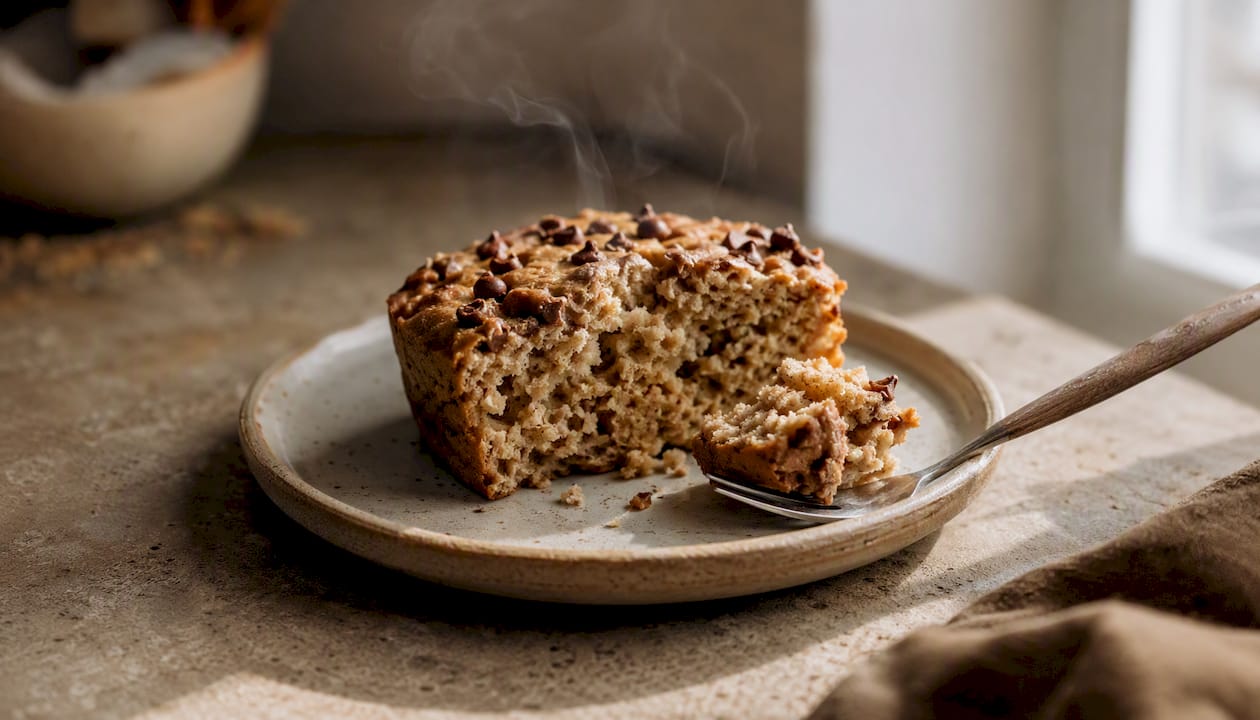
The second thing people underestimate is rest time. Pulling the mug out while the center looks underdone and letting it sit for a full minute is not a workaround. It is the method. Microwaves cook from the inside out, and the residual heat finishes the job.
Speed and protein are the real wins here. A scratch mug cake with a good moisture anchor and the right powder takes three minutes from pantry to spoon. A Bell’s Protein Pantry mix cuts that to two. For anyone fitting protein targets into a busy morning or a post-workout window, that difference is real.
Bell’s Protein Pantry baking mixes: skip the measuring
Scratch mug cakes are satisfying to nail. But on the mornings when you want 19 g of protein in under two minutes without measuring five ingredients, Bell’s Protein Pantry protein baking mixes are the faster path.

The banana bread mix and blueberry muffin mix both convert to single-serve mug cakes with just milk and an egg. No powder math, no texture guesswork. Pick up a mix at Bell’s Protein Pantry and have a warm, high-protein snack ready before your coffee finishes brewing.
Sources
- Protein Mug Cake No Cake Mix (Ready in 2 Minutes!) - My Baking Corner
- Protein Powder Mug Cake - Texanerin Baking
- Protein Muffins: 20g+ High-Protein Recipes | ProteinCalc
- 3-Minute Chocolate Protein Mug Cake - Running to the Kitchen®
- Protein Mug Cake - Easy, Protein-Packed Recipe Ready in Minutes
- Medlineplus
Recommended
- Portable Protein Snacks for Busy, Health-Conscious People – Bell’s Protein Pantry
- High Protein Muffins: 12–19g Per Serving Recipe Guide – Bell’s Protein Pantry
- Healthy Blueberry Muffin Recipe: High-Protein Guide – Bell’s Protein Pantry
- Best Blueberry Muffin Mix for High-Protein Baking – Bell’s Protein Pantry