
Quick High Protein Desserts Ready in 10 Minutes or Less

The six fastest high-protein desserts you can make right now: blender cottage cheese pudding (5 min, moderate protein), two-minute microwave brownie (2 min, moderate protein), Greek yogurt chocolate mousse (5 min, moderate protein), peanut butter chia pudding (3 min active, moderate protein), blended cottage cheese frozen treat (5 min, moderate protein), and a Bell’s Protein Pantry muffin-in-a-cup (5 min microwave, moderate protein).
- Fastest for pure speed: two-minute microwave brownie
- Best for portability: peanut butter chia pudding in a sealed jar
- Best dessert feel: Bell’s Protein Pantry muffin-in-a-cup from mix
Cottage cheese earns its spot in nearly every one of these because it carries roughly 83% more natural protein than cream cheese, thanks to its high casein content. That slow-digesting casein keeps you satisfied longer than a whey-only snack would.
Table of Contents
- What are the best no-bake, single-serve protein desserts you can make fast?
- How do you use a high-protein baking mix for fast single-serve desserts?
- How do you meal prep and store high-protein desserts for grab-and-go?
- Why does adding protein to desserts actually help you feel full?
- What should you look for when buying a high-protein baking mix?
- Quick no-bake protein desserts you can make with nuts and seeds
- Which natural sweeteners work best with high-protein ingredients?
- Common mistakes that ruin quick high-protein desserts
- Key Takeaways
- Why these recipes and mixes matter to us at Bell’s
- Bell’s Protein Pantry mixes make fast protein desserts simple
- Sources and further reading
What are the best no-bake, single-serve protein desserts you can make fast?
Four recipes worth keeping in your back pocket:
Blender cottage cheese pudding. Blend ½ cup whole-milk cottage cheese, 1 scoop chocolate protein powder, 1 tbsp cocoa, and 3 tbsp almond milk until smooth. Chill for a firmer set or eat straight from the blender for a softer pudding. Yields a moderate amount of protein. For a plant-based swap, use silken tofu in place of cottage cheese and a vegan protein powder.
Greek yogurt chocolate mousse. Stir ¾ cup plain Greek yogurt with 1 tbsp cocoa, 1 tsp honey, and a pinch of salt. Fold in a tablespoon of protein powder if you want to push past 16g protein per serving. Top with a few dark chocolate chips to keep sugar low while hitting that familiar chocolate note.
Two-minute microwave brownie. Combine 1 egg, 2 tbsp Greek yogurt, 1 tbsp protein powder, 1 tbsp cocoa, and ½ tsp baking powder in a mug. Microwave for about two minutes and let it rest 30 seconds before eating. Protein is moderate. For a vegan version, swap the egg for a flax egg (1 tbsp ground flaxseed + 3 tbsp water, rested 5 minutes).
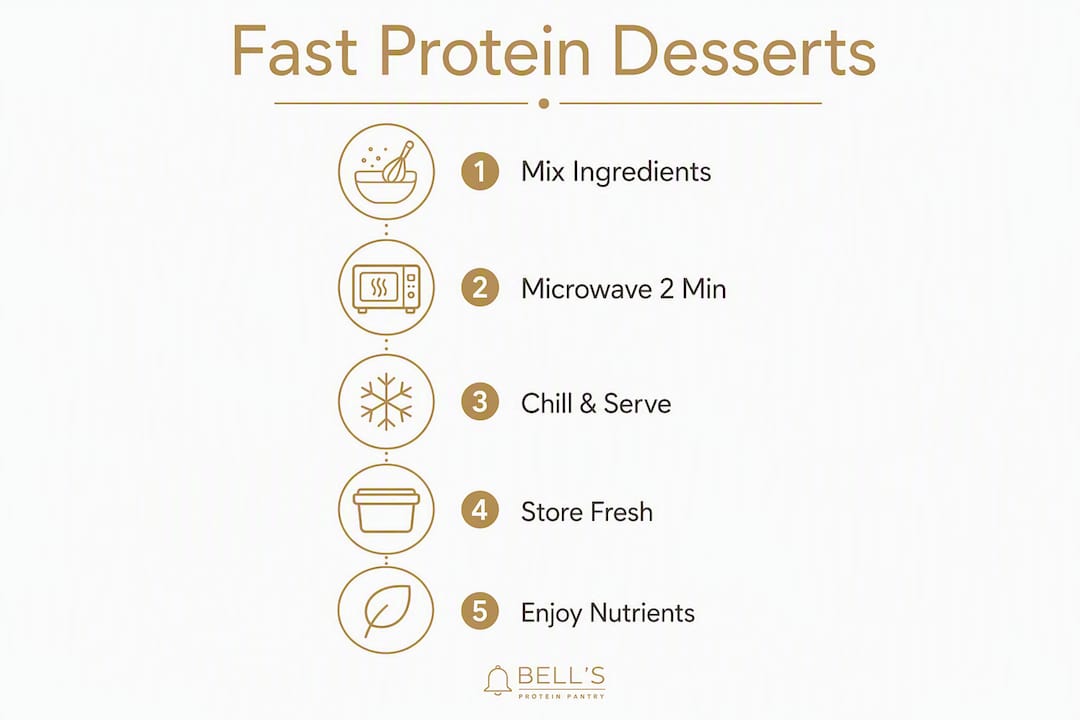
Protein-packed chia pudding. Mix 3 tbsp chia seeds, ¾ cup unsweetened almond milk, 1 tbsp peanut butter, and 1 scoop protein powder. Stir well and refrigerate at least 20 minutes, or overnight. Active prep is under 3 minutes. Protein is moderate per jar.
Storage tip: Single-serve jars with lids keep no-bake puddings and chia cups fresh in the fridge for up to 3 days. Prep four at once on Sunday and you have grab-and-go desserts through Wednesday.
Pro Tip: Microwave wattage matters more than most people expect. Standard 90-second timing works for a 700–900W microwave. On a 1200W+ unit, check your brownie at 60 seconds and add 15-second intervals from there — overcooking protein batter turns it rubbery fast.
How do you use a high-protein baking mix for fast single-serve desserts?
Bell’s Protein Pantry mixes are built for exactly this kind of speed. Here is how to get baked-style results in minutes:
- Muffin-in-a-cup (microwave). Measure 3–4 tbsp of mix into a microwave-safe mug, add 2 tbsp water or milk, and stir until combined. Microwave on high for 60–90 seconds. Check at 60 seconds on high-wattage units. One serving delivers 17–19g protein with 39% less sugar than leading brands.
- Mini muffin tin (oven). Prepare the full mix per package directions, then divide into a 24-cup mini muffin tin. Bake at 350°F for 6-7 minutes. You get 20-24 portable bites from one batch.
- Sheet-pan quick bake. Spread batter about ½ inch thick on a parchment-lined quarter sheet pan. Bake at 350°F for 8–10 minutes. Cut into bars once cooled. Faster than a loaf and easy to portion.
| Format | Prep Time | Cook/Microwave Time | Approx. Protein/Serving |
|---|---|---|---|
| Muffin-in-a-cup (microwave) | 2 min | 60–90 sec | 17–19g |
| Mini muffins (oven, 24-cup tin) | 5 min | 6-7 min | 17–19g |
| Sheet-pan bars | 5 min | 8–10 min | 17–19g |
| Standard muffins (12-up tin) | 5 min | 14–15 min | 17–19g |
Pro Tip: When converting a mix to a microwave single-serve, the batter should be sligtly wetter than the package directions. The microwave pulls moisture out faster than an oven, and a slightly wetter batter keeps the texture tender rather than dense.
How do you meal prep and store high-protein desserts for grab-and-go?
Baked muffins from a high-protein mix stay fresh at room temperature for 2 days, in the fridge for up to 5 days, and in the freezer for up to 3 months. No-bake puddings and chilled cottage cheese desserts are best within 3 days refrigerated. Chia pudding jars hold well for 4 days covered in the fridge.
For portability, single-serve mason jars with screw-top lids are the most practical option. Silicone muffin cups double as both baking molds and travel containers. If you are packing muffins for school or work, a small reusable zip bag or a snack container with a tight lid prevents drying.
Protein powder continues to absorb moisture after mixing. When preparing no-bake desserts ahead of time, increase your liquid ratio slightly and store them covered. A dessert that looks perfect at prep can turn powdery by day two if the liquid balance is off.
Reheating baked muffins: 15–20 seconds in the microwave on medium power restores softness without drying them out. Avoid full power for more than 10 seconds on a high-wattage unit.
Why does adding protein to desserts actually help you feel full?
Protein slows gastric emptying, which means blood sugar rises more gradually after a protein-rich dessert than after a sugar-forward one. That steadier curve is what prevents the energy crash 30 minutes later.
| Dessert Type | Primary Protein Source | Approx. Protein/Serving |
|---|---|---|
| Blender cottage cheese pudding | Cottage cheese (casein) | ~16g |
| Microwave protein brownie | Egg + Greek yogurt + powder | ~15g |
| Chia pudding with protein powder | Protein powder + chia | ~12g |
| Blended cottage cheese frozen treat | Cottage cheese | ~13g |
Bell’s Protein Pantry mixes sit at the top of this range, delivering 17–19g protein per serving. For weight-management goals, that protein density per dessert serving is genuinely useful, not just a marketing claim.
- Cottage cheese contains more protein than cream cheese per serving
- Greek yogurt (plain, ¾ cup): moderate protein content
- One large egg: a source of protein
- One scoop protein powder (standard 30g): a concentrated protein source
What should you look for when buying a high-protein baking mix?
A few label checks make the difference between a mix that actually delivers and one that just sounds healthy:
- Protein per serving: Aim for 15–20g minimum. Anything below 10g is closer to a standard baking mix with a protein claim bolted on.
- Sugar content: Look for reduced-sugar claims and check the grams. Bell’s Protein Pantry mixes carry 39% less sugar than leading brands, which matters when you are eating these as daily snacks.
- Ingredient transparency: Whole-food protein sources (like real eggs, milk protein, or legume flours) beat a vague “protein blend” with no named source.
- Allergen notes: Check for dairy, gluten, and nut disclosures, especially if you are buying for a household with mixed dietary needs.
For low-glycemic baking, the sweetener type matters too. Mixes using monk fruit, erythritol, or coconut sugar tend to have a lower glycemic impact than those relying on cane sugar alone or maltodextrin.
Quick no-bake protein desserts you can make with nuts and seeds
Nuts and seeds are some of the most underused protein boosters in quick desserts. Two tablespoons of hemp seeds add about 6g of complete protein with zero cooking required. Almond butter brings roughly 7g per two-tablespoon serving, plus healthy fats that slow sugar absorption.
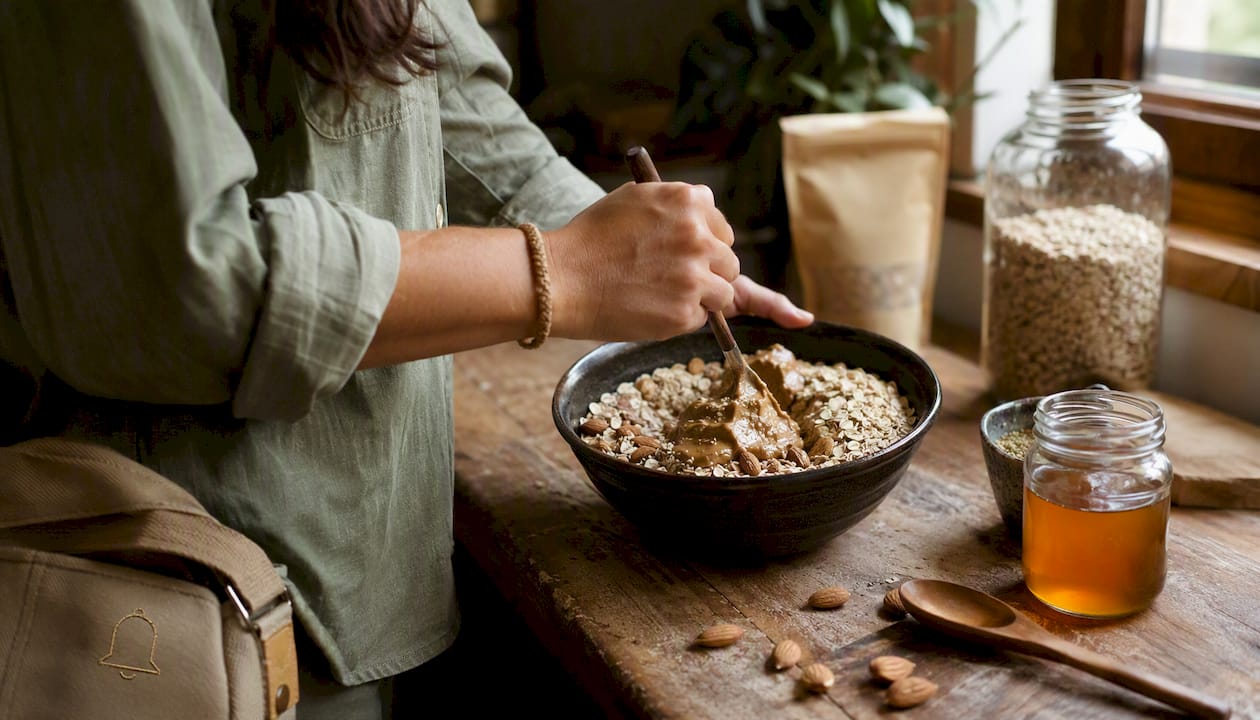
A simple no-bake protein ball takes about 5 minutes: combine ½ cup rolled oats, 2 tbsp almond butter, 1 tbsp honey, 1 scoop protein powder, and 2 tbsp hemp seeds. Roll into balls and refrigerate for 15 minutes. Each ball delivers roughly 5–7g protein depending on your protein powder. Make a dozen at once and they keep in the fridge for a week.
Chia seeds deserve a separate mention. Beyond the chia pudding recipe above, two tablespoons of chia seeds stirred into Greek yogurt with a drizzle of honey and crushed walnuts takes 90 seconds and adds about 4g protein on top of the yogurt’s base.
Which natural sweeteners work best with high-protein ingredients?
Some sweeteners clash with protein powders in ways that affect both flavor and texture. Stevia, for example, can amplify bitterness in chocolate protein powders. Monk fruit sweetener tends to be more neutral and works well in both baked and no-bake applications.
Honey and maple syrup add a small amount of natural protein alongside their sweetness (about 0.3g per tablespoon, which is negligible), but their real value is flavor compatibility. Both pair naturally with peanut butter and chocolate, the two flavors that help busy families adopt protein desserts fastest.
Coconut sugar has a lower glycemic index than white sugar and a mild caramel flavor that complements banana bread mixes particularly well. Dates blended into no-bake balls or puddings add fiber alongside sweetness, which helps buffer the blood sugar response.
Common mistakes that ruin quick high-protein desserts
Overmixing protein batter. Protein powder toughens when overworked. Stir just until combined, especially in mug cakes and microwave brownies.
Skipping the liquid adjustment for make-ahead recipes. Protein powder keeps absorbing moisture in the fridge. A pudding that looks perfect at prep can be thick and chalky by morning. Add a splash more liquid than the recipe calls for when you know it is going overnight.
Microwaving on full power the whole time. High-protein batters dry out fast. Start at 60–70% power for mug cakes, or check early and add short intervals.
Using a low-powered blender for cottage cheese desserts. A standard blender leaves a slightly grainy texture. A high-powered blender produces the smooth, ice-cream-like result that makes these desserts genuinely satisfying.
Choosing a mix based on the front-panel claim alone. “High protein” on the front can mean anything from 8g to 20g per serving. Flip the package and check the nutrition facts before buying.
Key Takeaways
Quick, high-protein desserts work best when you pair the right technique (no-bake, microwave, or a ready mix) with protein-dense ingredients like cottage cheese, Greek yogurt, or Bell’s Protein Pantry mixes delivering 17–19g per serving.
| Point | Details |
|---|---|
| Fastest single-serve option | A two-minute microwave brownie with egg, Greek yogurt, and protein powder delivers ~15g protein. |
| Best portability trick | Pack chia pudding or cottage cheese pudding in sealed single-serve jars; stays fresh up to 3 days refrigerated. |
| Key label check | Look for 15–20g protein per serving and a reduced-sugar claim before buying any baking mix. |
| Microwave timing safety | Check mug cakes at 60 seconds on 1200W+ microwaves; add 15-second intervals to avoid rubbery texture. |
| Bell's Protein Pantry Mixes | Follow directions on package. Do not over mix or over bake. Delivers 15-17g protein per serving. |
Why these recipes and mixes matter to us at Bell’s
We started Bell’s Protein Pantry because we kept running into the same problem: the healthy baking mixes on the market either tasted like cardboard or were loaded with sugar and artificial ingredients. As a mother-daughter team, we wanted something we could actually feel good about eating and serving to our family on a busy Tuesday night.
Every mix we make is built around whole, recognizable ingredients and real protein numbers, not inflated claims. The Banana Bread and Blueberry Muffin mixes came first because those are the flavors people actually reach for when they want something that feels like a treat.
Bell’s Protein Pantry mixes make fast protein desserts simple
Seventeen to nineteen grams of protein per serving, 39% less sugar than leading brands, and a prep time that fits into a real weeknight. That is what Bell’s Protein Pantry mixes are built for.

The Banana Bread mix and the Blueberry Muffin mix are the best starting points. Both work as standard muffins, mini muffins, sheet-pan bars, or a single-serve muffin-in-a-cup from the microwave. One mix, four formats, all under 20 minutes from pantry to plate.
Browse the full range of protein baking mixes and pick your first mix today. The single-serve microwave method means you can have your first high-protein dessert ready before you finish reading this page.
Sources and further reading
The recipe timing, protein estimates, and technique notes in this article draw from the following sources:
- No-Bake Cottage Cheese Cheesecake Cups — Clean Food Crush: supports the casein protein advantage and cottage cheese protein density claim (~83% more than cream cheese).
- Two Minute Protein Brownie — Calla’s Clean Eats: recipe basis for the single-serve microwave brownie and two-minute timing claim.
- 5-Minute Protein Pudding — Sara Baking: supports the blender pudding recipe, storage notes, and the familiar-flavor adoption insight.
- Protein Pudding — Wholesome Yum: protein-per-serving benchmark (~16g) and the make-ahead liquid adjustment guidance.
- Easy Peanut Butter Cup Cottage Cheese Ice Cream — Healthy Kitchen: blender technique notes and the ~13g protein estimate for blended cottage cheese frozen desserts.
- Quick Protein Brownie microwave timing — Recipes by Lena: wattage-specific microwave timing guidance (check at 60 seconds on 1200W+ units).
- Bell’s Protein Pantry: brand specifications including 17–19g protein per serving and 39% reduced sugar claim.
Protein estimates in this article are approximations based on standard ingredient quantities. Exact values vary by brand, scoop size, and specific product formulation. Always check the nutrition label on your specific ingredients for precise macros.
This article is for general informational purposes. Consult a registered dietitian or qualified health professional for personalized nutrition guidance.
Recommended
- Healthy Dessert Ideas That Actually Satisfy Your Sweet Tooth – Bell’s Protein Pantry
- Portable Protein Snacks for Busy, Health-Conscious People – Bell’s Protein Pantry
- High Protein Brunch Recipes for a Satisfying Meal – Bell’s Protein Pantry
- High Protein Muffins: 12–19g Per Serving Recipe Guide – Bell’s Protein Pantry