
Grab and Go Protein Snacks: Your Quick Shortlist

The best grab-and-go protein snacks contain a moderate amount of protein per serving and need zero prep beyond grabbing them from the fridge or pantry. Our shortlist: single-serve Greek yogurt, cottage cheese cups, hard-boiled eggs, string cheese, beef or turkey jerky, roasted chickpeas, canned tuna or salmon packets, and a make-ahead bake like Bell’s Protein Pantry banana bread or blueberry muffins.
We built this list around one idea: your snack should work as hard as you do, without asking much of you in return. That means picking options based on how they’re stored and what your day actually looks like.
- Single-serve Greek yogurt (a moderate amount of protein, refrigerated, zero prep)
- Cottage cheese cup (a moderate amount of protein, refrigerated, zero prep)
- Two hard-boiled eggs (a moderate amount of protein, refrigerated, cook ahead)
- String cheese stick (a moderate amount of protein, shelf-stable a few hours, zero prep)
- Beef or turkey jerky (a moderate amount of protein, shelf-stable, zero prep)
- Roasted chickpeas, half cup (a moderate amount of protein, shelf-stable, zero prep)
- Canned tuna or salmon packet (16 to 20 g, shelf-stable, zero prep)
- Bell’s Protein Pantry baked good (17 to 19 g, freezer or fridge, make-ahead)
Quick stat: Research on protein and appetite regulation shows higher-protein snacking supports satiety and helps preserve lean muscle better than low-protein alternatives, which is why a snack in the 15 to 30 gram range does more for you than a granola bar with 3 grams. Pick the shelf-stable options for travel days and the make-ahead bakes when you know your week is going to get away from you.
Key Takeaways
Grab and go protein snacks work best when you pick two or three reliable options and repeat them, aiming for 15 to 30 grams of protein depending on whether it’s a light bite or a meal replacement.
| Point | Details |
|---|---|
| Aim for 20 to 30 g | This range improves satiety and helps preserve muscle, especially around workouts. |
| Match storage to your day | Shelf-stable jerky and nuts for travel, refrigerated yogurt and eggs for home or office. |
| Combine two items for bigger totals | Pairing a dairy or fish source with a nut butter or cheese easily hits 25 g. |
| Batch-bake once a week | Ten minutes of active prep on a mix or egg muffins covers five to seven days of snacks. |
| Bell’s Protein Pantry fits the make-ahead slot | Its mixes deliver 17 to 19 g of protein per serving and freeze well for grab-and-go mornings. |
Table of Contents
- Grab and Go Protein Snacks by Category, With the Numbers
- How to Hit 20 to 30 Grams of Protein in One Snack
- Make-Ahead Recipes That Actually Survive a Busy Week
- Packing, Storing, and Keeping Snacks Safe on the Go
- Which Grab and Go Snack Fits Your Situation
- Why Repeatable Prep Beats a New Recipe Every Week
- A Simple Way to Keep Protein Snacks in the House
- Where to Verify Protein Numbers and Storage Rules
- Sources
Grab and Go Protein Snacks by Category, With the Numbers
Not every “high protein snack” earns that label. A granola bar with 4 grams of protein and 12 grams of sugar isn’t doing you any favors, no matter how the packaging markets it. Here’s what actually delivers, broken down by how it’s stored and what it’s good for.
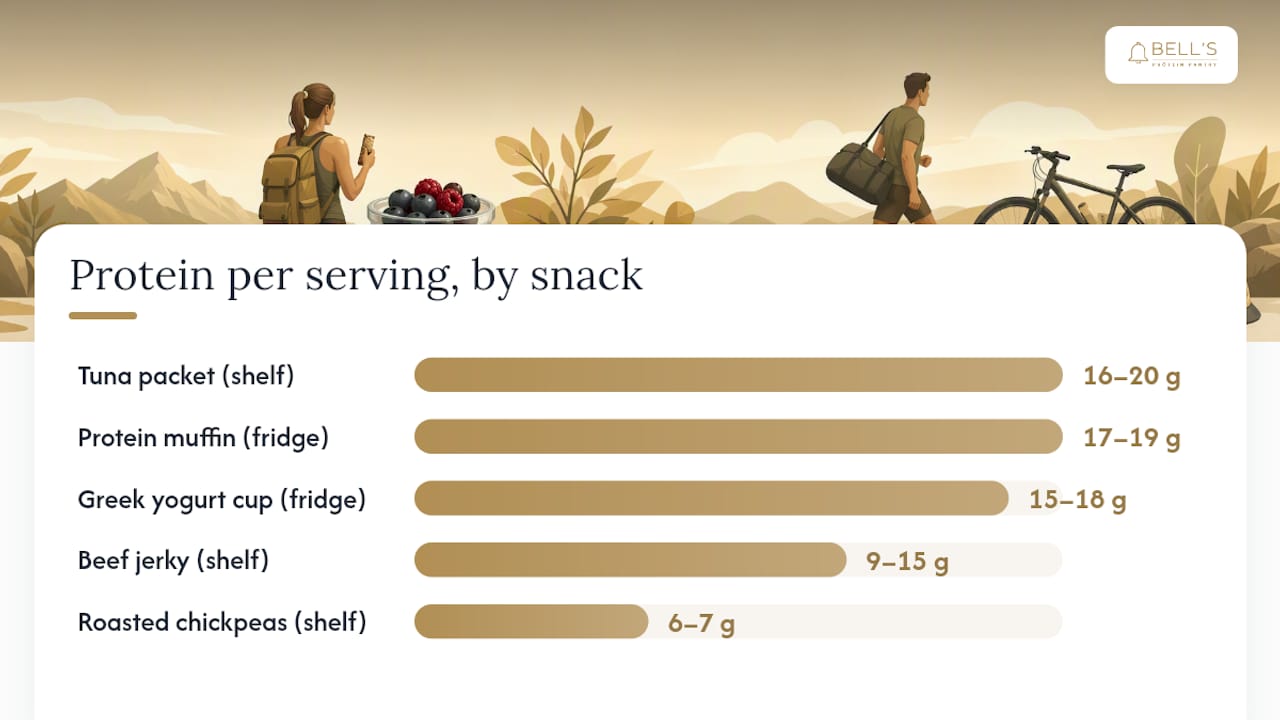
Shelf-stable and travel-friendly. Beef jerky and turkey sticks pack a moderate amount of protein per serving with no refrigeration required, which makes them the obvious pick for flights, road trips, or a bag that sits in your car all day. Roasted chickpeas and edamame snacks run lower, around 6 to 8 grams per serving, but they add fiber and a satisfying crunch that jerky can’t match. Protein bars vary wildly, anywhere from 10 to 20 grams, so read the label rather than trust the front-of-box claim. The FDA’s guidance on reading protein content on Nutrition Facts labels is worth five minutes if you’ve never actually checked how protein grams are calculated and rounded.
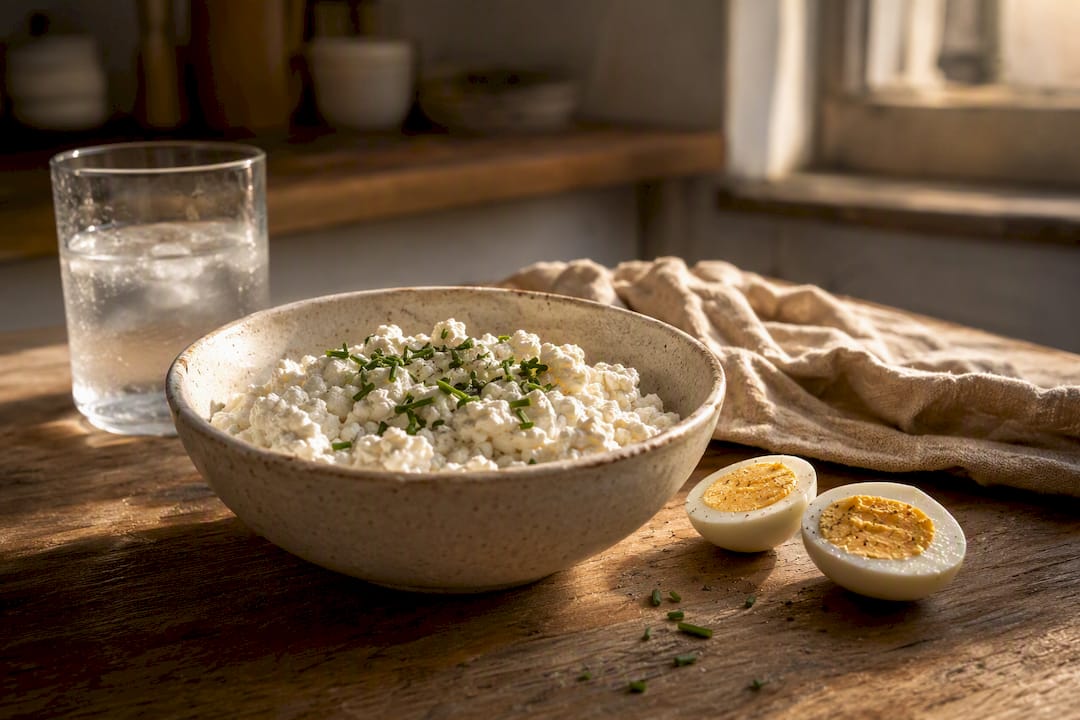
Dairy and egg, refrigerated. Greek yogurt is the workhorse here, delivering a moderate amount of protein per single-serve cup with almost no prep. Cottage cheese runs close behind with a similar protein amount and holds up well in a cooler bag. Hard-boiled eggs provide a moderate amount of protein for two and need a five-minute batch-cook on Sunday, and string cheese, while lower in protein, survives a few unrefrigerated hours better than yogurt does.
Canned and packet protein. A single-serve tuna or salmon packet delivers 16 to 20 grams of protein and needs no cooking, no cooler, and no cleanup beyond the packet itself. USDA FoodData Central’s nutrient entries confirm these values land near the top of the shelf-stable category, which is part of why so many post-workout routines lean on them.
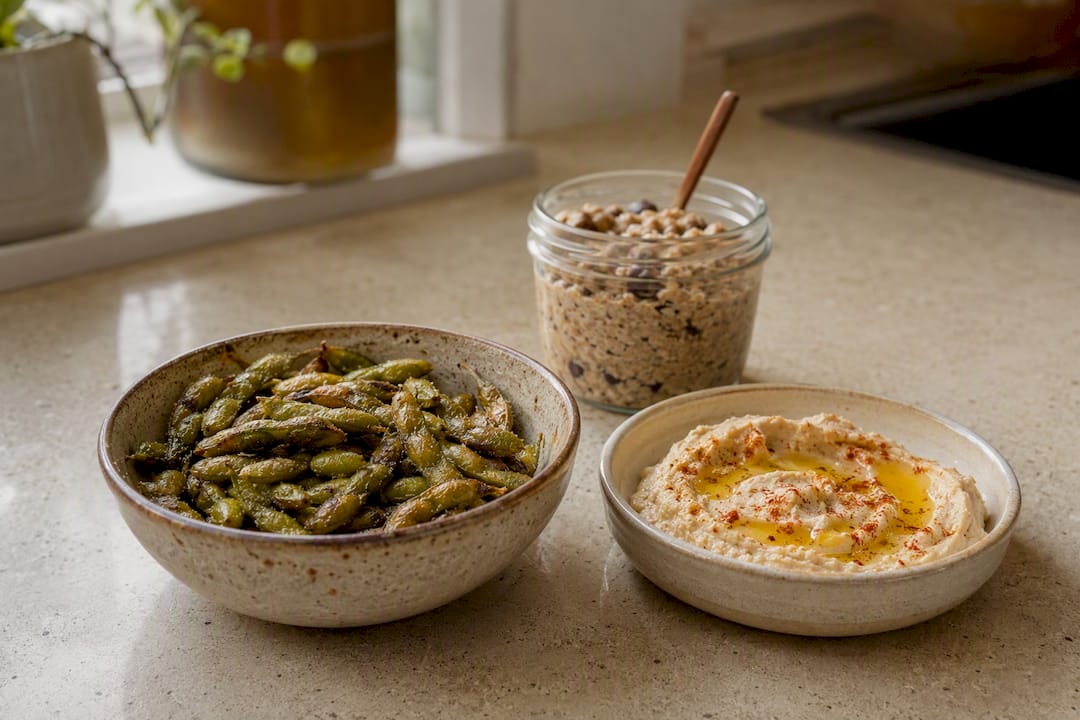
Plant-forward and dairy-free. Roasted edamame, a scoop of hummus with veggies, or protein-boosted baked oats made with pea or soy protein powder can reach 15 to 20 grams per serving. These matter for readers who skip dairy entirely, and they prove you don’t need meat or eggs to hit a real protein number.
| Snack | Protein per serving | Prep / ready status | Storage | Best for |
|---|---|---|---|---|
| Greek yogurt cup | 15 to 18 g | Ready to eat | Refrigerate | Breakfast, kids |
| Beef jerky | 9 to 15 g | Ready to eat | Shelf-stable | Travel |
| Tuna packet | 16 to 20 g | Ready to eat | Shelf-stable | Post-workout |
| Hard-boiled eggs (2) | 12 g | Cook ahead | Refrigerate | Any time |
| Cottage cheese cup | 12 to 14 g | Ready to eat | Refrigerate | Weight control |
| Roasted chickpeas | 6 to 7 g | Ready to eat | Shelf-stable | Kid snack |
| Bell’s Protein Pantry muffin | 17 to 19 g | Bake ahead | Refrigerate or freeze | Breakfast, travel |
Budget-conscious readers should lean on eggs, cottage cheese, and canned tuna. All three cost less per gram of protein than most bars or jerky, and they store well enough to buy in bulk without waste.
How to Hit 20 to 30 Grams of Protein in One Snack
Three combo patterns reliably get you there without a recipe or a scale.
- Dairy or egg base plus a fat and protein topper. One Greek yogurt cup (about 17 g) plus two tablespoons of peanut butter (about 8 g) lands you at roughly 25 grams, backed by USDA nutrient data for both ingredients.
- Stack two shelf-stable items. A tuna packet (18 g) plus a string cheese stick (7 g) gets you to 25 grams without touching a fridge.
- Baked protein item plus fruit. One Bell’s Protein Pantry muffin (18 g) plus a banana rounds out a snack near 19 to 20 grams, with the fruit adding fiber and quick carbs your muscles can actually use.
Do pack items in a way that keeps wet and dry components separate, and do measure nut butter rather than eyeball it. Don’t assume a bar’s front label matches its actual protein count, and don’t rely on a single small snack if you’ve gone more than five hours without eating.
Pro Tip: Bake a batch of Bell’s Protein Pantry banana bread or blueberry muffins on Sunday and portion them into single servings. Because the protein content is baked into the mix itself, every piece lands in the same 17 to 19 gram range, so you’re not doing math at 7 a.m.
Make-Ahead Recipes That Actually Survive a Busy Week
Simple, repeatable bakes and egg bites beat complicated recipes because you only have to think about them once a week, not every morning. That’s the whole game with portable protein: reduce the decisions, not the nutrition.
Egg muffins with cottage cheese. Whisk six eggs with a half cup of cottage cheese, add spinach or peppers, and bake in a muffin tin at 350°F for 18 to 20 minutes. Yield: 12 muffins, about 6 to 7 grams of protein each. Active prep time: 10 minutes. The cottage cheese adds protein and gives the crumb a lighter, almost custard-like texture, though it’s optional if you’re short on time.
Bell’s Protein Pantry banana bread or blueberry muffins. Mix, pour, and bake as directed. Yield: one loaf or 12 muffins, each delivering 17 to 19 grams of protein per serving according to the brand’s stated formulation. Active prep time: about 10 minutes before the oven does the rest.
Protein baked oats or chia pudding. Combine oats, a scoop of protein powder, milk, and an egg, then bake for 25 minutes, or mix chia seeds with milk and protein powder and refrigerate overnight. Yield: 4 servings, roughly 15 to 20 grams of protein each.
If you want more detail on the batch-baking side, our guide to protein blueberry muffin meal prep walks through portioning and freezing a full week’s worth in one session.
Packing, Storing, and Keeping Snacks Safe on the Go
Dairy, eggs, and baked goods with cream cheese or yogurt need refrigeration and shouldn’t sit at room temperature more than two hours, per Foodsafety. Jerky, nuts, roasted chickpeas, and shelf-stable protein bars don’t need a cooler at all.
- Use an insulated bag with a slim ice pack for yogurt, cottage cheese, or egg muffins.
- Keep dressings, nut butter, or sauces in a separate small container to avoid soggy snacks.
- Choose leakproof, hard-sided containers for anything with liquid.
- Reheat baked items briefly if you like them warm, but they’re fine cold or at room temp for a few hours.
- Label anything you’re sharing with a group if nuts, dairy, or eggs are involved.
Pro Tip: Parents and commuters get the most mileage from a small soft-sided cooler with one reusable ice pack. It holds two days of snacks and fits in a backpack side pocket without adding much weight.
Which Grab and Go Snack Fits Your Situation
- Post-workout: Canned tuna plus whole-grain crackers, for fast protein and electrolytes.
- Travel day: Jerky and a protein bar, since neither needs refrigeration.
- Quick breakfast: A Bell’s Protein Pantry muffin plus a hard-boiled egg, ready in seconds.
- Kid snack: String cheese and roasted chickpeas, easy to portion and mess-free.
- Weight control: Cottage cheese with berries, high protein and genuinely filling.
- Vegan or dairy-free: Roasted edamame plus hummus and veggies.
- Budget-conscious: Eggs and canned tuna, both cheap per gram of protein.
- Time-crunched week: A make-ahead bake wins every time you know mornings will be chaotic.
Why Repeatable Prep Beats a New Recipe Every Week
The biggest mistake we see health-conscious people make isn’t a lack of good recipes. It’s treating snack prep like a creative project instead of a system. Dietitians consistently point to 20 to 25 grams of protein at breakfast or in a substantial snack as the number that actually curbs mid-morning hunger, and that number is far easier to hit with three go-to options on rotation than with a new Pinterest recipe every Sunday. Pick two or three snacks you genuinely like, batch them, and repeat. That’s the whole strategy, and it works better than complexity ever does.
A Simple Way to Keep Protein Snacks in the House
Bell’s Protein Pantry solves the one problem that trips up most grab-and-go plans: running out of something good to grab.
Mix, bake, and slice into single servings, then freeze what you won’t eat in the next five days. A frozen muffin thaws on the counter in about 20 minutes or gets 30 seconds in the microwave, so it’s ready before your coffee finishes brewing. Made mother-daughter owned with family recipes at the core, these mixes were built for exactly the kind of week where cooking from scratch isn’t happening but eating well still matters. Browse the full lineup of protein baking mixes and pick the flavor that fits your week.
Where to Verify Protein Numbers and Storage Rules
- Foodsafety: the standard for how long perishable snacks last at room temperature or in the fridge.
- PubMed Central research on protein and satiety: the clinical basis for recommending higher-protein snacks for hunger control.
Sources
Recommended
- Portable Protein Snacks for Busy, Health-Conscious People – Bell’s Protein Pantry
- Best High Protein Snacks for Fitness and Real Results – Bell’s Protein Pantry
- Protein Snacks for Seniors: Easy, Low-Sugar Options – Bell’s Protein Pantry
- High Protein Weight Loss Snacks That Actually Work – Bell’s Protein Pantry